Rubber vs steel dumbbells can make a gym feel either quietly polished or seriously hardcore. Short answer: rubber suits most commercial gyms, while steel is better for heavy, compact strength setups. Keep reading to compare durability, noise, flooring, cost, and the best-selling dumbbells for your facility.
Quick Answer
Rubber vs steel dumbbells: which is better?
Rubber dumbbells are the safer all-around choice for most commercial facilities because they are quieter, easier on flooring, and comfortable for a wide range of members. Steel dumbbells win when compact dimensions and heavy lifting are higher priorities.
What is the difference between rubber dumbbells and steel dumbbells?
Rubber dumbbells normally contain metal underneath a protective rubber exterior. Steel dumbbells leave much more of the metal exposed, which keeps the heads smaller but offers less cushioning around floors and racks.
Which is better for commercial gyms: rubber or steel dumbbells?
For a busy health club, hotel gym, apartment fitness center, or school weight room, rubber is usually easier to manage day after day.
Which is better for strength and bodybuilding gyms?
Steel becomes especially attractive once dumbbells get heavy. A compact 100-pound steel head is simply easier to position than an oversized coated head during presses and rows.
Quick recommendations by facility type
General commercial gym: rubber. Bodybuilding gym: steel or pro-style rubber. Hotel or apartment: rubber. Athletic center: rubber hex or multi-sided. Heavy strength room: steel deserves serious consideration.
What Are Rubber Dumbbells?
How rubber dumbbells are constructed
Most commercial rubber dumbbells combine a steel or cast-iron core with rubber surrounding the weighted heads.
Rubber-coated steel or cast iron cores
The metal provides the weight and structure. Rubber handles the everyday bumps, rack contact, and occasional less-than-gentle landing.
Virgin rubber vs standard rubber coatings
Rubber quality varies. Better compounds generally hold their shape and appearance longer under frequent commercial use.
Rubber hex dumbbells
Hex heads resist rolling, making them useful for presses, rows, carries, and exercises performed from the floor.
Round rubber dumbbells
Round heads deliver the traditional commercial dumbbell look and work naturally with shelf and saddle racks.
Multi-sided rubber dumbbells
Eight-, ten-, and twelve-sided designs offer extra stability without looking like a basic garage-gym hex dumbbell.
Rubber-coated pro-style dumbbells
These combine a bodybuilding-style round profile with a protective rubber exterior.
Why rubber dumbbells are common in commercial gyms
They hit a practical sweet spot: good durability, reasonable cost, quieter use, and better protection around the facility.
Who should choose rubber dumbbells?
Facilities serving a broad member base usually benefit most, especially when noise and flooring matter.
What Are Steel Dumbbells?
How steel dumbbells are constructed
Steel dumbbells may use solid steel heads, machined components, stainless steel, chrome finishes, or traditional pro-style construction.
Solid steel dumbbells
Solid steel packs substantial weight into relatively compact dimensions.
Raw steel dumbbells
Raw finishes create an industrial look that fits naturally in serious strength rooms.
Stainless steel dumbbells
Stainless steel delivers a cleaner exposed-metal appearance while improving corrosion resistance.
Chrome dumbbells
Chrome brings the polished weight-room look many lifters associate with classic commercial gyms.
Steel pro-style dumbbells
Pro-style options are particularly appealing in bodybuilding gyms where traditional round heads still rule the rack.
Steel vs cast iron dumbbells
Both are metal, but they differ in manufacturing, density, finishes, and overall construction.
Why steel dumbbells can have more compact heads
Without a thick rubber layer, manufacturers can keep more of the weight packed into a smaller footprint.
Who should choose steel dumbbells?
Strength gyms, bodybuilding facilities, and clubs carrying very heavy dumbbell ranges are the strongest candidates.
Rubber Dumbbells vs Steel Dumbbells: What’s the Difference?
Rubber-coated vs exposed-metal construction
Rubber surrounds the weighted head; steel leaves more of the metal exposed.
Head size
Steel typically has the advantage in compactness.
Head shape
Rubber is widely available in hex, round, multi-sided, and pro-style designs.
Durability
Both can last for years when the head-to-handle construction is commercial grade.
Floor protection
Rubber is more forgiving when a member sets a dumbbell down harder than planned.
Noise
Rubber wins comfortably. Steel meeting a rack is rarely subtle.
Grip and handle feel
This depends more on handle diameter, knurling, shape, and finish than head material.
Rubber odor
New rubber may have a noticeable smell, although ventilation and time normally reduce it.
Cosmetic wear
Rubber can scuff. Steel can scratch. Busy gyms eventually leave their signature on both.
Rust and corrosion
Exposed steel needs more attention around sweat and humidity.
Cleaning and maintenance
Rubber generally requires less corrosion-related care.
Upfront price
Pricing varies by brand, construction, weight range, and rack package, so material alone does not determine cost.
Commercial appearance
Rubber looks modern and practical. Steel gives the free-weight area a harder, more traditional strength-room feel.
Long-term value
The best value is the dumbbell that fits your traffic, training style, flooring, and maintenance routine.
Rubber vs Steel Dumbbells: Head-to-Head Comparison
Which lasts longer?
Both can last a long time. Construction quality matters more than the label on the material.
Which handles heavy commercial use better?
Rubber is generally more forgiving in mixed-member environments.
Which protects flooring better?
Rubber.
Which is quieter?
Rubber.
Which has smaller dumbbell heads?
Steel.
Which is easier to clean?
Both are manageable, although steel finishes may need additional care.
Which is better for very heavy dumbbells?
Steel gains an edge because compactness matters more as weight climbs.
Which is better for high-traffic gyms?
Rubber typically offers the easier member experience.
Which is easier to rack and store?
Steel saves head space; rubber has an enormous selection of rack-ready packages.
Which costs less?
It varies. Compare complete sets rather than assuming one category always costs less.
Which offers better overall value?
Rubber usually wins for general commercial facilities. Steel can offer excellent value in specialized strength gyms.
Advantages and Disadvantages of Rubber Dumbbells
Advantages of rubber dumbbells
Better floor protection
Rubber softens normal contact with commercial flooring.
Lower impact noise
Helpful when your gym shares a building with offices, hotel rooms, or apartments.
Comfortable contact during dumbbell setup
Resting rubber heads on the thighs before a heavy press is more pleasant than doing the same with bare metal.
Wide range of commercial shapes and weights
Hex, round, pro-style, and multi-sided options give buyers plenty of flexibility.
Protected heads are less exposed to corrosion
The rubber covers much of the underlying metal.
Good choice for mixed-member facilities
Beginners and advanced members can comfortably share the same rack.
Excellent value for commercial gyms
Rubber offers a strong mix of durability and affordability.
Broad availability of sets with racks
Complete packages make planning easier.
Disadvantages of rubber dumbbells
New rubber odor
The smell can be noticeable when a full set first arrives.
Rubber can scuff with use
Constant rack contact eventually leaves marks.
Coating may eventually crack or separate
Quality manufacturing makes a major difference here.
Larger heads than compact steel dumbbells
The difference becomes obvious as weights get heavier.
Rubber quality varies by manufacturer
Not every rubber compound performs the same way.
Appearance can decline after years of hard commercial use
A busy free-weight room is rarely gentle.
Advantages and Disadvantages of Steel Dumbbells
Advantages of steel dumbbells
Compact head dimensions
This becomes especially useful above 75 or 100 pounds.
Traditional strength-training feel
Steel feels right at home beside platforms, benches, and heavy racks.
Strong option for heavier dumbbell ranges
Smaller heads simplify pressing and rowing with big weights.
No rubber coating to crack or separate
One potential wear point disappears entirely.
Distinctive raw steel, stainless or chrome appearance
Steel can give a free-weight room real visual character.
Strong fit for bodybuilding and strength gyms
Heavy lifters are where steel earns its keep.
Disadvantages of steel dumbbells
Less protection for gym flooring
Good flooring is not optional.
Louder rack and floor contact
Expect more noise around busy lifting areas.
Scratches are more visible
Polished surfaces advertise every hard rack return.
Some finishes can chip
Heavy impact can damage surface coatings.
Potential rust or corrosion
Moisture and damaged finishes deserve attention.
Requires more attention to commercial flooring
Steel and thin flooring make an expensive combination.
Rubber vs Steel Dumbbells for Commercial Durability
Repeated rack contact
Rubber handles it more quietly; steel may show scratches sooner.
Drops and impact
Neither material should be treated like a bumper plate.
Heavy daily usage
A genuine commercial design matters more than flashy marketing language.
Rubber coating wear
Watch heavily used pairs for cuts and surface damage.
Rubber cracking and separation
Proper manufacturing and reasonable use reduce the risk.
Steel scratches and finish wear
Some owners actually like the worn-in strength-gym look; others decidedly do not.
Sweat and cleaning chemicals
Use products approved for the finish rather than reaching for whatever spray bottle is nearest.
Rust and corrosion
Humidity makes exposed steel more demanding.
Which lasts longer in a busy commercial gym?
Either can last well, but rubber often ages more gracefully in a mixed-use gym.
Why construction quality matters more than material alone
A strong head connection, good tolerances, and commercial warranty matter more than simply seeing “rubber” or “steel” in the product name.
Rubber vs Steel Dumbbells for Floor Protection
How rubber helps absorb impact
Rubber creates a softer contact surface between the dumbbell and the room around it.
What happens when steel dumbbells hit flooring
More force transfers directly into the floor.
Commercial rubber flooring requirements
Both materials should still be used on proper gym flooring.
Protecting racks
Rubber reduces harsh metal-on-metal contact.
Protecting walls and surrounding equipment
No coating replaces sensible spacing and member etiquette.
Why rubber coating does not make a dumbbell drop-proof
Repeated dropping can still damage heads, handles, floors, or racks.
Which material is safer around finished floors?
Rubber is the clear winner.
Rubber vs Steel Dumbbells for Noise
Rack noise
Rubber keeps everyday re-racking quieter.
Floor impact
Steel produces a sharper, harder sound.
Dumbbell-to-dumbbell contact
Rubber softens accidental contact between pairs.
Why commercial gyms should care about noise
Noise affects members, neighboring businesses, and the overall feel of the room.
Hotels and resorts
Rubber usually makes far more sense.
Apartment fitness centers
Your upstairs neighbor will probably vote rubber too.
Corporate gyms
A quieter free-weight area fits an office environment better.
Which is quieter overall?
Rubber, by a comfortable margin.
Rubber vs Steel Dumbbells: Size and Compactness
Why steel dumbbells can have smaller heads
There is no thick protective layer surrounding the weight.
How rubber coating increases head dimensions
The added material naturally increases diameter or overall head size.
Does head size matter during bench presses?
Yes. Oversized heads can bump together or interfere with positioning.
Heavy dumbbell rows
Compact heads can feel easier to maneuver beside the torso.
Dumbbells above 100 lbs
This is where steel’s size advantage becomes most obvious.
Rack length requirements
Measure the real set instead of estimating from one dumbbell.
Which is better for crowded free-weight areas?
Steel offers physical compactness, although good rack design can narrow the gap.
Which option saves more space?
Steel generally wins.
Rubber vs Steel Dumbbells: Grip and Training Experience
Knurled steel handles
Good knurling should feel secure without turning every workout into a grip endurance test.
Chrome handles
Chrome provides the familiar commercial dumbbell feel many members expect.
Straight handles
Simple, traditional, and easy to understand.
Contoured handles
Some users find a shaped grip more comfortable.
Handle diameter
Diameter can noticeably change how heavy weights feel in the hand.
Grip during sweaty workouts
Knurling matters far more than whether the head is rubber or steel.
Dumbbell balance
A well-built dumbbell should feel stable and predictable throughout the movement.
Resting dumbbells on the thighs
Rubber gets the comfort point here.
Which feels better during heavy pressing?
Rubber feels softer during setup; steel feels more compact once the lift begins.
Which feels better for rows and carries?
Both perform well, although some strength-focused users prefer compact steel heads.
Rubber vs Steel Dumbbells for Heavy Lifting
Dumbbells from 5–50 lbs
Rubber works extremely well through this general fitness range.
Dumbbells from 55–100 lbs
Both remain practical, but head dimensions start becoming noticeable.
Dumbbells above 100 lbs
Steel becomes increasingly attractive.
Why head compactness matters at heavier weights
Big heads can interfere with setup, range of motion, and body positioning.
Rubber dumbbells for bodybuilding
Round and pro-style rubber models remain excellent choices.
Steel dumbbells for bodybuilding
Compact heavy heads make steel particularly appealing.
Which works better for serious strength training?
Steel has the edge at the very heavy end.
Which works better for general commercial gyms?
Rubber remains the stronger all-around choice.
Rubber Hex Dumbbells vs Steel Dumbbells
What makes rubber hex dumbbells different?
They combine protective rubber with flat sides that help stop the dumbbell from rolling away mid-workout.
Anti-roll head design
That little detail matters in busy functional areas.
Rubber hex dumbbells for floor exercises
The stable shape works well for rows, carries, and other floor-based exercises.
Rubber hex dumbbells for presses and rows
They remain versatile enough for standard strength work.
Steel dumbbells for heavy training
Steel takes the lead when maximum weight and compactness matter more.
Head size differences
Steel is normally smaller at equal weights.
Rack-space differences
Compare the actual rack package before buying.
Which is better for functional training areas?
Rubber hex dumbbells.
Which is better for commercial gyms?
Rubber hex is the broader choice; steel is more specialized.
Best Rubber Dumbbells from Dumbbells Direct
Multi-Sided Rubber Dumbbells
TROY TSD-R 12-Sided Rubber Encased Dumbbells
A strong general-commercial option for buyers wanting rubber protection and a stable multi-sided head.
VTX SD-R 8-Sided Rubber Encased Dumbbells
A practical choice for facilities that want less rolling without moving to a traditional hex profile.
TAG Fitness 8-Sided Virgin Rubber Dumbbells – R8DB
A commercial option suited to coordinated free-weight areas and rack packages.
TKO Strength 10-Sided Pro Rubber Dumbbells – 829TR
A distinctive design for gyms wanting something between round and hex.
Rubber Hex Dumbbells
USA Sports by Troy HD-R Rubber Hex Dumbbells
A straightforward option for general strength training.
York Rubber Hex Dumbbell with Chrome Ergo Handle
Combines rubber heads with a familiar chrome ergonomic grip.
TAG Fitness Rubber Hex Dumbbells
Well suited to commercial and functional areas.
Body-Solid Rubber Hex Dumbbells
A practical choice for mixed-member gyms.
Intek Strength Rubber Hex Dumbbells
Worth comparing when building a complete commercial hex rack.
TKO Strength Tri-Grip Rubber Hex Dumbbells – 814TXR
The grip-focused design gives this model a different feel from conventional hex dumbbells.
TKO Strength Straight Handle Rubber Hex Dumbbells
A more traditional alternative for members who prefer a straight handle.
Round and Pro-Style Rubber Dumbbells
Body-Solid Premium Round Rubber Dumbbells
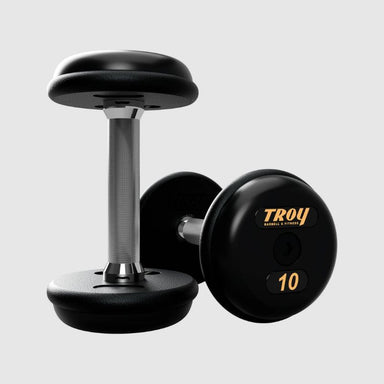
York Rubber Encased Pro Style Dumbbell
TROY RUFD-R Rubber Encased Pro Style Dumbbell
TROY RUFDC-R Rubber Encased Pro Style Dumbbell
These options make sense when you want the look and feel of a traditional strength room without giving up the benefits of a rubber-covered head.
Best Steel and Chrome Dumbbells from Dumbbells Direct
Solid Steel Dumbbells
York Professional Chrome Dumbbell with Ergo Grip – Solid Steel
A compact steel option with a classic polished appearance.
Intek Strength Kraft RAW Series Steel Dumbbells – KSDB-PR
A strong fit for facilities that prefer an exposed-metal, strength-focused aesthetic.
Stainless Steel Dumbbells
Intek Strength Custom Logo Delta Series Stainless Steel Dumbbells
A branded option for facilities looking for a distinctive stainless presentation.
Chrome and Pro-Style Metal Dumbbells
Hampton Chrome Beauty-Grip Dumbbells
Hampton Eclipse Chrome Pro-Style Dumbbells
TROY HFD-C Pro Style Dumbbells with Chrome Endcaps
TROY PFD-C Pro Style Dumbbells with Chrome Endcaps
TROY HFDC-C Pro Style Dumbbells with Chrome Endcaps
These are worth considering when traditional commercial-gym styling matters as much as raw practicality.
Best Rubber Dumbbell Sets to Consider
Troy TSD-R 12-Sided Rubber Encased Dumbbell Sets
VTX SD-R 8-Sided Rubber Dumbbell Sets
USA by Troy HD-R Rubber Hex Dumbbell Sets
TAG Fitness Rubber Hex Dumbbell Sets
TAG Fitness 8-Sided Virgin Rubber Dumbbell Sets – R8DB
Body-Solid Rubber Coated Hex Dumbbell Sets
Body-Solid Round Rubber Coated Dumbbell Sets
TKO Tri-Grip Rubber Hex Dumbbell Sets – 814TXR
TKO Strength 10-Sided Pro Rubber Dumbbell Set – 829TR
Intek Strength Rubber Hex Dumbbell Sets
Choose the weight range around actual member demand. A compact studio may be perfectly served by 5–50 pounds, while a serious commercial free-weight room may need 5–100 pounds or considerably more.
Best Steel and Chrome Dumbbell Sets to Consider
Intek Strength Kraft Steel RAW Dumbbell Sets – KSDBSET
Intek Custom Logo Kraft Steel RAW Dumbbell Set
Intek Custom Logo Delta Stainless Steel Dumbbell Set
Hampton Chrome Beauty-Grip Dumbbells Set with Rack
Hampton Eclipse Chrome Pro-Style Dumbbells Set
Hampton Eclipse Chrome Pro-Style Dumbbells Set with Horizontal Rack
Troy HFD-C Pro Style Dumbbell Sets with Chrome End Caps
TROY HFDC-C Pro Style Dumbbell Sets with Chrome End Caps
TROY PFD-C Pro Style Dumbbell Sets with Chrome End Caps
Rubber vs Steel Dumbbell Sets with Racks
Why buying dumbbells and racks together makes sense
You remove much of the guesswork around head dimensions, weight range, and rack compatibility.
5–30 lb sets
Useful for lighter-training areas and compact studios.
5–50 lb sets
A practical starting point for smaller commercial facilities.
5–75 lb sets
A good middle ground for broader member strength levels.
5–100 lb sets
A common target for full commercial free-weight areas.
Heavy sets above 100 lbs
Strength gyms may need separate racks for the heavy end.
Vertical racks
Useful for smaller sets and tight layouts.
Two-tier racks
Easy to access but generally wider.
Three-tier racks
Use vertical space more effectively.
Saddle racks
Give every dumbbell a defined home.
Horizontal shelf racks
Familiar, flexible, and easy for members to navigate.
Which configuration uses floor space most efficiently?
Three-tier designs often perform well, but actual dumbbell dimensions determine the answer.
Best Rubber Dumbbell Sets with Racks from Dumbbells Direct
TROY COMMPAC-TSDR50 5–50 lb Rubber Dumbbell Set with Rack
TROY COMMPAC-TSDR100 5–100 lb Rubber Dumbbell Set with Saddle Racks
VTX VERTPAC-SDR50 5–50 lb Rubber Dumbbell Set with Rack
VTX VERTPAC-SDR75 8-Sided Rubber Dumbbell Set with 3-Tier Rack
USA Sports by Troy VERTPAC-HDR50G Rubber Hex Dumbbell Set
USA Sports by Troy VERTPAC-HDR100 Rubber Hex Dumbbell Set
TAG Fitness Rubber Hex Dumbbell Set with 3-Tier Rack
TKO S889-TXRA10 5–50 lb Rubber Hex Dumbbell Set with Rack
TKO S890-TXRE15 5–75 lb Rubber Hex Dumbbell Set with Rack
TKO S891-TXR-E20 5–100 lb Tri-Grip Rubber Hex Set with Rack
Rubber vs Steel vs Cast Iron Dumbbells
Rubber-coated dumbbells
Best when floor protection and quieter training matter.
Solid steel dumbbells
Compact and excellent for heavier lifting.
Cast iron dumbbells
Simple, traditional, and often cost-conscious.
Material density
Dense exposed metal usually allows smaller heads.
Head dimensions
Steel generally wins.
Durability
All three can last when properly constructed.
Floor protection
Rubber wins.
Noise
Rubber wins again.
Rust and corrosion
Exposed iron and steel require more care.
Maintenance
Rubber is generally easier from a corrosion standpoint.
Price
Brand and construction matter more than broad material categories.
Which offers the best commercial value?
For most mixed-use gyms, rubber provides the best balance.
Rubber vs Steel vs Urethane Dumbbells
Rubber dumbbells
Practical, quieter, and widely available at commercial price points.
Steel dumbbells
Compact and particularly appealing to heavy lifters.
Urethane dumbbells
A higher-end coated option known for abrasion resistance and long-term appearance.
Which costs less?
Rubber is often the more budget-friendly coated choice.
Which protects floors best?
Rubber and urethane both perform better than exposed steel.
Which produces less noise?
Rubber and urethane both perform well.
Which has the most compact heads?
Steel.
Which resists cosmetic wear best?
Urethane generally has the advantage.
Which is best for high-traffic gyms?
Rubber offers strong value, while urethane may justify its higher cost in demanding facilities.
Rubber vs Metal Dumbbells: Are All Metal Dumbbells the Same?
Steel dumbbells
Dense and compact.
Stainless steel dumbbells
More corrosion-resistant with a refined metal look.
Chrome-plated dumbbells
Metal construction finished with a polished chrome surface.
Cast iron dumbbells
Traditional and straightforward.
Why “metal dumbbells” is a broad term
It can describe several materials and construction methods.
Rubber-coated metal cores
Ironically, many rubber dumbbells are still mostly metal underneath.
Which type should commercial buyers compare?
Look at real construction, dimensions, warranty, weight accuracy, and intended use.
Rubber vs Plastic Dumbbells
How plastic dumbbells differ from commercial rubber dumbbells
Plastic dumbbells typically occupy a different segment from fixed commercial strength equipment.
Weight range
Commercial rubber dumbbells are available through much heavier ranges.
Durability
Commercial rubber models are built for more demanding use.
Commercial-use suitability
Rubber is the more appropriate choice for serious shared facilities.
Why plastic dumbbells are not a direct substitute for fixed commercial dumbbells
The construction, intended traffic, and available loads are fundamentally different.
Are Rubber Dumbbells Good for Commercial Gyms?
General strength training
Yes. They cover virtually every standard dumbbell exercise.
High-volume member use
Commercial-grade models handle repeated daily use well.
Functional training
Hex and multi-sided designs are particularly useful.
Dumbbell bench presses
Rubber heads make setup more comfortable.
Rows and carries
They perform just as well here.
Schools and athletic facilities
Durability and floor protection are useful advantages.
Hotels and apartments
Lower noise gives rubber an obvious edge.
When rubber dumbbells may not be the best option
A hardcore strength facility needing very heavy, compact dumbbells may prefer steel.
Rubber vs Steel Dumbbells for Different Facilities
General commercial gyms
Rubber is the strongest all-around choice.
Strength and bodybuilding gyms
Steel or pro-style rubber.
Athletic performance centers
Rubber hex and multi-sided designs work especially well.
Personal training studios
Rubber is usually easiest to manage.
Functional training gyms
Rubber hex dumbbells fit naturally.
Schools and universities
Rubber balances durability with facility protection.
Hotels and resorts
Rubber wins on noise.
Apartment fitness centers
Rubber is generally the better neighbor.
Corporate wellness centers
Rubber creates a quieter and more approachable strength area.
Which Option Is Better for Small Commercial Gyms?
Head dimensions
Steel takes less room at heavier weights.
Rack-space requirements
Measure the complete set rather than one pair.
Floor protection
Rubber wins.
Noise restrictions
Rubber wins again.
Choosing the right weight range
Do not sacrifice half the room to 110-pound dumbbells if nobody in your gym uses them.
5–50 lb vs 5–75 lb vs 5–100 lb
Choose based on real demand.
Rubber hex dumbbells for compact facilities
They offer excellent versatility per square foot.
Compact steel dumbbells for heavy training
Steel works well where stronger lifters train in limited space.
Which provides better value per square foot?
Rubber offers broader versatility; steel offers superior compactness.
Rubber vs Steel Dumbbell Maintenance
Cleaning rubber dumbbells
Use mild, manufacturer-appropriate cleaning products.
How to reduce new rubber odor
Ventilation and time are usually the simplest answers.
Inspecting rubber for cracking
Check heavily used pairs during regular equipment inspections.
Checking for coating separation
Pay attention around edges and head connections.
Cleaning steel dumbbells
Remove sweat and moisture rather than leaving them overnight.
Protecting chrome finishes
Avoid aggressive abrasive cleaners.
Preventing rust and corrosion
Keep exposed metal clean and dry.
Inspecting handles and head connections
Movement or looseness should never be ignored.
Maintaining dumbbell racks
Inspect saddles, trays, welds, and high-contact areas.
Which requires less maintenance?
Rubber generally requires less corrosion-related attention.
Rubber vs Steel Dumbbell Price & Overall Value
What affects rubber dumbbell prices?
Rubber quality, construction, weight range, handles, and brand all matter.
What affects steel dumbbell prices?
Steel type, machining, finish, construction, and weight range influence cost.
Rubber hex vs steel pricing
Compare actual products rather than broad categories.
Pro-style dumbbell pricing
Handles, endcaps, plates, and construction can shift pricing significantly.
Complete dumbbell set cost
A full 5–100 lb run adds up quickly, so plan the entire rack from the start.
Dumbbell rack costs
Include storage in the initial budget.
Flooring costs
Steel may increase the importance of heavier-duty protection.
Replacement costs
The cheapest initial purchase is not automatically the cheapest long-term option.
Long-term ownership cost
Durability, replacement parts, maintenance, and facility damage all matter.
Buying complete commercial packages
Packages can simplify budgeting, shipping, and layout planning.
Bulk pricing and custom discounts
Commercial buyers purchasing full sets, racks, or larger equipment packages can ask Dumbbells Direct about custom bulk pricing.
What Should Gym Owners Check Before Choosing Rubber vs Steel Dumbbells?
Expected daily traffic
Busy gyms need true commercial construction.
Member demographics
Buy for the people who actually use the room.
Training style
Functional training and bodybuilding create very different priorities.
Maximum dumbbell weight required
This can strongly influence head-size decisions.
Head shape
Hex, round, multi-sided, and pro-style designs each serve different needs.
Head dimensions
Important for both training comfort and rack planning.
Rubber quality
Not all rubber coatings are equal.
Handle material
Chrome, raw steel, and other finishes create different feels.
Handle diameter and knurling
These directly affect grip comfort.
Weight accuracy
Commercial pairs should feel consistent.
Head-to-handle construction
This connection is one of the most important durability points.
Flooring
Match the dumbbells to the surface underneath them.
Noise restrictions
Shared buildings need more careful planning.
Rack compatibility
Never assume every dumbbell fits every rack.
Available floor space
Leave enough room for both storage and lifting.
Cleaning requirements
Choose equipment your staff can realistically maintain.
Commercial warranty
Confirm coverage for your type of facility.
Budget
Compare complete package cost, not just individual pair pricing.
Future expansion
Leave room to add heavier pairs later.
Which Dumbbells Direct Products Fit This Comparison Best?
Best Rubber Options for General Commercial Gyms
TROY TSD-R 12-Sided Rubber Dumbbells
VTX SD-R 8-Sided Rubber Dumbbells
TAG Fitness 8-Sided Virgin Rubber Dumbbells – R8DB
TKO Strength 10-Sided Pro Rubber Dumbbells – 829TR
Best Rubber Hex Options
USA Sports by Troy HD-R Rubber Hex Dumbbells
TAG Fitness Rubber Hex Dumbbells
Body-Solid Rubber Hex Dumbbells
Intek Strength Rubber Hex Dumbbells
TKO Tri-Grip Rubber Hex Dumbbells – 814TXR
Best Rubber Options for Traditional Strength Areas
Body-Solid Premium Round Rubber Dumbbells
TROY RUFD-R Rubber Encased Pro Style Dumbbells
TROY RUFDC-R Rubber Encased Pro Style Dumbbells
York Rubber Encased Pro Style Dumbbells
Best Steel Options for Strength Facilities
Intek Kraft RAW Series Steel Dumbbells
York Professional Chrome Solid Steel Dumbbells
Best Chrome and Pro-Style Options
Hampton Eclipse Chrome Pro-Style Dumbbells
TROY HFD-C Pro Style Dumbbells
TROY PFD-C Pro Style Dumbbells
TROY HFDC-C Pro Style Dumbbells
Best Complete Rubber Sets with Racks
TROY COMMPAC-TSDR50 5–50 lb Rubber Dumbbell Set with Rack
TROY COMMPAC-TSDR100 5–100 lb Rubber Set with Saddle Racks
USA Sports by Troy VERTPAC-HDR100 Rubber Hex Set with Rack
TAG Fitness Rubber Hex Dumbbell Set with 3-Tier Rack
TKO S891-TXR-E20 5–100 lb Tri-Grip Rubber Hex Set with Rack
Should Your Gym Buy Rubber or Steel Dumbbells First?
When rubber should be your first choice
Choose rubber when versatility, floor protection, noise control, and broad member appeal matter most.
When steel should be your first choice
Choose steel when very heavy lifting and compact dimensions lead the priority list.
When rubber hex dumbbells make the most sense
They are excellent for general strength areas, functional training, and smaller commercial gyms.
When round rubber dumbbells make more sense
Round models fit traditional free-weight rooms and commercial shelf racks nicely.
When pro-style steel dumbbells make sense
They are right at home in bodybuilding-focused facilities.
When a mixed dumbbell lineup works
One smart setup is rubber through the general range, then compact steel for the heaviest pairs.
Why flooring may decide the purchase
Steel places greater demands on the surface underneath it.
Why noise restrictions matter
Rubber can make a huge difference in shared buildings.
Why member demographics matter
A hotel gym should not be outfitted exactly like a hardcore bodybuilding club.
When budget should determine the decision
Buy the strongest complete setup you can realistically maintain rather than overspending on material alone.
Commercial Dumbbell Buying Checklist
Facility type
Expected daily traffic
Rubber vs steel construction
Weight range
Head shape
Head dimensions
Handle material
Handle diameter
Knurling
Weight accuracy
Floor protection
Noise
Rack compatibility
Available floor space
Cleaning and maintenance
Commercial warranty
Budget
Future expansion
The trick is not finding one dumbbell that “wins” every category. It is finding the combination that makes sense for your actual gym, your actual members, and your actual floor plan.
Frequently Asked Questions
What is the difference between rubber dumbbells and steel dumbbells?
Rubber dumbbells cover their metal heads with protective rubber, while steel dumbbells expose much more of the metal construction.
Which is better for commercial gyms: rubber or steel dumbbells?
Rubber is generally the better all-around commercial choice.
Which dumbbells are best, rubber or steel?
Rubber is more versatile; steel is better for specialized heavy lifting.
Are rubber dumbbells good?
Yes. They are one of the most practical options for shared commercial facilities.
Do rubber dumbbells last?
Quality commercial models can last for years with sensible use.
Do rubber dumbbells damage floors?
They are much more floor-friendly than bare metal, but proper commercial flooring is still necessary.
Why do rubber dumbbells smell?
The smell comes from compounds used during rubber manufacturing.
Does the rubber smell go away?
It normally becomes less noticeable with ventilation and time.
Are steel dumbbells more durable?
Steel eliminates coating wear, but the dumbbells can still scratch, corrode, or develop connection problems.
Do steel dumbbells rust?
Some steels can rust when exposed surfaces are not properly maintained.
Are steel dumbbells louder than rubber dumbbells?
Yes, particularly during rack and floor contact.
Are rubber hex dumbbells good for commercial gyms?
Absolutely. Their stability and versatility make them especially useful.
Are steel dumbbells better for heavy lifting?
They can be, primarily because compact heads become valuable at heavier weights.
Which dumbbells are more compact?
Steel generally wins.
Which is better for small gyms?
Rubber offers versatility, while steel offers more compact heavy weights.
Is rubber better than cast iron?
Rubber is quieter and kinder to floors. Cast iron is simpler and more traditional.
What is the difference between rubber and metal dumbbells?
Many rubber dumbbells actually contain metal internally. The practical difference is the protective outer coating.
Are rubber-coated dumbbells better than bare steel?
For most general commercial facilities, yes. Bare steel remains excellent for specialized strength gyms.
What should gym owners check before choosing rubber vs steel dumbbells?
Compare member traffic, weight range, dimensions, handles, construction, flooring, noise, racks, warranty, and total cost.
Which Dumbbells Direct products fit this comparison best?
For rubber, strong options include TROY TSD-R, VTX SD-R, TAG R8DB, USA Sports HD-R, and TKO 814TXR or 829TR. For steel, compare Intek Kraft RAW and York Professional Chrome.
Final Verdict
Best for general commercial gyms
Rubber dumbbells.
Best for high-traffic facilities
Commercial-grade rubber dumbbells.
Best for strength and bodybuilding gyms
Steel or heavy-duty pro-style rubber dumbbells.
Best for hotels and apartment gyms
Rubber dumbbells.
Best for functional training
Rubber hex or multi-sided dumbbells.
Best for heavy dumbbell training
Steel gets the edge for compactness.
Best for floor protection
Rubber.
Best for noise reduction
Rubber.
Best for compact dumbbell heads
Steel.
Best budget-friendly commercial option
Rubber hex dumbbells are one of the strongest value choices.
Best overall value
For most commercial facilities, rubber offers the best balance of price, durability, noise control, floor protection, and everyday usability.
Rubber vs steel dumbbells: which should your facility buy first?
If you are furnishing a general health club, hotel, apartment gym, school, or corporate fitness center, start with rubber. It works for more members and creates fewer headaches around noise and flooring.
If your facility is built around serious strength or bodybuilding, steel deserves a closer look. Once your rack reaches the heavier end, compact heads can make a noticeable difference.
Request a quote, bulk discounts & this week’s 5% coupon
Dumbbells Direct carries rubber hex, multi-sided rubber, round rubber, pro-style, steel, chrome, stainless steel, urethane, and complete dumbbell sets with racks.
Commercial buyers can also inquire about custom discounts for bulk orders, complete dumbbell sets, rack packages, and larger gym projects.
Dumbbells Direct runs a rotating 5% off promotion on all orders each week using different coupon codes. Contact us to check the current code, compare options, and request pricing for the right dumbbell setup for your facility.





Leave a comment