Pro style or hex? Your dumbbell rack has bigger decisions than it looks. The short answer: pro style dumbbells are better for traditional commercial strength rooms and heavy lifting, while hex dumbbells win for versatility, stability, and functional training. Keep reading to compare durability, cost, storage, and best-selling dumbbells.
Quick Answer
Pro style vs hex dumbbells: which is better?
Neither wins everywhere. Pro style dumbbells shine in dedicated strength areas, while hex dumbbells are the more flexible all-rounders.
What is the difference between pro style dumbbells vs hex dumbbells?
Traditional pro style dumbbells usually use round plates secured around a fixed handle. Hex dumbbells use fixed, flat-sided heads that help stop the dumbbell from rolling.
Are pro style dumbbells better than hex dumbbells?
They can be if your members spend most of their time pressing, rowing, curling, and lifting heavy.
Are hex dumbbells better than pro style dumbbells?
They can be when workouts regularly move from the bench to the floor.
Which is better for commercial gyms: pro style dumbbells vs hex dumbbells?
For a classic commercial strength room, pro style makes a strong case. For a multipurpose gym, rubber hex dumbbells are difficult to beat.
Which is better for small gyms?
Hex usually gives small facilities more training options without demanding a highly specialized setup.
Which is better for bodybuilding gyms?
Pro style gets the edge because it fits heavy progressive training and the traditional dumbbell-area layout.
Which is better for functional training?
Hex wins thanks to its stable, anti-roll shape.
Which is better for heavy lifting?
Pro style dumbbells become particularly attractive as a facility moves into heavier weight ranges.
Quick recommendations by facility type
Bodybuilding gym? Look closely at pro style. Hotel, apartment gym, studio, or functional area? Start with hex. Large full-service facility? There is a good argument for having both.
What Are Pro Style Dumbbells?
What does pro style dumbbell mean?
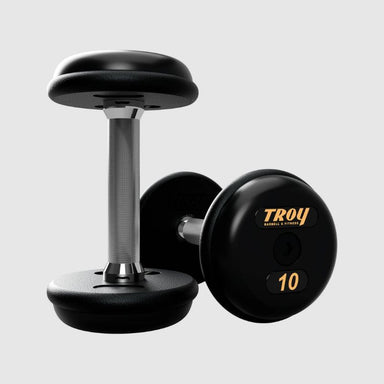
A traditional pro style dumbbell is a fixed-weight dumbbell built around a handle with round weight plates secured at each end.
Traditional pro style dumbbell construction
Fixed handles with separate weight plates
The plates stay assembled permanently for day-to-day gym use. Members simply grab the weight they need and train.
Bolts, fasteners, and endcaps
Depending on the model, these components hold the dumbbell together and protect the ends.
Round plate-style heads
This is the look many people picture when they think of an old-school commercial weight room.
Straight-handle pro style dumbbells
Straight handles provide a consistent grip from one side to the other.
Contoured-handle pro style dumbbells
A contoured handle changes the grip profile and may feel more natural to some users.
Chrome-endcap pro style dumbbells
Chrome endcaps give the dumbbell a classic, polished strength-room appearance.
Rubber-endcap pro style dumbbells
Rubber endcaps soften contact compared with exposed metal and create a darker, more modern look.
Fully rubber-encased pro style dumbbells
These keep the familiar pro style format while adding more rubber coverage around the heads.
Typical pro style dumbbell weight ranges
Pro style systems make sense when a gym wants a long progression of weights, including heavier pairs for experienced lifters.
Pro style dumbbell sets
Complete sets also make the room look intentional rather than pieced together over time.
Pro style dumbbell sets with racks
Because the heads are round, proper rack storage is especially important.
Why pro style dumbbells are common in commercial gyms
They look organized, handle heavy training well, and offer several combinations of handles, finishes, and endcaps.
Who should choose pro style dumbbells?
They are a strong fit for bodybuilding gyms, athletic facilities, schools, universities, and traditional commercial strength rooms.
What Are Hex Dumbbells?
What does hex dumbbell mean?
“Hex” refers to the flat-sided head shape rather than the material.
Six-sided head shape
The flat faces keep the dumbbell from casually rolling across the floor after you set it down.
Fixed-head construction
Most commercial hex dumbbells use permanently attached heads rather than separate plates.
Why hex dumbbells do not roll
Put one down after a hard set and it tends to stay where you left it. That sounds minor until a busy gym has ten people training in the same area.
Rubber hex dumbbells
Rubber hex dumbbells are a popular commercial choice because they combine floor stability with a coated contact surface.
Cast iron hex dumbbells
Cast iron versions keep things simple and compact but offer less cushioning against floors and racks.
Urethane hex dumbbells
Urethane adds another commercial coating option for facilities willing to invest more upfront.
Neoprene hex dumbbells
These are more common in lighter studio, aerobic, and group-training ranges.
Vinyl hex dumbbells
Vinyl-coated models also tend to serve lighter training applications.
Straight vs contoured handles
Do not judge a hex dumbbell by its head alone. Handle shape can completely change how the same weight feels in your hand.
Typical hex dumbbell weight ranges
Hex sets can cover beginner weights through serious strength work.
Hex dumbbell sets
A full hex dumbbell set works well for facilities that want one flexible dumbbell line for multiple training styles.
Hex dumbbell sets with racks
Vertical and multi-tier packages can make large sets easier to fit into compact rooms.
Why hex dumbbells are popular in commercial gyms
They are familiar, versatile, easy to place on the floor, and useful for both conventional lifting and functional workouts.
Who should choose hex dumbbells?
Small gyms, hotels, apartment fitness centers, personal-training studios, and mixed-use commercial gyms should give them serious consideration.
Are All Hex Dumbbells the Same?
Hex describes shape, not quality
No. Two hex dumbbells can look similar from across the room and still feel completely different once you pick them up.
Rubber vs cast iron hex dumbbells
Rubber changes the noise, floor contact, overall dimensions, and appearance.
Urethane vs rubber hex dumbbells
Both use coated heads, but they differ in feel, finish, wear characteristics, and price.
Head-to-handle construction
This connection matters in a commercial gym where equipment is used all day.
Straight vs contoured handles
Some members strongly prefer one grip profile over the other.
Handle diameter
A thicker handle can feel very different during heavy rows or pressing.
Knurling
More aggressive knurling generally improves grip but may feel rougher during high-rep sessions.
Rubber quality
Different rubber compounds can vary in odor, feel, and cosmetic wear.
Weight accuracy
Manufacturing tolerances also vary by product.
Head dimensions
A bulky 70 lb dumbbell can behave very differently from a more compact one at the same labeled weight.
Commercial vs light-duty hex dumbbells
Always match the product to the expected traffic instead of assuming every hex dumbbell belongs in a commercial facility.
Why two 50 lb hex dumbbells can feel different
Handle thickness, head size, coating, knurling, and balance can all change the experience.
Pro Style Dumbbells vs Hex Dumbbells: What’s the Difference?
Plate-built vs fixed-head construction
This is the biggest structural difference between the two categories.
Round vs hexagonal head shape
Traditional pro style heads are round. Hex heads have flat sides.
Rolling and anti-roll stability
Hex wins here without much debate.
Weight distribution
Both can feel balanced when properly designed.
Handle construction
Pro style gives buyers more freedom to choose among different handle and endcap combinations.
Straight vs contoured handles
Both styles may offer ergonomic choices depending on the product.
Handle diameter
Always compare actual dimensions before committing to dozens of pairs.
Knurling
The head shape will not help much if members dislike the grip.
Head dimensions
Heavy hex heads can become physically large.
Overall dumbbell length
Length matters during presses, curls, and any movement where the dumbbells travel close to the torso.
Heavy-weight compactness
Pro style can be especially attractive once a gym starts stocking very heavy dumbbells.
Available weight ranges
Both categories offer broad ranges, although pro style is closely associated with extensive heavy commercial sets.
Floor exercise stability
Hex wins.
Traditional lifting
Both work perfectly well for presses, rows, curls, and lunges.
Functional training
Hex is easier to manage during movements that repeatedly start or finish on the floor.
Commercial rack compatibility
Check head width, handle clearance, and tray style before choosing a rack.
Floor protection
Coating matters more than shape. Rubber coverage can help reduce hard metal-to-floor contact.
Noise
Again, material and user behavior usually matter more than geometry.
Maintenance
Fixed-head hex dumbbells are simple, while assembled pro style designs may have more components to inspect.
Repairability
Some pro style designs may offer more serviceable parts, depending on the model.
Commercial appearance
Pro style looks at home in a traditional strength room. Hex creates a more flexible, multipurpose feel.
Price
Basic rubber hex sets often have a lower starting cost than elaborate pro style configurations.
Long-term value
The best value comes from buying what your members will actually use, not simply what looks impressive on opening day.
Pro Style vs Hex Dumbbells Weight Comparison
Are hex dumbbells lighter than pro style dumbbells?
No. A labeled weight is still that weight regardless of head shape.
Does a 50 lb hex dumbbell weigh less than a 50 lb pro style dumbbell?
A 50 lb dumbbell should provide roughly 50 lb of resistance whether it is hex or pro style.
Labeled weight vs physical size
What changes is the physical package around that weight.
Why pro style heads can look more compact at heavy weights
Plate-based construction can keep heavier dumbbells from becoming excessively wide.
Why rubber hex heads become larger as weight increases
More material is needed as the weight climbs.
Plate density
Denser construction can change dimensions without changing resistance.
Rubber coating thickness
Thicker coatings add size around the core.
Handle weight
The handle contributes to total weight but does not change what the labeled dumbbell is intended to weigh.
Does dumbbell shape change resistance?
No. Shape changes handling, not the basic load.
Manufacturing weight tolerances
Small differences can exist between products, so commercial buyers should check manufacturer specifications when accuracy matters.
Pro Style vs Hex Dumbbells: Head-to-Head Comparison
Which is better for commercial gyms?
Pro style for dedicated strength rooms; hex for mixed-use environments.
Which is more stable on the floor?
Hex.
Which is less likely to roll?
Hex.
Which is better for floor exercises?
Hex.
Which is better for functional training?
Hex.
Which is better for traditional strength training?
Either.
Which is better for bodybuilding?
Pro style.
Which is better for heavy lifting?
Pro style gets the edge.
Which works better above 75 lb?
Pro style becomes increasingly attractive.
Which works better above 100 lb?
Pro style is often easier to integrate into a dedicated heavy dumbbell line.
Which offers more handle options?
Pro style.
Which feels better during presses?
That comes down to head size, handle shape, and personal preference.
Which is easier to rack?
Either, if you buy the right rack.
Which takes less rack space?
Actual set dimensions matter more than the label “hex” or “pro style.”
Which is easier to maintain?
Fixed-head hex is mechanically simple.
Which is more repairable?
Some assembled pro style systems may provide more replaceable components.
Which protects floors better?
Rubber-covered versions have the advantage over exposed metal.
Which is quieter?
Rubber-coated dumbbells generally produce softer contact.
Which looks better in a commercial gym?
Pro style wins if you want a classic strength-club look.
Which is cheaper?
Basic hex options usually have the lower entry point.
Which offers better overall value?
Hex for versatility. Pro style for a serious traditional strength room.
Pro Style Dumbbells Pros and Cons
Pro Style Dumbbell Pros
Traditional commercial gym feel
Excellent heavy-weight selection
Compact construction at heavier weights
Straight-handle options
Contoured-handle options
Chrome-endcap options
Rubber-endcap options
Strong rack presentation
Excellent for traditional strength training
Well suited to bodybuilding gyms
Some designs can be serviced by replacing components
Pro Style Dumbbell Cons
Round heads can roll
Less stable for floor exercises
Usually require dedicated racks
Higher upfront cost than basic hex dumbbells
Fasteners and endcaps may need inspection
Less convenient for renegade rows and push-up variations
Hex Dumbbells Pros and Cons
Hex Dumbbell Pros
Anti-roll design
Stable on the floor
Excellent for renegade rows
Excellent for dumbbell push-ups
Useful for functional training
Easy to manage in open training spaces
Simple fixed-head construction
Many rubber-coated options
Broad selection of sets and rack packages
Good value for small gyms
Hex Dumbbell Cons
Heavy heads can become bulky
Fewer handle configurations than pro style
Less traditional bodybuilding appearance
Large sets still require considerable rack space
Fixed-head damage may be less practical to service
Pro Style Dumbbell Construction vs Hex Dumbbell Construction
How pro style dumbbells are assembled
Traditional models combine plates around a dedicated fixed handle.
Weight plates
These create the recognizable round head profile.
Fixed handles
The weight is not changed between users like an adjustable dumbbell.
Steel bolts
Some designs use robust fasteners to secure the assembly.
Endcaps
Endcaps protect the outside and influence the final look.
How hex dumbbells are constructed
Most use permanently attached fixed heads.
Cast cores
These form the main weight inside many hex designs.
Fixed heads
There are fewer visible components than on traditional plate-built pro style models.
Rubber coatings
Rubber adds a softer exterior surface.
Urethane coatings
Urethane provides another commercial-grade finish option.
Handle-to-head connections
This is worth checking closely when the dumbbells will see constant daily use.
Which construction is better for commercial traffic?
Both can work well when they are designed for commercial use and matched to the facility.
Pro Style vs Hex Dumbbells for Heavy Lifting
Dumbbells above 50 lb
Both categories remain practical here.
Dumbbells above 75 lb
Head dimensions start to matter much more.
Dumbbells above 100 lb
Compactness and rack design become major considerations.
Heavy dumbbell head dimensions
A huge head can get in the way before the weight itself becomes the problem.
Overall dumbbell length
Long dumbbells may feel awkward during presses and curls.
Getting heavy dumbbells into position
Heavy lifters often roll the dumbbells onto their thighs before kicking them into pressing position.
Resting dumbbells on the thighs
Head and endcap shape can affect how comfortable that setup feels.
Handle clearance
Enough room around the handle matters when hands, wrists, and thighs are working in tight spaces.
Dumbbell bench presses
Pro style is particularly at home here.
Heavy rows
Either works well.
Shrugs
Grip quality matters more than head shape.
Farmer carries
Again, handles are the bigger story.
Why compactness matters at heavier weights
Once dumbbells get big, every extra inch feels bigger than it sounds.
Which is better for serious strength facilities?
Pro style usually makes the stronger case.
Pro Style vs Hex Dumbbells for Bodybuilding
Flat dumbbell press
Both work.
Incline dumbbell press
Both work.
Shoulder press
Both work.
Heavy dumbbell rows
Both work.
Biceps curls
Handle feel becomes more noticeable than head shape.
Hammer curls
Either style gets the job done.
Lateral raises
Shape has very little effect.
Progressive weight ranges
This is where a carefully planned commercial set matters.
Duplicate popular pairs
If everyone wants the 25s and 30s at 6 p.m., buying duplicates can matter more than buying another exotic dumbbell design.
Why pro style is associated with bodybuilding gyms
Its long weight ranges and classic rack presentation fit the culture.
Can hex dumbbells build muscle just as effectively?
Yes. Your muscles do not care whether the head has six sides.
Pro Style vs Hex Dumbbells for Functional Training
Renegade rows
Hex is far more stable.
Dumbbell push-ups
Flat sides create a safer base.
Plank rows
Same advantage.
Man makers
Hex makes floor transitions easier.
Dumbbell burpees
Again, anti-roll stability helps.
HIIT circuits
Hex dumbbells are easy to set down and move around quickly.
Dumbbell complexes
Either works, but hex handles changes between floor and standing movements more neatly.
Ground-to-overhead movements
The flat heads give you a predictable resting position.
Why anti-roll stability matters
It keeps one athlete's dumbbell from wandering into somebody else's station.
Which is safer for floor-based exercises?
Hex.
Is Hex Dumbbells Good for Strength Training?
Pressing exercises
Yes.
Rows
Yes.
Curls
Yes.
Lunges
Yes.
Romanian deadlifts
Yes.
Farmer carries
Absolutely.
Functional training
This is one of hex dumbbells' strongest uses.
Floor exercises
The stable heads give them a clear advantage.
Heavy lifting
They work well, though head size can become cumbersome at very heavy weights.
Are hex dumbbells good enough for commercial gyms?
Commercial-grade models certainly are.
Pro Style vs Hex Dumbbells for Traditional Strength Training
Bench presses
Shoulder presses
Rows
Curls
Triceps work
Lunges
Romanian deadlifts
Carries
Both styles handle these staples without a problem.
Which feels better for classic free-weight training?
Pro style often feels more natural in a traditional commercial strength setting, but the difference is mostly about handle, dimensions, and preference.
Pro Style vs Hex Dumbbells for Grip and Handle Comfort
Straight handles
A consistent diameter appeals to many experienced lifters.
Contoured handles
Some members prefer the fuller center section.
Knurled handles
Knurling improves grip when hands get sweaty.
Handle diameter
This can dramatically change how heavy weights feel.
Handle length
More usable grip space may benefit larger hands.
Chrome handles
Chrome is common across both commercial categories.
Grip during heavy pressing
A secure grip matters most when the load gets serious.
Grip during high-rep workouts
Comfort becomes equally important when volume climbs.
Which offers more handle choices?
Pro style.
Which feels better during long training sessions?
That one is personal, so test the grip when possible.
Pro Style vs Hex Dumbbells for Floor Exercises
Why pro-style round heads can move
Round surfaces naturally roll.
Why hex heads stay stable
The flat surfaces create stopping points.
Renegade rows
Plank rows
Dumbbell push-ups
Man makers
Hex is the better choice for all four.
Circuit training
Hex is also easier to manage when several stations share the same space.
Circle dumbbell exercises
For workouts involving round dumbbells on the floor, remember that circular heads may move unless the exercise keeps the weight off the ground.
Can you use pro style dumbbells for floor exercises?
Yes, but not every movement benefits from a rolling head.
Which is safer for floor-based workouts?
Hex usually provides the more stable base.
Pro Style Dumbbells vs Round Dumbbells
Are all pro style dumbbells round?
Traditional pro style models generally use round plate-style heads.
Round shape vs pro-style construction
“Round” describes shape. “Pro style” describes a particular construction style.
Solid-head round dumbbells
These may be rubber, urethane, or steel and are not automatically pro style.
Plate-built pro style dumbbells
These use the traditional plate-and-handle approach.
Rubber round dumbbells
These provide a coated circular alternative.
Urethane round dumbbells
These are common in polished commercial installations.
Why “round” and “pro style” are not interchangeable
One tells you what the dumbbell looks like. The other tells you more about how it is built.
Which is better for traditional commercial gyms?
Either can work, but pro style has the stronger classic strength-room identity.
Pro Style Dumbbells vs Hex vs Round Dumbbells
Pro style describes construction
Hex describes shape
Round describes shape
Keeping these definitions straight prevents a lot of shopping confusion.
Fixed round dumbbells vs plate-built pro style
They can look similar on a rack while being built very differently.
Hex dumbbells vs round dumbbells
This comparison is mainly about rolling, floor stability, storage, and training style.
Anti-roll stability
Hex wins.
Heavy lifting
Pro style makes a strong case.
Floor exercises
Hex wins again.
Rack storage
All commercial dumbbells should have organized storage.
Which category fits which gym?
Choose based on how the room is actually used.
Hex Dumbbells vs Rubber Dumbbells
Why the phrase compares two different features
This search causes plenty of confusion because hex is a shape while rubber is a material.
Hex describes head shape
A hex dumbbell may be rubber, urethane, cast iron, neoprene, or vinyl.
Rubber describes material or coating
A rubber dumbbell can be hex, round, or multi-sided.
Rubber hex dumbbells
These combine a coated exterior with anti-roll heads.
Rubber round dumbbells
These retain a circular profile.
Rubber pro style dumbbells
They may use rubber endcaps or more extensive rubber encasement.
Multi-sided rubber dumbbells
Eight-, ten-, and twelve-sided models sit between classic hex and round designs.
Can a hex dumbbell also be rubber?
Yes. In fact, rubber hex dumbbells are one of the most common commercial combinations.
Which combination is best for commercial use?
For general-purpose facilities, rubber hex is a very safe starting point.
Dumbbell Shapes Explained
Hexagonal dumbbells
Stable and functional.
Round dumbbells
Classic and smooth-looking.
Multi-sided dumbbells
Designed to add more stability without using a strict six-sided profile.
Pro style plate-built heads
Traditional and closely associated with commercial strength rooms.
Does dumbbell shape affect resistance?
No.
Does shape affect rolling?
Yes.
Does shape affect storage?
Yes.
Does shape affect floor exercises?
Definitely.
Which dumbbell shape is best for commercial gyms?
There is no universal winner, but hex is the most versatile for mixed-use facilities.
Pro Style vs Hex Dumbbells for Commercial Gyms
Daily member traffic
Busy rooms demand durable equipment and clear organization.
Shared equipment
Easy-to-find increments matter when dozens of members share the same rack.
Member turnover
A broad user base usually favors familiar, intuitive equipment.
Heavy daily use
Choose dumbbells specifically intended for the expected workload.
Training style
This should drive the decision more than appearance.
Required weight range
Buy for your strongest regular users, not just beginners.
Heavy dumbbell availability
Pro style becomes especially attractive here.
Duplicate pairs
Popular weights often deserve duplicates.
Floor exercises
Hex performs better.
Anti-roll stability
Hex wins again.
Rack organization
Both styles benefit from clearly planned storage.
Available floor space
Measure the rack footprint before ordering.
Equipment maintenance
Factor inspection and cleaning into your buying decision.
Commercial appearance
Pro style offers a stronger traditional strength-room identity.
Replacement costs
Think beyond the opening-day purchase price.
Which should a commercial gym buy?
A traditional weight room will often prefer pro style. A mixed-use commercial facility will usually get more flexibility from hex.
Pro Style vs Hex Dumbbells for Small Gyms
Limited square footage
Every piece of equipment needs to earn its floor space.
Limited rack capacity
Compact hex packages can help.
Weight range
A smaller facility may not need every pair through 100 lb.
Training versatility
Hex excels here.
Functional exercises
Hex handles them naturally.
Floor exercises
Another point for hex.
Member strength levels
Stock the weights your actual members use.
Budget
Hex often offers an easier starting point.
Which gives more training value per square foot?
For most small gyms, hex.
Pro Style vs Hex Dumbbells for Bodybuilding Gyms
Heavy weight ranges
Pro style.
Duplicate heavy pairs
Useful in busy bodybuilding facilities.
Pressing stations
Pro style fits naturally alongside multiple benches.
Dumbbell rack length
Plan for significant horizontal storage if the range is large.
Handle choices
Pro style provides more options.
Traditional strength-room appearance
Pro style wins.
Which shape fits bodybuilding training better?
Pro style, although hex still performs the exercises perfectly well.
Pro Style vs Hex Dumbbells for Hotel Gyms
Limited supervision
Simple, stable equipment is useful.
Guest safety
Anti-roll heads help keep stray dumbbells where they belong.
Anti-roll stability
Hex wins.
Noise
Rubber helps.
Floor protection
Rubber helps here too.
Equipment appearance
A uniform set still keeps the room looking professional.
Which is more practical?
Rubber hex is usually the easier hotel choice.
Pro Style vs Hex Dumbbells for Apartment Fitness Centers
Shared spaces
Equipment should be easy to control and easy to put away.
Noise restrictions
Rubber-coated dumbbells make sense.
Rolling dumbbells
Hex eliminates much of that concern.
Floor protection
Use appropriate gym flooring regardless of dumbbell type.
Limited square footage
Compact rack packages matter.
Which should apartment gyms choose?
Rubber hex in most cases.
Pro Style vs Hex Dumbbells for Personal Training Studios
Trainer-controlled environments
Studios can select a tighter, more carefully planned range.
Functional training
Hex works very well.
Traditional strength training
Hex still handles it without trouble.
Floor exercises
Another advantage for hex.
Small group sessions
Anti-roll dumbbells keep stations neater.
Equipment appearance
Matching sets still create a polished room.
Which provides more versatility?
Hex.
Pro Style vs Hex Dumbbells for Schools and Universities
High user turnover
Equipment must cope with constant sharing.
Athlete strength levels
Weight ranges may need to extend far beyond a typical hotel gym.
Heavy training
Pro style makes sense in dedicated strength rooms.
Functional training
Hex works well in athletic-performance spaces.
Equipment maintenance
Regular inspections should be part of operations.
Rack organization
Clear storage reduces clutter.
Budget
Institutional buyers should compare complete package costs.
Which delivers better institutional value?
A combination may be the smartest answer for larger programs.
Pro Style vs Hex Dumbbells for Gym Floors
Does head shape affect floor protection?
Less than material and user behavior do.
Rubber hex heads
They create a softer contact surface than bare metal.
Rubber-endcap pro style dumbbells
These add some protection at the outer ends.
Fully rubber-encased pro style dumbbells
These provide more rubber coverage.
Chrome-endcap pro style dumbbells
Use more care around finished surfaces.
Cast iron hex dumbbells
They are simple but provide less cushioning.
Commercial rubber flooring
This remains one of the best defenses against normal weight-room impact.
Hardwood and finished floors
These require much more protection.
Why dumbbell weight matters
A dropped 100 lb dumbbell is a very different problem from a gently placed 10 lb dumbbell.
Which is most floor-friendly?
Rubber-covered options paired with proper gym flooring.
Pro Style vs Hex Dumbbells for Noise
Dumbbell-to-floor noise
Rubber can help soften impact.
Dumbbell-to-rack noise
Rack design and member habits matter too.
Rubber hex heads
Generally quieter than exposed iron.
Rubber pro style dumbbells
Another practical option.
Rubber endcaps
Helpful when the outer ends contact racks or floors.
Chrome endcaps
More likely to produce sharper contact sounds.
Cast iron hex dumbbells
Expect more metal-related noise.
Which works best in noise-sensitive facilities?
Rubber hex is the easiest recommendation.
Pro Style vs Hex Dumbbells for Durability
Fixed-head durability
Simple construction can be an advantage.
Plate-and-bolt construction
Traditional pro style systems use more individual components.
Handle-to-head connections
This deserves attention in any commercial dumbbell.
Bolts and fasteners
Inspect them where applicable.
Rubber endcap wear
Rubber can scuff over time.
Chrome endcap wear
Chrome can show scratches and cosmetic marks.
Rubber hex coating wear
Edges and high-contact areas may show use first.
Repeated rack contact
Even great equipment will show wear if it is slammed into storage all day.
Accidental floor contact
Dropping shortens the life of almost any dumbbell.
Which lasts longer in a commercial gym?
Construction quality, maintenance, coating, storage, and member behavior matter more than shape alone.
Are Pro Style Dumbbells Repairable?
Replaceable endcaps
Some models may allow endcap replacement.
Bolts and fasteners
These may be serviceable depending on the design.
Plate inspection
Check for movement or looseness during routine maintenance.
Handle inspection
Look for damage before it becomes a safety issue.
Tightening loose components
Follow the manufacturer's instructions.
Can hex dumbbells be repaired?
Repairability varies significantly by construction.
When replacement makes more sense
Severe structural damage may justify replacing the dumbbell rather than improvising a repair.
Does serviceability improve lifetime value?
It can, especially when genuine replacement parts remain available.
Pro Style vs Hex Dumbbells for Rack Storage
Why pro style dumbbells need secure racks
Round heads can move if left loose on the floor.
Can hex dumbbells sit safely on the floor?
They can stay put, but commercial gyms should still rack them.
Saddle racks
A natural match for many pro style sets.
Cradle racks
These securely hold individual pairs.
Flat shelf racks
Popular for hex and multi-sided dumbbells.
Three-tier racks
Useful for larger sets.
Vertical racks
Good for compact ranges where floor space is tight.
Pro style head dimensions
Check saddle width and spacing.
Hex head dimensions
Large heavy heads need enough shelf depth.
Handle clearance
Members need room to grab each pair without pinching fingers.
Heavy dumbbell spacing
Leave enough room for safe retrieval.
Which takes less rack space?
Compare actual set-and-rack dimensions rather than relying on category alone.
Pro Style vs Hex Dumbbells for Gym Layout
Dumbbell rack footprint
Measure it before the delivery truck arrives.
Bench positioning
Leave enough room for members to move heavy dumbbells safely.
Walkway clearance
A gorgeous dumbbell line is useless if it blocks traffic.
Functional training space
Hex is easier to move into open areas.
Floor exercise space
Flat-sided heads help keep stations organized.
Heavy lifting areas
Pro style works well beside dedicated benches.
Rolling dumbbells
Plan for this if you choose round heads.
Which works better in tight spaces?
Hex generally provides more flexibility.
Pro Style vs Hex Dumbbells: Appearance and Gym Design
Classic commercial weight-room appearance
Pro style.
Modern functional-training appearance
Hex.
Hammertone plates
These give pro style dumbbells a rugged traditional look.
Chrome endcaps
They add visual contrast.
Rubber endcaps
They create a darker, softer appearance.
Rubber hex heads
They look simple and consistent across a full rack.
Matching dumbbell racks
Matching storage can make either style look more professional.
Weight identification
Make numbers easy to read from standing height.
Which creates the stronger commercial presentation?
Pro style wins for classic strength-room character. Hex wins for clean multipurpose simplicity.
Pro Style vs Rubber Hex Dumbbells
Traditional pro style construction
Built around the familiar plate-and-handle format.
Rubber hex construction
Usually uses fixed heads with a rubber exterior.
Head shape
Round versus flat-sided.
Anti-roll stability
Hex.
Handle choices
Pro style.
Floor exercises
Hex.
Heavy lifting
Pro style gets the edge.
Floor protection
Rubber coverage helps both categories.
Noise
Again, rubber is the key factor.
Rack storage
Both should be properly stored.
Commercial appearance
Pro style is more traditional.
Price
Rubber hex often costs less to get started.
Which should a commercial gym buy?
Buy pro style for a dedicated strength identity; buy rubber hex for broader versatility.
Rubber Pro Style vs Rubber Hex Dumbbells
Rubber endcaps vs rubber-coated heads
The coverage is different even when both products use rubber.
Fully rubber-encased pro style dumbbells
These narrow the material difference while retaining pro style construction.
Anti-roll stability
Hex.
Floor protection
Both can work well when used properly.
Noise
Both can be quieter than exposed metal.
Heavy lifting
Pro style has the traditional advantage.
Handle options
Pro style.
Rack storage
Both require planned storage.
Which offers better commercial value?
Hex for mixed-use spaces; pro style for strength-focused facilities.
Chrome Pro Style vs Rubber Hex Dumbbells
Chrome endcaps vs rubber heads
This is partly an appearance decision and partly a floor-contact decision.
Commercial appearance
Chrome pro style looks unmistakably traditional.
Floor protection
Rubber hex is more forgiving.
Noise
Rubber hex generally has the advantage.
Head dimensions
Compare actual models at the weights you plan to stock.
Heavy pressing
Pro style fits naturally.
Maintenance
Chrome may show cosmetic wear more clearly.
Which is better for traditional strength gyms?
Chrome-endcap pro style.
Pro Style vs Urethane Dumbbells
Plate-built pro style vs urethane construction
This comparison is about construction as much as coating.
Weight range
Both can support serious commercial ranges.
Durability
Compare model-specific commercial ratings.
Cosmetic wear
Different finishes age differently.
Noise
Coated heads generally reduce harsh metal contact.
Odor
Material formulation can affect how a new dumbbell smells.
Custom logos
Urethane is particularly attractive for branded commercial sets.
Commercial appearance
Both can look excellent in a polished facility.
Price
Urethane usually sits higher in the market than basic rubber or iron options.
Which fits high-traffic gyms better?
Either can, provided the product is designed for that workload.
Pro Style vs Adjustable Dumbbells
Fixed vs adjustable construction
Pro style dedicates one dumbbell to one weight. Adjustable designs combine many weights into a smaller footprint.
York Black Contour Cast Iron Adjustable Dumbbell Set
A traditional adjustable option for buyers prioritizing flexibility.
PowerBlock Commercial Pro 100 Adjustable Dumbbells
A space-saving commercial adjustable option capable of replacing multiple fixed pairs.
Space savings
Adjustable wins.
Weight-change speed
Fixed dumbbells are faster in a busy shared room.
Multiple-member use
A full fixed set lets several people train at once.
Heavy lifting
Both can work depending on weight capacity.
Maintenance
Adjustable mechanisms require different care from fixed dumbbells.
Which is better for commercial gyms?
Fixed dumbbells are usually simpler for high-volume shared use.
Which is better for very small gyms?
Adjustable dumbbells deserve serious consideration when space is extremely limited.
Pro Style vs Hex Dumbbells Price Comparison
Individual dumbbell cost
Compare equivalent weights and construction.
Price per pound
This can help normalize the comparison, especially across large sets.
Pro style dumbbell set cost
Handle choice and endcap style can affect the total.
Hex dumbbell set cost
Material matters greatly here.
5–50 lb set cost
This range is a practical starting point for many smaller facilities.
5–75 lb set cost
Useful when stronger users need more progression.
5–100 lb set cost
A serious commercial range requires a larger equipment and storage budget.
Heavy dumbbell costs
Costs rise quickly as total set weight increases.
Rack costs
Always include storage in your budget.
Maintenance costs
Consider inspection, cleaning, and eventual replacement.
Replacement costs
A single damaged dumbbell is easier to replace if the line remains available.
Which is cheaper upfront?
Basic rubber or cast iron hex dumbbells usually provide the lower starting point.
Which can cost less over time?
The answer depends on durability, maintenance, use, and whether the set still meets your needs years later.
Bulk pricing and custom quotes
Facilities purchasing full sets, racks, or larger quantities can contact Dumbbells Direct for custom bulk pricing.
Weekly 5% discount opportunities
Dumbbells Direct also runs rotating 5% off weekly promotions using different coupon codes, so check the current offer before placing your order.
Which offers better lifetime value?
Choose the style that best matches how your members train. The cheapest unused dumbbell is still a bad investment.
Pro Style Dumbbell Sets
Individual pairs vs complete sets
Complete sets make progression, appearance, and rack organization easier.
5–50 lb pro style sets
A practical range for lighter commercial environments.
5–75 lb pro style sets
A useful step up for broader strength levels.
5–100 lb pro style sets
Better suited to full commercial strength rooms.
Heavy pro style sets
Ideal where advanced lifters need serious progression.
Straight-handle sets
Great for buyers who prefer a consistent grip.
Contoured-handle sets
A different ergonomic feel for the entire rack.
Rubber-endcap sets
Useful for facilities wanting softer outer contact surfaces.
Chrome-endcap sets
Best for the classic commercial look.
Fully rubber-encased sets
A strong middle ground between traditional pro style construction and rubber-heavy commercial design.
Which range should a commercial gym buy?
Start with your member profile, then add heavier or duplicate pairs where demand justifies them.
Hex Dumbbell Sets
Rubber hex dumbbell sets
The most broadly useful choice for many gyms.
Cast iron hex dumbbell sets
Simple and budget-conscious.
Urethane hex dumbbell sets
A higher-cost commercial alternative.
3–25 lb sets
Useful for studios and lighter training.
5–30 lb sets
A compact starter range.
5–50 lb sets
A common choice for small gyms.
5–75 lb sets
Better for stronger general populations.
5–100 lb sets
Suitable for full commercial strength coverage.
Which range should a commercial gym buy?
Buy enough weight to serve your strongest regular users without wasting rack space on pairs nobody touches.
Pro Style vs Hex Dumbbell Sets with Racks
Saddle-rack packages
A natural fit for pro style dumbbells.
Horizontal shelf packages
Popular for hex sets.
Three-tier rack packages
They hold substantial ranges without stretching the room too far horizontally.
Vertical-rack packages
Useful in compact facilities.
Heavy dumbbell storage
Lower shelves and saddles should be easy to access safely.
Which takes less floor space?
Vertical and tightly designed multi-tier packages generally have the advantage.
Which creates better rack organization?
Either can look excellent when the rack is matched to the set.
Which offers more value per square foot?
Hex often wins in small multipurpose facilities.
Best Pro Style Dumbbells from Dumbbells Direct
Pro Style Dumbbells with Chrome Endcaps
TROY HFD-C Pro Style Dumbbells – Straight Handle & Chrome Endcaps
TROY HFDC-C Pro Style Dumbbells – Contoured Handle & Chrome Endcaps
TROY PFD-C Pro Style Dumbbells – Straight Handle & Chrome Endcaps
TROY PFDC-C Pro Style Dumbbells – Contoured Handle & Chrome Endcaps
These options suit facilities that want the unmistakable look of classic pro style dumbbells with chrome detailing.
Pro Style Dumbbells with Rubber Endcaps
TROY PFD-R Pro Style Dumbbells – Straight Handle & Rubber Endcaps
TROY HFD-R Pro Style Dumbbells – Straight Handle & Rubber Endcaps
TROY PFDC-R Pro Style Dumbbells – Contoured Handle & Rubber Endcaps
TROY HFDC-R Pro Style Dumbbells – Contoured Handle & Rubber Endcaps
These are worth considering when you like the traditional pro style platform but prefer rubber end surfaces.
Fully Rubber-Encased Pro Style Dumbbells
TROY RUFD-R Pro Style Dumbbells – Straight Handle
TROY RUFDC-R Pro Style Dumbbells – Contoured Handle
These bring more rubber coverage to the pro style category while keeping straight and contoured grip choices available.
Best Pro Style Dumbbell Sets from Dumbbells Direct
Troy HFD-C Pro Style Dumbbell Sets
TROY HFDC-C Pro Style Dumbbell Sets
TROY PFD-C Pro Style Dumbbell Set
TROY PFD-R Pro-Style Dumbbell Sets
Troy HFD-R Pro Style Dumbbell Sets
Troy HFDC-R Pro Style Dumbbell Sets
TROY PFDC-R Pro Style Dumbbell Set
TROY RUFD-R Rubber Encased Pro Style Dumbbell Set
TROY RUFDC-R Rubber Encased Pro Style Dumbbell Set
The advantage here is choice. A commercial buyer can select handle shape, endcap material, finish, and set configuration instead of settling for one universal pro style design.
Best Pro Style Dumbbell Sets with Racks from Dumbbells Direct
TROY COMMPAC-RUFDR50 5–50 lb Pro Style Dumbbell Set with Saddle Rack
TROY COMMPAC-RUFDR100 5–100 lb Pro Style Dumbbell Set with Saddle Rack
The 5–50 lb package suits facilities that need a focused range, while the 5–100 lb option makes more sense for serious commercial strength areas.
Best Rubber Hex Dumbbells from Dumbbells Direct
USA Sports by Troy HD-R Rubber Hex Dumbbells
York Rubber Hex Dumbbell with Chrome Ergo Handle
TAG Fitness Rubber Hex Dumbbells
Body Solid Rubber Hex Dumbbells
Intek Strength Rubber Hex Dumbbell
TKO Strength Tri-Grip Rubber Hex Dumbbells
These give buyers several ways to build a straightforward commercial rubber hex area, from conventional grips to more distinctive handle designs.
Best Rubber Hex Dumbbell Sets from Dumbbells Direct
USA by Troy HD-R Rubber Hex Dumbbell Sets
York Barbell Rubber Hex Dumbbell Sets
TAG Fitness Rubber Hex Dumbbell Sets
Body-Solid Rubber Coated Hex Dumbbell Sets
BodyKore RB5100 5–100 lb Rubber Hex Dumbbell Set
TKO Tri-Grip Rubber Hex Dumbbell Sets – 814TXR
TKO Strength Straight Handle Rubber Hex Dumbbell Sets
Intek Rubber Hex Dumbbell Sets
For buyers who already know the range they need, complete sets are usually easier to plan than building a dumbbell line one pair at a time.
Best Hex Dumbbell Sets with Racks from Dumbbells Direct
USA Sports VERTPAC-HDR30G 5–30 lb Rubber Hex Set
USA Sports VERTPAC-HDR50G 3–50 lb Rubber Hex Set
USA Sports VERTPAC-HDR75 5–75 lb Rubber Hex Set
USA Sports VERTPAC-HDR100 Rubber Hex Set
TKO S826-RXL8 3–25 lb Set
TKO S826-RXM8 5–30 lb Set
TKO S6230-RXA10 5–50 lb Set
TKO S889-TXRA10 5–50 lb Set
TKO S890-TXRE15 5–75 lb Set
TKO S891-TXR-E20 5–100 lb Set
TAG Fitness Rubber Hex Dumbbell Set with Vertical Rack
TAG Fitness Rubber Hex Dumbbell Set with 3-Tier Horizontal Rack
These packages make it easier to match the dumbbell range to the available space. Smaller vertical setups work well in tighter rooms, while 5–75 lb and 5–100 lb packages better serve full commercial facilities.
Other Commercial Dumbbells Worth Comparing
Multi-Sided Rubber Dumbbells
TROY TSD-R 12-Sided Rubber Encased Dumbbells
VTX SD-R 8-Sided Rubber Encased Dumbbells
TAG Fitness 8-Sided Virgin Rubber Dumbbells – R8DB
TKO Strength 10-Sided Pro Rubber Dumbbells – 829TR
These options are useful if you want more floor stability than a fully round head without committing to a traditional six-sided hex design.
Commercial Urethane Dumbbells
TROY TSD-U 12-Sided Urethane Encased Dumbbells
VTX SD-U 8-Sided Urethane Encased Dumbbells
TKO Strength Tri-Grip Urethane Hex Dumbbells – 816TXU
Hampton Fitness DBU DURA-BELL Urethane Hexagon Dumbbell
Urethane deserves consideration when the facility wants a commercial coating alternative and is comfortable with the higher investment.
Commercial Adjustable Dumbbells
PowerBlock Commercial Pro 100 Adjustable Dumbbells
York Black Contour Cast Iron Adjustable Dumbbell Set
Adjustable options can make sense when square footage matters more than having dozens of fixed pairs available simultaneously.
Which Dumbbells Direct Products Fit This Comparison Best?
Best traditional pro style option
TROY HFD-C Pro Style Dumbbells
Best chrome-endcap pro style option
TROY HFDC-C Pro Style Dumbbells
Best rubber-endcap pro style option
TROY PFD-R Pro Style Dumbbells
Best contoured-handle pro style option
TROY HFDC-R Pro Style Dumbbells
Best fully rubber-encased pro style option
TROY RUFDC-R Pro Style Dumbbells
Best 5–50 lb pro style package
TROY COMMPAC-RUFDR50
Best 5–100 lb pro style package
TROY COMMPAC-RUFDR100
Best straightforward rubber hex option
USA Sports by Troy HD-R Rubber Hex Dumbbells
Best rubber hex option for functional training
TKO Strength Tri-Grip Rubber Hex Dumbbells
TAG Fitness Rubber Hex Dumbbells
Best compact rubber hex package
TKO S826-RXL8
TKO S826-RXM8
Best 3–50 lb rubber hex package
USA Sports VERTPAC-HDR50G
Best broad rubber hex package
USA Sports VERTPAC-HDR75
USA Sports VERTPAC-HDR100
The easiest way to narrow these down is to start with the room, not the catalog. A compact hotel gym and a bodybuilding-focused commercial club should not be shopping for the same dumbbell package.
What Should Gym Owners Check Before Choosing Pro Style vs Hex Dumbbells?
Facility type
Start with who uses the room.
Daily member traffic
More users mean more wear and more demand for duplicate weights.
Training style
Traditional lifting and functional training create different equipment needs.
Bodybuilding vs functional training
This is one of the clearest decision points between pro style and hex.
Maximum dumbbell weight
Plan for your strongest regular lifters.
Required weight range
A hotel may stop much earlier than a serious strength club.
Weight increments
Consistent jumps make progression easier.
Duplicate popular pairs
Do not underestimate rush-hour demand.
Head dimensions
Heavy dumbbells can become surprisingly bulky.
Overall dumbbell length
Longer is not always better.
Straight vs contoured handles
Pick the grip your members will actually enjoy using.
Handle diameter
This deserves more attention than many buyers give it.
Floor exercise frequency
High frequency points toward hex.
Anti-roll requirements
Important in open and unsupervised spaces.
Floor material
Match the dumbbells with appropriate gym flooring.
Noise restrictions
Hotels and apartments should prioritize this.
Rack compatibility
Do not assume every rack fits every dumbbell.
Available rack space
Measure first.
Maintenance requirements
Know what your staff can realistically inspect and maintain.
Replacement or repair options
Ask what happens when one dumbbell eventually gets damaged.
Commercial warranty
Read the actual terms for the intended facility.
Budget
Compare complete room costs, not just one pair.
Bulk-order pricing
Large orders may qualify for custom pricing through Dumbbells Direct.
Future expansion
Leave room for heavier pairs, duplicates, or another rack later.
Commercial Dumbbell Buying Checklist
Pro style or hex
Fixed or adjustable
Rubber or exposed metal
Required weight range
Weight increments
Duplicate pairs
Handle style
Head dimensions
Anti-roll stability
Heavy-weight availability
Rack capacity
Available square footage
Noise
Floor protection
Maintenance
Commercial warranty
Budget
Future expansion
If you can answer those points before shopping, you are far less likely to buy a beautiful dumbbell set that does not actually fit your gym.
Frequently Asked Questions
What is the difference between pro style dumbbells vs hex dumbbells?
Traditional pro style dumbbells typically use round plate-style construction, while hex dumbbells use flat-sided fixed heads.
Are pro style dumbbells better than hex dumbbells?
They are often better for traditional strength rooms and heavier dumbbell ranges.
Are hex dumbbells better than pro style dumbbells?
They are usually better for functional and floor-based training.
Are hex dumbbells good for commercial gyms?
Yes, provided the model is intended for commercial use.
Why do commercial gyms use pro style dumbbells?
They offer heavy ranges, handle choices, traditional styling, and organized rack presentation.
Are all hex dumbbells the same?
No. Construction, material, handles, dimensions, and durability can vary.
Are hex dumbbells lighter than pro style dumbbells?
No. Equal labeled weights provide essentially the same resistance.
Does a 50 lb hex dumbbell weigh the same as a 50 lb pro style dumbbell?
Yes, within normal manufacturing tolerances.
Why do pro style dumbbells have round heads?
The traditional weight-plate construction naturally creates a circular profile.
Do pro style dumbbells roll?
They can.
Do hex dumbbells roll?
Not easily, because their flat sides stop normal rolling.
Are pro style dumbbells fixed weight?
Yes for normal day-to-day gym use.
Are pro style dumbbells adjustable?
No. Although some are built from separate components, commercial pro style dumbbells are intended to remain at a fixed weight.
Can pro style dumbbells be repaired?
Some models may have serviceable components, but this depends on the exact design.
Are pro style dumbbells better for heavy lifting?
They are particularly well suited to heavy traditional dumbbell work.
Are hex dumbbells good for heavy lifting?
Yes, although very heavy hex heads can become bulky.
Which is better for bodybuilding: pro style or hex?
Pro style usually fits the bodybuilding environment better.
Which is better for renegade rows?
Hex.
Which is better for dumbbell push-ups?
Hex.
Which is better for heavy dumbbell presses?
Both work, but pro style often feels more at home in heavy commercial lifting areas.
Which takes more rack space?
It depends on the exact dumbbell and rack dimensions.
Which lasts longer, pro style or hex dumbbells?
Quality, construction, maintenance, and user behavior matter more than shape alone.
Which is cheaper, pro style or hex dumbbells?
Basic hex dumbbells usually have the lower upfront cost.
What is the difference between rubber hex and pro style dumbbells?
Rubber hex describes a coated head shape. Pro style describes a traditional dumbbell construction format.
Is a rubber hex dumbbell a pro style dumbbell?
Not in the traditional plate-built sense.
What is the difference between hex and round dumbbells?
The biggest difference is head shape and how easily the dumbbell can roll.
What should gym owners check before choosing pro style vs hex dumbbells?
Training style, traffic, weight range, handles, flooring, floor exercises, storage, maintenance, warranty, and budget.
Which Dumbbells Direct products fit this comparison best?
TROY's pro style lineup covers several handle and endcap combinations, while USA Sports by Troy, York, TAG, Body-Solid, Intek, and TKO provide multiple rubber hex options and set packages.
Final Verdict
Best for traditional commercial strength rooms
Pro style.
Best for bodybuilding gyms
Pro style.
Best for heavy dumbbell training
Pro style.
Best for handle choices
Pro style.
Best for compact heavy weights
Pro style.
Best for anti-roll stability
Hex.
Best for floor exercises
Hex.
Best for functional training
Hex.
Best for small gyms
Hex.
Best for hotel gyms
Rubber hex.
Best for apartment gyms
Rubber hex.
Best for schools and universities
Either, depending on the program.
Best for rack presentation
Pro style.
Best for classic commercial appearance
Pro style.
Best budget option
Basic rubber or cast iron hex.
Best value per square foot
Hex.
Best overall value
For a multipurpose commercial gym, hex dumbbells usually provide the widest usefulness. For a strength-focused facility that wants heavy ranges and a classic dumbbell area, pro style can be the smarter investment.
Pro style vs hex dumbbells: which should your gym buy?
Picture your busiest hour. If members are bouncing between benches, rows, presses, renegade rows, and floor circuits, hex dumbbells will probably make life easier.
If your dumbbell area is a dedicated strength zone filled with benches, experienced lifters, and heavy progressive sets, pro style dumbbells are likely the better fit. Neither is automatically “best”—the winner is the one that matches the room.
Request a quote, bulk pricing & this week’s 5% offer
Building a complete dumbbell area can add up quickly, especially when racks and heavier pairs enter the picture. Contact Dumbbells Direct for custom bulk pricing if you are purchasing larger quantities, complete sets, or facility packages.
Dumbbells Direct also runs rotating 5% off weekly promotions with different coupon codes. Check the current offer before ordering so you can use the promotion available that week.





Leave a comment