














The best dumbbells depend on where they will be used, how often they will be handled, and the types of exercises you plan to perform. Before buying, compare the material, shape, weight range, handle design, storage requirements, and whether you need individual pairs or a complete set.
Home gym owners may prioritize floor protection and compact storage, while commercial facilities usually need dumbbells that can withstand frequent daily use. Use the guide below to compare your options.
Compare Dumbbell Materials
Each dumbbell material offers different benefits based on your budget, training environment, and expected usage.
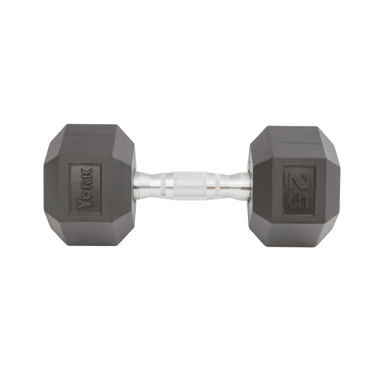
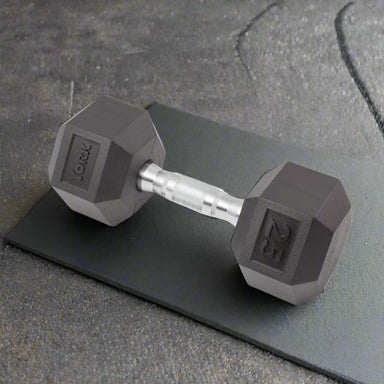
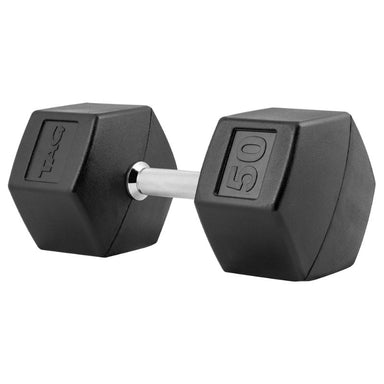
Rubber dumbbells help protect floors, reduce noise, and provide a practical option for home gyms, schools, and commercial facilities. Rubber hex dumbbells also remain stable when placed on the floor.
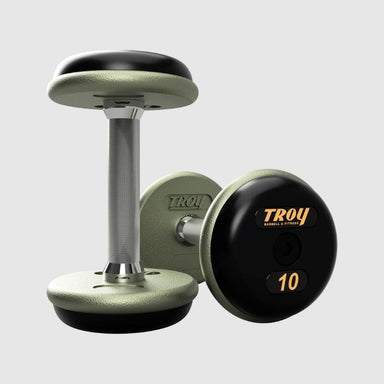
Urethane dumbbells are designed for busy commercial gyms and athletic facilities where weights are used throughout the day. Their coating resists marks, wear, and damage from repeated handling.
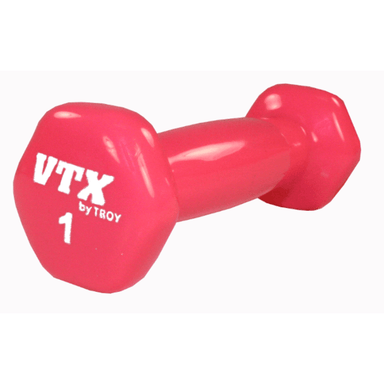
Neoprene dumbbells are commonly used for lighter resistance exercises, group fitness classes, rehabilitation, and beginner workouts. Their coated surface provides a comfortable grip and makes them easy to identify.
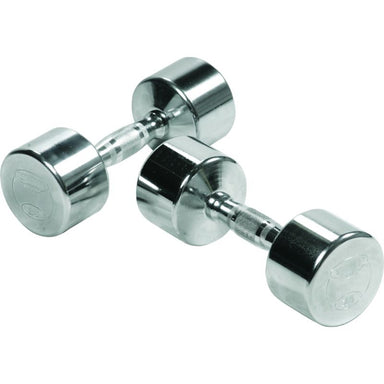
Cast iron dumbbells offer a traditional weight-room design with minimal coating. They are a straightforward choice for lifters who prefer a classic appearance and compact construction.
Choose the Right Dumbbell Shape and Style
Dumbbell shape affects stability, storage, handling, and exercise selection.
Hex and 12-sided dumbbells are less likely to roll when placed on the floor. They work well for home gyms, circuit training, and exercises that use the dumbbells as supports, such as renegade rows.
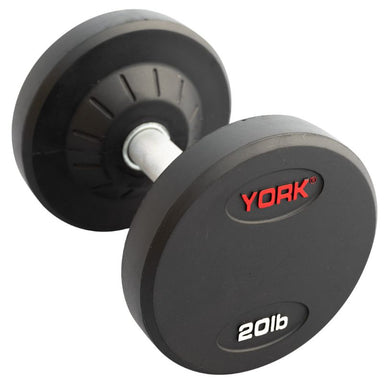
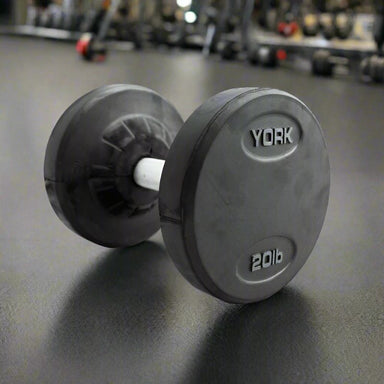
Round dumbbells are frequently used in commercial gyms because of their balanced design and consistent feel across a complete weight range.
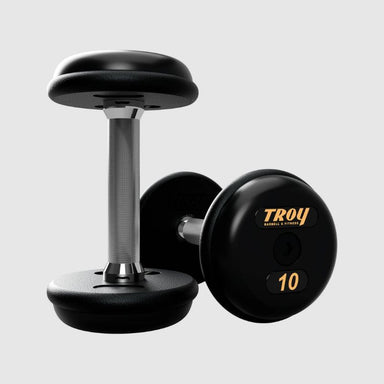
Pro-style dumbbells feature compact heads and straight or contoured handles. They are commonly selected for traditional weight rooms, schools, and commercial fitness facilities.
Adjustable dumbbells combine several weight choices in a smaller footprint. They can be helpful in home gyms where storage space is limited.
Select the Right Dumbbell Weights and Set Size
Consider your current strength level, planned exercises, available space, and future training needs when choosing dumbbell weights.
Beginners and group fitness users may need lighter weights for controlled movements, while strength-focused lifters may require a broader range for presses, rows, squats, and lower-body exercises. Buying several individual pairs allows you to build your collection gradually.
A complete dumbbell set provides consistent weight increments and makes it easier for multiple users to train at the same time. Available options may include starter ranges, midweight sets, heavier commercial runs, and full sets with storage racks.
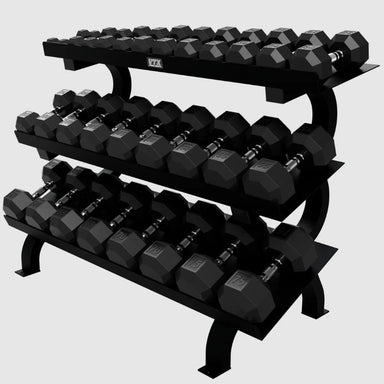
For a cleaner and more organized workout area, consider a dumbbell set with a vertical, two-tier, three-tier, or saddle-style rack. Always verify the included weight range, number of pairs, rack capacity, and available floor space before ordering.