Neoprene feels friendly; rubber means business. The short answer? Neoprene dumbbells are better for lighter studio classes, while rubber dumbbells are better for heavier, more versatile training. Keep reading to compare grip, durability, weight ranges, and which of our best-selling dumbbells fits your studio best.
Quick Answer
Neoprene vs rubber dumbbells: which is better?
Neoprene is usually the better choice for group fitness, barre, aerobics, senior classes, and other workouts built around lighter weights and lots of repetitions. Rubber dumbbells make more sense when members need heavier loads, progressive strength training, and a broader commercial weight range.
What is the difference between neoprene dumbbells and rubber dumbbells?
Neoprene dumbbells normally have a soft coating that covers most or all of the dumbbell, including the handle. Rubber dumbbells usually have rubber-coated heads with a steel or chrome handle.
Which is better for commercial gyms: neoprene or rubber dumbbells?
Rubber is the stronger all-around choice for a commercial free-weight area. It handles heavier training, comes in more weight options, and fits a wider range of members.
Which is better for fitness studios and group classes?
Neoprene usually wins for dedicated classes. The softer grip, lighter weights, color coding, and quiet handling can make a crowded studio run much more smoothly.
Quick recommendations by facility type
Group fitness studio: neoprene. HIIT studio: both. General commercial gym: rubber. Hotel or apartment gym: neoprene for light training plus rubber for heavier strength work.
What Are Neoprene Dumbbells?
What is a neoprene dumbbell?
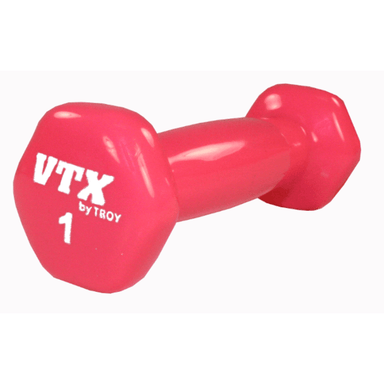
A neoprene dumbbell is a fixed dumbbell covered with a soft synthetic material called neoprene. The coating creates the slightly cushioned feel many people associate with studio weights.
How neoprene dumbbells are constructed
Most neoprene dumbbells use a solid weighted core covered by the neoprene exterior. Unlike many rubber dumbbells, the coating often continues across the handle.
Cast iron cores with neoprene coating
Cast iron is commonly used inside because it keeps the dumbbell relatively compact while providing the required weight.
Why neoprene feels softer than exposed metal
Your hand touches the coating instead of bare steel. During a class with curls, presses, raises, and lunges repeated for 30 or 40 minutes, that softer surface can feel noticeably friendlier.
Typical neoprene dumbbell weight ranges
Neoprene is most common in lighter weights. That makes it a natural match for group fitness rather than heavy free-weight training.
Color-coded neoprene dumbbells
Color coding is surprisingly useful in a busy class. An instructor can say, “Grab your lighter pair,” and members can spot the right weight without reading tiny markings.
Neoprene hex vs round dumbbells
Hex or flattened designs resist rolling. Round versions can look tidy on a studio rack but may move more easily on the floor.
Why neoprene dumbbells are popular in studio classes
They are comfortable, quiet, easy to recognize, and well suited to lighter movements performed for higher repetitions.
Is neoprene a brand or a material?
Neoprene is a material, not a dumbbell brand. Multiple manufacturers use it in their own dumbbell lines.
Who should choose neoprene dumbbells?
They are a strong fit for group fitness studios, hotels, senior programs, schools, boutique facilities, and gyms with a dedicated light-training area.
What Are Rubber Dumbbells?
How rubber dumbbells are constructed
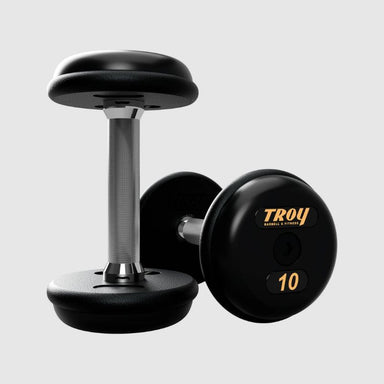
Rubber dumbbells generally place a protective rubber coating around the weighted heads while leaving the handle exposed.
Rubber-coated steel or cast iron cores
The internal construction varies by brand and model. For commercial buyers, the quality of the head-to-handle connection matters just as much as the rubber itself.
Rubber hex dumbbells
Rubber hex dumbbells are popular because the flat sides resist rolling. They work well for presses, rows, lunges, carries, and floor-based exercises.
Round rubber dumbbells
Round designs provide the familiar commercial-gym appearance often seen in full free-weight areas.
Multi-sided rubber dumbbells
Eight-, ten-, and twelve-sided heads offer a middle ground. They resist rolling without using the traditional six-sided hex shape.
Rubber-coated pro-style dumbbells
These combine a classic bodybuilding-style shape with added protection around the weighted heads.
Typical commercial rubber dumbbell weight ranges
Rubber has a major advantage here. Facilities can build everything from a small 5–30 lb studio rack to complete 5–100 lb commercial sets and heavier.
Why rubber dumbbells are common in commercial gyms
They simply cover more training situations. A single rubber rack can serve beginners in the morning and stronger members later the same day.
Who should choose rubber dumbbells?
General commercial gyms, personal training studios, schools, HIIT facilities, and strength-focused spaces are the obvious candidates.
Neoprene vs Rubber Dumbbells: What’s the Difference?
Neoprene coating vs rubber coating
Neoprene usually wraps most of the dumbbell. Rubber typically protects the heads while leaving the handle metal.
Grip feel
Neoprene feels softer. Rubber dumbbells often feel more like traditional commercial weights because of their knurled handles.
Handle comfort
For long classes, neoprene can be more forgiving. For heavier lifts, a knurled steel handle may feel more secure.
Weight range
Rubber wins easily once the workout moves beyond lighter studio weights.
Head shape
Both materials appear in anti-roll designs, but rubber offers more commercial shapes and styles overall.
Durability
Commercial rubber usually handles heavier daily use better.
Impact resistance
Rubber dumbbells are better suited to occasional harder contact. Neither style should be treated like a bumper plate, though.
Floor protection
Both help compared with exposed metal. Proper flooring still matters, especially once heavier rubber dumbbells enter the room.
Noise
Both are relatively quiet, which is a big plus for studios, hotels, and apartment fitness centers.
Odor
New rubber can have a more noticeable smell. Good ventilation usually reduces it over time.
Cleaning and hygiene
Both are easy to wipe down when you use cleaners appropriate for the material.
Size and storage
Light neoprene sets can be stored very efficiently. A complete rubber strength rack naturally takes up more room.
Price
The total cost depends more on weight range, quantity, and rack setup than material alone.
Commercial lifespan
For demanding mixed-use facilities, rubber generally has the advantage.
Long-term value
Neoprene offers excellent value for lighter classes. Rubber provides better long-term versatility.
Neoprene vs Rubber Dumbbells: Head-to-Head Comparison
Which has the better grip?
Neoprene wins for softness. Rubber dumbbells with knurled steel handles win when grip security under heavier loads matters more.
Which is more comfortable for high-repetition classes?
Neoprene.
Which lasts longer?
Rubber generally handles tougher commercial use better.
Which handles drops better?
Rubber.
Which protects studio flooring better?
Both are floor-friendly compared with exposed metal, although actual protection still depends on weight and how the dumbbell is used.
Which is quieter?
Both perform well.
Which is easier to clean?
Neither is difficult. The key is using a cleaner that will not dry out or damage the coating.
Which offers more weight choices?
Rubber.
Which works better for beginners?
Neoprene is especially approachable.
Which works better for heavier strength training?
Rubber.
Which is better for commercial use?
Rubber is better for an entire commercial gym. Neoprene can be the better purchase for a dedicated studio zone.
Which offers better overall value?
For many facilities, the best value comes from combining the two instead of forcing one dumbbell type to do everything.
Advantages and Disadvantages of Neoprene Dumbbells
Advantages of neoprene dumbbells
Soft and comfortable grip
The fully coated feel works well during longer sessions.
Good control during high-repetition exercises
Members can move through curls, raises, presses, and lunges without an aggressive metal grip.
Color coding makes weights easy to identify
This keeps classes moving and reduces the scramble around the rack.
Quiet during group classes
Twenty people changing weights at once creates far less racket than twenty pairs of exposed metal dumbbells.
Gentle contact with studio flooring
The coating helps soften ordinary floor contact.
Useful lighter weight increments
This makes progression easier for beginners and high-repetition programming.
Excellent for aerobics and group fitness
That is arguably where neoprene makes the most sense.
Easy for beginners to recognize and use
There is very little setup or explanation required.
Disadvantages of neoprene dumbbells
Limited heavier weight ranges
They cannot replace a complete commercial strength rack.
Not ideal for repeated heavy drops
Neoprene is designed for controlled studio use, not rough strength-floor treatment.
Coating can wear with demanding commercial use
Inspect popular weights regularly for tears or exposed core material.
Less suitable for serious strength training
Rubber, urethane, or steel is usually the better route.
Large class sets require dedicated storage
A few lightweight dumbbells look compact until you need three dozen pairs.
Advantages and Disadvantages of Rubber Dumbbells
Advantages of rubber dumbbells
Greater durability for heavier training
Rubber models are built for a tougher day-to-day workload.
Much wider commercial weight ranges
You can create anything from a small studio rack to a serious 100-plus-pound lineup.
Better suited to strength training
Presses, rows, carries, squats, and lunges all fit naturally.
Rubber hex heads resist rolling
That matters more than you think in a crowded circuit class.
Good floor protection
The rubber coating helps reduce harsh metal contact.
Wide choice of commercial rack packages
This makes complete studio installations easier to plan.
Strong choice for mixed-use gyms
Rubber works for both general fitness and more serious strength training.
Disadvantages of rubber dumbbells
Less comfortable for some long-duration studio classes
Knurled steel can feel aggressive after hundreds of repetitions.
New rubber may have an odor
This can be more noticeable in smaller enclosed studios.
Heavier sets require more rack space
A complete 5–100 lb collection needs proper planning.
More equipment than some light-class studios actually need
If your heaviest dumbbell is rarely above 10 lbs, a full rubber strength rack may simply be overkill.
Neoprene vs Rubber Dumbbells for Studio Classes
Group fitness classes
Neoprene is the natural fit for lighter, repetitive class formats.
Aerobics
Neoprene works especially well because the weights stay light and comfortable.
HIIT classes
A mixed lineup works better. Use neoprene for lighter conditioning and rubber when strength intervals get heavier.
Barre
Neoprene wins easily.
Pilates-inspired strength classes
The soft grip and lighter increments are well suited to controlled movements.
Circuit training
Rubber becomes more useful as loads increase.
Senior fitness classes
Neoprene offers easy identification and beginner-friendly handling.
Rehabilitation and light-resistance training
Lighter neoprene weights can be useful in appropriately supervised programs.
Bootcamp-style classes
Rubber usually handles the broader exercise range better.
Which is better when dozens of members share dumbbells?
Neoprene is great for lighter classes, while rubber provides more flexibility when participants vary widely in strength.
Neoprene vs Rubber Dumbbells for Group Fitness
Fast weight changes during classes
Fixed dumbbells are already fast to use. No collars, plates, or adjustment mechanisms are involved.
Color-coded weight identification
Neoprene takes the win here.
Grip comfort during long sets
Again, neoprene has the edge.
Noise from multiple users
Both are much quieter than exposed metal.
Storage between classes
A dedicated neoprene club rack can hold many light pairs without taking over the room.
Cleaning shared dumbbells
Build cleaning into your class turnover instead of treating it as an afterthought.
How many pairs should a group fitness studio buy?
Plan around your maximum class size, then add extra pairs of the weights members reach for most often.
Which material is better for large classes?
Neoprene for light group fitness. A mix of neoprene and rubber works better when strength levels vary.
Neoprene vs Rubber Dumbbells for Grip and Comfort
Fully coated neoprene handles
They feel soft and consistent from end to end.
Knurled steel handles on rubber dumbbells
These feel more secure under heavier loads.
Grip with sweaty hands
A well-knurled steel handle can provide better traction when exercises get demanding.
High-repetition exercises
Neoprene is often more comfortable.
Handle diameter
This should still be checked because an uncomfortable diameter can make either material unpleasant.
Grip fatigue
For a 45-minute class, softer handles may reduce irritation.
Which feels better during a 30–60 minute class?
For lighter repeated movements, neoprene usually wins.
Neoprene vs Rubber Dumbbells for Durability
Repeated daily studio use
Both can perform well if they are used for the jobs they were designed to handle.
Rack and storage contact
Good storage helps prevent unnecessary wear.
Accidental drops
Rubber is better equipped for harder commercial use.
Sweat exposure
Regular wiping keeps either coating cleaner and easier to inspect.
Cleaning chemicals
Avoid aggressive cleaners unless the manufacturer specifically approves them.
Neoprene coating wear
Watch for tears, peeling, or areas where the core starts showing.
Rubber coating wear
Scuffs are normal. Cracks or separation deserve more attention.
Which lasts longer in a commercial facility?
Under heavier use, rubber generally lasts better.
Why build quality matters more than coating alone
A poorly built rubber dumbbell is not automatically better than a well-made neoprene one. Construction still matters.
Neoprene vs Rubber Dumbbells for Floor Protection and Noise
Studio flooring
Both coatings are more forgiving than bare metal.
Hardwood and finished floors
Use proper protective mats even with lightweight coated dumbbells.
Commercial rubber flooring
Either material works well on appropriate gym flooring.
Noise during group classes
Neoprene is particularly quiet when dozens of light pairs are being moved around.
Accidental floor contact
Rubber gives heavier dumbbells extra protection.
Which is better for upstairs studios?
Neoprene works beautifully for light classes. Rubber is the better choice when heavier resistance is unavoidable.
Which is better for hotels and apartments?
Both are useful, but neoprene is especially attractive for quieter studio-style training.
Neoprene vs Rubber Dumbbells: Weight Range
Lightweight studio dumbbells
Neoprene owns this category.
1–5 lb dumbbells
Ideal for barre, aerobics, senior programs, and light conditioning.
5–10 lb dumbbells
A very useful range for group fitness and beginners.
10–15 lb dumbbells
Both materials can work comfortably here.
15–25 lb dumbbells
Rubber starts becoming more practical.
Dumbbells above 25 lbs
Rubber is usually the clear choice.
When neoprene reaches its practical limit
If members regularly need heavier presses, rows, or lunges, neoprene has done its job and rubber should take over.
When rubber dumbbells become the better choice
Once progressive strength is part of your program, rubber becomes much more valuable.
Building a complete studio weight progression
A smart studio might use neoprene at the lighter end and switch to rubber as weights increase.
Neoprene vs Rubber Hex Dumbbells
Is neoprene the same as hex?
No. Neoprene is a material. Hex describes the shape of the dumbbell head.
Why material and shape are different comparisons
You can have a neoprene dumbbell and a rubber dumbbell that are both hex-shaped.
Neoprene hex dumbbells
They combine soft grip with anti-roll stability.
Rubber hex dumbbells
They offer the same anti-roll benefit with greater strength-training versatility.
Anti-roll stability
Both work well when the heads are flat-sided.
Floor exercises
Rubber hex dumbbells are especially handy during circuits and supported movements.
Handle comfort
Neoprene feels softer; rubber models usually provide a more traditional steel grip.
Weight range
Rubber wins.
Commercial durability
Rubber usually handles tougher environments better.
Which works better for studios?
Neoprene for lighter classes.
Which works better for strength areas?
Rubber hex.
Neoprene vs Rubber-Coated Dumbbells
Fully neoprene-coated design
The coating normally continues across the handle for a softer overall feel.
Rubber-coated head with steel handle
This feels more like a traditional commercial dumbbell.
Grip feel
Neoprene favors comfort; knurled steel favors heavier grip security.
Head protection
Both coatings help protect the weighted core and nearby surfaces.
Cleaning
Both should be wiped regularly in shared studios.
Weight progression
Rubber offers significantly more room to grow.
Which design works better for shared studio use?
Neoprene for lighter classes, rubber when the same studio also offers strength training.
Neoprene vs Metal Dumbbells
Soft coating vs exposed metal
Neoprene feels warmer and more forgiving in the hand.
Grip comfort
Neoprene is generally more comfortable for beginners.
Noise
Neoprene wins.
Floor contact
Neoprene is gentler.
Compactness
Dense metal dumbbells can have smaller heads.
Heavy weight ranges
Metal-based commercial designs dominate this category.
Which is better for group fitness?
Neoprene.
Which is better for traditional strength training?
Rubber-coated or exposed-metal commercial dumbbells.
Are Neoprene Dumbbells Safe?
What neoprene is
Neoprene is a synthetic material used in sporting goods and many other protective products.
Are neoprene dumbbells toxic?
Material formulations differ by manufacturer. If this is an important purchasing concern, check the brand’s product and safety documentation rather than assuming every neoprene dumbbell uses the same formulation.
Skin contact and normal gym use
Use the product as intended and follow manufacturer recommendations.
New-product odor
Some coated equipment may have a mild smell when new.
Cleaning shared neoprene dumbbells
Use compatible cleaning products and wipe them regularly.
When damaged coating should be replaced
Replace or service a dumbbell when damage exposes the core or interferes with safe handling.
Why buyers should follow manufacturer care instructions
The wrong cleaner or storage conditions can shorten the life of any coating.
Neoprene vs Rubber Dumbbells for Storage
Studio dumbbell racks
A good rack keeps class changes fast and the floor clear.
Vertical racks
These are useful when every square foot matters.
Horizontal racks
They make weights easy to see and return.
A-frame racks
A compact option for smaller lightweight sets.
Color-coded storage
Neoprene makes visual organization particularly easy.
Storing dozens of lightweight pairs
Plan around duplicates, not just one pair of each weight.
Rack capacity for group classes
Start with maximum participant count and build from there.
Which option uses floor space more efficiently?
Light neoprene club packages can be extremely space-efficient.
Best Neoprene Dumbbells from Dumbbells Direct
Individual Neoprene Dumbbells
VTX GTD Neoprene Textured Hex Dumbbell
A practical option for studios wanting a comfortable grip and anti-roll head.
York Neoprene Fitbell
A strong fit for lighter training and group fitness.
York Neoprene Hexagon Fitbell with Cast Ergo Handle – Black
A useful choice for studios that prefer a more uniform black equipment setup.
Neoprene Dumbbell Sets
Body-Solid Neoprene Dumbbell Sets – BSTNDS
A straightforward way to build a coordinated studio weight range.
York Neoprene Round Club Pack – Multi Colored
The color-coded approach works particularly well in instructor-led classes.
Best Neoprene Dumbbell Sets with Racks for Studios
VTX Neoprene Dumbbell Set with Rack – THD-NPAC
VTX Aerobic Pac Neoprene Dumbbell Set with Rack – MDR-DNPAC
YORK 15612 Black Neoprene Hexagon Fitbell Club Pack with Rack
Body-Solid Commercial Neoprene Dumbbell Package – GDR500-NEOPAC
Buying the rack and weights together can save a lot of guesswork. It also prevents the classic studio problem: the dumbbells arrive first, then everyone realizes there is nowhere sensible to put them.
Best Rubber Dumbbells for Studios That Need Heavier Weights
Rubber Hex Dumbbells
USA Sports by Troy HD-R Rubber Hex Dumbbells
York Rubber Hex Dumbbells
TAG Fitness Rubber Hex Dumbbells
Body-Solid Rubber Hex Dumbbells
Intek Strength Rubber Hex Dumbbells
TKO Strength Tri-Grip Rubber Hex Dumbbells
Multi-Sided Rubber Dumbbells
TROY TSD-R 12-Sided Rubber Encased Dumbbells
VTX SD-R 8-Sided Rubber Encased Dumbbells
TAG Fitness R8DB 8-Sided Virgin Rubber Dumbbells
TKO Strength 829TR 10-Sided Pro Rubber Dumbbells
These options make more sense when a studio wants to move beyond light group fitness and offer real strength progression.
Best Rubber Dumbbell Sets with Racks for Studios
VTX 8-Pair Rubber Dumbbell Set with Rack – VERTPAC-SDR25
VTX 5–30 lb Rubber Dumbbells with A-Frame Rack – VERTPAC-SDR30
USA Sports by Troy 5–30 lb Rubber Hex Dumbbell Set with Rack – VERTPAC-HDR30G
TKO S826-RXL8 3–25 lb Rubber Hex Dumbbell Set with Rack
TKO S826-RXM8 5–30 lb Rubber Hex Dumbbell Set with Rack
TROY COMMPAC-TSDR50 5–50 lb Rubber Dumbbell Set with Rack
Neoprene vs Rubber Dumbbell Sets with Racks
Why studios should consider complete packages
A matched package simplifies storage, purchasing, and floor planning.
Small class packages
Prioritize duplicate popular weights rather than buying an unnecessarily wide range.
Full group-fitness packages
Build around the largest class you realistically expect to run.
8-pair racks
Useful for small training studios.
Vertical racks
Excellent for saving floor space.
A-frame racks
Simple and effective for lighter sets.
Horizontal racks
Easy for members to browse quickly.
Multi-tier racks
Better for wider rubber dumbbell ranges.
Which rack style works best for studio classes?
The best rack is the one members can use without forming a queue between exercises.
Which material provides better value in a complete package?
Neoprene wins for light class packages; rubber wins for versatility.
How Many Dumbbells Does a Group Fitness Studio Need?
Number of class participants
Your maximum class size should drive your first calculation.
One pair per participant vs shared weights
One pair per member keeps classes moving, although some workouts require two or three weight choices.
Buying duplicate popular weights
It is usually smarter to buy extra mid-range pairs than one pair of every possible weight.
Light, medium and heavy class options
Three clear levels work well for many studios.
Example weight mix for 10 members
Provide enough usable pairs for all 10 members plus extra light and medium choices.
Example weight mix for 20 members
Increase duplicates of popular weights instead of simply doubling your maximum weight.
Example weight mix for 30 members
Two smaller racks may improve traffic flow more than one crowded rack.
Planning rack capacity before buying
Storage should be part of the order, not tomorrow’s problem.
Neoprene vs Rubber vs Vinyl Dumbbells
Neoprene coating
Soft and comfortable for studio work.
Rubber coating
Better suited to heavier commercial use.
Vinyl coating
Another practical lightweight group-fitness option.
Grip comfort
Neoprene often feels softer.
Durability
Rubber usually wins when loads and usage increase.
Odor
Rubber can have the strongest new-product smell.
Cleaning
All three should be cleaned with compatible products.
Weight ranges
Rubber offers the broadest choice.
Price
Compare actual packages rather than assuming one material is always cheaper.
Which is best for group fitness studios?
Neoprene is a strong first choice.
Neoprene vs Rubber vs Urethane Dumbbells
Neoprene for light studio training
Best for comfort and lightweight classes.
Rubber for versatile commercial training
A strong middle ground between price, durability, and weight range.
Urethane for demanding commercial environments
Often chosen when abrasion resistance and long-term appearance matter.
Grip differences
Neoprene usually coats the handle, while rubber and urethane models commonly use steel handles.
Durability differences
Rubber and urethane usually handle heavier commercial use better.
Weight ranges
Rubber and urethane dominate once weights get heavier.
Odor
Urethane usually has less noticeable odor than many rubber options.
Price
Urethane is often the more expensive choice.
Which material should a studio buy?
Buy for your programming. There is no benefit in paying for a heavy-duty urethane rack if your clients never lift above 10 lbs.
Are Neoprene Dumbbells Good for Commercial Gyms?
Where neoprene works well
Dedicated studio and lightweight training areas.
Dedicated studio and group fitness areas
This is where neoprene makes the most sense.
Beginner training areas
Soft handles and clear weight identification make them approachable.
Rehabilitation and senior fitness
Lighter increments can be useful in appropriately supervised settings.
Where neoprene reaches its limits
Heavy strength training.
Why rubber works better in free-weight areas
Rubber offers more weights and tolerates a wider range of exercises.
Can a commercial gym use both?
Absolutely. In many cases, it should.
Which Dumbbells Are Best for Different Studios?
Group fitness studios
Neoprene.
Boutique fitness studios
Neoprene or a mixed setup.
Personal training studios
Rubber offers more progression.
Pilates studios
Neoprene.
Barre studios
Neoprene.
HIIT studios
Use both.
Hotel fitness centers
Neoprene for light training and rubber for the main strength area.
Apartment fitness centers
Rubber is usually more versatile.
Schools and universities
Rubber in strength rooms, neoprene in class spaces.
Corporate wellness centers
A modest mixed range works well.
Senior fitness facilities
Neoprene is usually the better fit.
Rehabilitation-oriented facilities
Light neoprene dumbbells can support appropriately supervised programming.
Which Is Better for Small Studios?
Lightweight neoprene sets
Excellent when the studio does not need heavy resistance.
Compact rack packages
Vertical and A-frame storage can save valuable floor space.
Rubber hex options for heavier members
A few heavier rubber pairs can extend the studio’s training options.
How much weight range does a small studio really need?
Buy for the clients you have. An unused 80 lb pair is just expensive decoration.
When a mixed neoprene and rubber setup saves money
Use neoprene throughout the lighter range, then add rubber only where heavier resistance is actually needed.
Best value per square foot
A carefully planned mixed rack often wins.
Should Your Studio Buy Neoprene and Rubber Dumbbells?
When one material is enough
A barre or aerobics studio may never need anything beyond neoprene.
Neoprene for lighter studio weights
Use it for high-repetition and beginner-friendly programming.
Rubber for medium and heavier weights
Add rubber where progressive strength becomes important.
Example mixed dumbbell lineup
A studio might keep the lightest class weights in neoprene and transition to rubber for the heavier range.
How to avoid unnecessary duplicate weights
Duplicate the weights members actually use most.
When to expand the rubber range
Add heavier options as your programming evolves.
Why a mixed setup can serve more members
Beginners get comfort, stronger clients get progression, and the studio avoids buying equipment nobody needs.
Neoprene vs Rubber Dumbbell Maintenance
Cleaning neoprene dumbbells
Use a mild material-compatible cleaner.
Cleaning rubber dumbbells
Remove sweat and grime regularly.
Which cleaners should you avoid?
Avoid harsh chemicals unless approved by the manufacturer.
Sweat and shared equipment
High-touch equipment needs a consistent routine.
Disinfecting between classes
Build a few minutes of equipment care into class turnover.
Proper rack storage
Good storage protects coatings and reduces trip hazards.
Inspecting neoprene coatings
Check for tearing or exposed core material.
Inspecting rubber coatings
Watch for cracking or separation.
Which material is easier to maintain?
Both are manageable with basic, consistent care.
Neoprene vs Rubber Dumbbell Price & Overall Value
Individual dumbbell price
Weight, construction, and brand all affect pricing.
Neoprene set cost
Light weights are less expensive individually, but large classes require lots of pairs.
Rubber set cost
Costs rise quickly as the weight range gets heavier.
Rack cost
Storage should be included in the project budget.
Number of pairs required
A class studio often needs more duplicates than a standard strength area.
Replacement frequency
Choose products designed for the level of use you expect.
Weight range and total material cost
Every extra heavy pair adds material, rack space, and shipping weight.
Buying studio packages
Dumbbell-and-rack packages can simplify the purchase.
Bulk pricing and custom quotes
If you are outfitting a complete class room, ask Dumbbells Direct about custom bulk pricing rather than pricing every pair separately.
Which offers better long-term value for studios?
Neoprene offers great value for dedicated light classes. Rubber provides better value when one rack must cover many training styles.
What Should Gym Owners Check Before Choosing Neoprene vs Rubber Dumbbells?
Facility type
Start with how the room is actually used.
Type of classes
High-repetition formats favor neoprene.
Number of participants
Class size determines how many duplicate pairs you need.
Expected daily usage
Higher traffic demands stronger commercial construction.
Member demographics
Consider experience, strength, age range, and training goals.
Required weight range
This can decide the purchase almost immediately.
Weight increments
Smaller jumps are useful for beginners and group fitness.
Grip comfort
Neoprene is softer; metal-handled rubber gives a more traditional strength grip.
Dumbbell shape
Hex and multi-sided designs resist rolling.
Anti-roll design
Especially useful in fast-moving classes.
Floor type
Protect delicate flooring regardless of coating.
Noise restrictions
Both materials work well in quieter environments.
Cleaning frequency
Choose materials your team can maintain consistently.
Rack compatibility
Confirm the entire set fits properly.
Available storage space
Measure before ordering.
Commercial warranty
Make sure the warranty applies to your intended facility.
Budget
Compare the total package, including racks and shipping.
Future expansion
Leave room for heavier rubber pairs if your studio grows into strength training.
Which Dumbbells Direct Products Fit This Comparison Best?
Best Neoprene Options for Group Fitness
VTX GTD Neoprene Textured Hex Dumbbells
York Neoprene Fitbells
York Neoprene Hexagon Fitbells
Body-Solid Neoprene Dumbbells – BSTNDS
Best Complete Neoprene Packages
VTX THD-NPAC Neoprene Dumbbell Set with Rack
VTX MDR-DNPAC Aerobic Pac
YORK 15612 Neoprene Club Pack with Rack
Body-Solid GDR500-NEOPAC Commercial Neoprene Package
Best Rubber Options for Studio Strength Training
TROY TSD-R 12-Sided Rubber Dumbbells
VTX SD-R 8-Sided Rubber Dumbbells
USA Sports HD-R Rubber Hex Dumbbells
TAG Fitness Rubber Hex Dumbbells
Best Rubber Packages for Small Studios
VTX VERTPAC-SDR25
VTX VERTPAC-SDR30
USA Sports VERTPAC-HDR30G
TKO S826-RXL8
TKO S826-RXM8
Commercial Studio Dumbbell Buying Checklist
Studio type
Number of class participants
Neoprene vs rubber construction
Weight range
Weight increments
Number of duplicate pairs
Grip
Shape
Floor protection
Noise
Rack capacity
Available floor space
Cleaning and maintenance
Commercial warranty
Budget
Future expansion
A good studio setup should still make sense when every popular pair is in use and another class begins in ten minutes. If it only looks organized when the room is empty, the plan needs work.
Frequently Asked Questions
What is the difference between neoprene dumbbells and rubber dumbbells?
Neoprene usually covers the whole dumbbell and suits lighter studio training. Rubber generally covers the heads and supports a much broader strength range.
Which is better, neoprene or rubber dumbbells?
Neoprene is better for lighter classes; rubber is better for heavier training.
Is neoprene better than rubber?
Only for certain uses. Neither material is automatically better.
Which is better for commercial gyms: neoprene or rubber dumbbells?
Rubber is generally the stronger all-around commercial choice.
What is a neoprene dumbbell?
A fixed dumbbell covered in a soft synthetic coating.
Is neoprene a brand or a material?
It is a material.
Are neoprene dumbbells safe?
Use commercially manufactured products according to manufacturer guidance.
Are neoprene dumbbells toxic?
Formulations vary, so buyers with material concerns should check product-specific manufacturer information.
Are neoprene dumbbells good for commercial gyms?
Yes, especially in studio and group-fitness areas.
Are neoprene dumbbells good for beginners?
Yes. Their softer grip and lighter weight options are beginner-friendly.
Are neoprene dumbbells good for HIIT?
Yes for lighter intervals. Rubber works better when the workout gets heavier.
Are neoprene dumbbells good for Pilates and barre?
Yes, particularly for lighter resistance.
Are rubber dumbbells better for strength training?
Generally, yes.
Is neoprene or rubber better for sweaty hands?
Neoprene feels comfortable, but a properly knurled rubber-dumbbell handle can provide better grip for heavy lifting.
Which lasts longer, neoprene or rubber dumbbells?
Commercial rubber usually lasts better under heavier use.
Do neoprene dumbbells damage floors?
They are relatively floor-friendly, but any dumbbell can damage a delicate surface if dropped.
Can neoprene dumbbells be dropped?
They are best used with controlled placement rather than repeated dropping.
What weights should a fitness studio buy?
Base the range on your programming and clients, not another gym’s rack.
How many dumbbell pairs should a group fitness studio have?
Plan around maximum class capacity and add duplicates of the most popular weights.
Are neoprene dumbbells better than vinyl dumbbells?
Neoprene often feels softer, but both can work well in lightweight studio training.
Is neoprene better than rubber hex dumbbells?
For light group fitness, often yes. For heavier strength training, rubber hex is better.
What should gym owners check before choosing neoprene vs rubber dumbbells?
Compare weight range, class size, grip, durability, storage, flooring, noise, cleaning, warranty, and total cost.
Which Dumbbells Direct products fit this comparison best?
VTX, York, and Body-Solid offer strong neoprene studio options, while TROY, VTX, USA Sports, TAG, TKO, Body-Solid, and Intek provide rubber choices for heavier training.
Final Verdict
Best for group fitness studios
Neoprene.
Best for Pilates and barre
Neoprene.
Best for beginners
Neoprene.
Best for HIIT studios
A mix of neoprene and rubber.
Best for heavier strength training
Rubber.
Best for grip comfort
Neoprene for lighter high-repetition classes.
Best for commercial durability
Rubber.
Best for floor protection
Both perform well when paired with suitable studio flooring.
Best for lightweight class sets
Neoprene.
Best for broader weight ranges
Rubber.
Best for small studios
Neoprene works well when programming stays light. A mixed setup is smarter when stronger clients need more resistance.
Best overall value
For a dedicated group-fitness studio, neoprene offers excellent value. For a studio that needs one dumbbell rack to cover almost everything, rubber is more versatile.
Neoprene vs rubber dumbbells: which should your studio buy first?
Start with neoprene if your business revolves around aerobics, barre, Pilates-inspired classes, senior fitness, or lighter group training. Start with rubber if strength training is a major part of the program.
For many studios, the winning answer is not “either/or.” Use neoprene for lighter class weights and rubber for the heavier end of the rack. That way, each material is doing the job it actually does best.
Request a quote, bulk discounts & this week’s 5% coupon
Dumbbells Direct offers individual dumbbells, complete sets, and rack packages for both studio and commercial use. If you are outfitting a full class room or purchasing multiple sets, ask about custom bulk pricing.
We also run a rotating 5% off promotion each week using different coupon codes. Check the current offer before ordering so you can compare the best available price for your facility.





Leave a comment