Vinyl is the friendly class regular; rubber is the workhorse. The short answer? Vinyl dumbbells suit light studio workouts, while rubber dumbbells are better for heavier, everyday gym use. Keep reading to compare durability, grip, weight range, value, and which best-selling dumbbells fit your space best.
Quick Answer
Vinyl vs rubber dumbbells: which is better?
For general-purpose gyms, rubber usually wins. Vinyl makes more sense when most workouts use lighter weights for classes, rehab-style training, or beginner programs.
What is the difference between vinyl dumbbells vs rubber dumbbells?
Vinyl dumbbells usually have a smooth, fully coated exterior and are common in lighter weights. Rubber dumbbells tend to use coated metal heads with separate steel handles and come in much broader weight ranges.
Which is better for commercial gyms: vinyl dumbbells vs rubber dumbbells?
Rubber is typically better for the main strength floor because it handles wider weight ranges and tougher day-to-day use.
Which is better for small gyms?
If your gym needs one rack to serve lots of different people, rubber is more versatile. If your facility revolves around light classes, vinyl can save money without giving members more weight than they need.
Which is better for studios and group fitness?
Vinyl is a natural fit for aerobics, barre, senior fitness, and beginner classes. It is easy to grab, easy to identify, and not intimidating.
Quick recommendations by facility type
Group fitness: vinyl. Personal training: rubber. Small commercial gym: rubber. Mixed studio: vinyl for lighter weights and rubber for heavier ones.
What Are Vinyl Dumbbells?
What is a vinyl dumbbell?
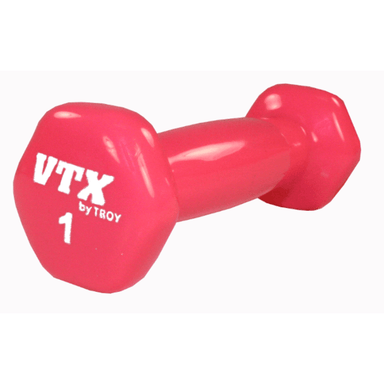
A vinyl dumbbell is a fixed-weight dumbbell covered with a smooth vinyl exterior. Think of the colorful weights lined up in an aerobics studio—that is where you will often see them.
How vinyl dumbbells are made
Construction differs by brand. Some use metal cores, while other fitness-style designs may use different internal materials.
Vinyl-coated cast iron dumbbells
When vinyl covers cast iron, the dumbbell stays fairly compact while gaining a softer outer surface.
Vinyl and plastic-style dumbbell construction
Not every “plastic-looking” dumbbell is built the same way, so check the product specifications instead of judging by appearance.
Why vinyl dumbbells are usually found in lighter weights
Vinyl is most useful where comfort and repetition matter more than heavy strength progression.
Typical vinyl dumbbell weight ranges
You will see vinyl most often in lightweight ranges used for classes and entry-level resistance training.
Color-coded vinyl dumbbells
Color coding is more useful than it sounds. In a 20-person class, spotting the right weight quickly keeps everyone moving.
Vinyl hex dumbbells
Hex heads resist rolling, which helps in compact studios where floor space is already crowded.
Round vinyl dumbbells
Round models are common in studio packages and high-pair-count class sets.
Why vinyl dumbbells are common in group fitness
They are simple, quiet, approachable, and well suited to high-repetition exercises.
Who should choose vinyl dumbbells?
Studios, senior programs, schools, hotels, and light-resistance facilities should give them a serious look.
What Are Rubber Dumbbells?
How rubber dumbbells are made
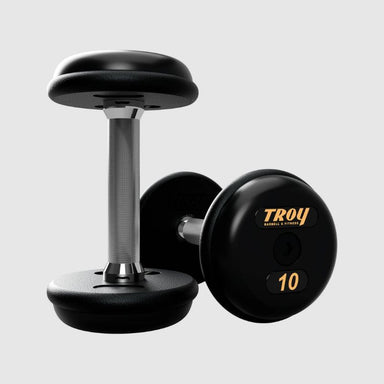
Most commercial designs use dense metal heads protected by rubber, usually paired with a steel or chrome handle.
Rubber-coated steel or cast iron cores
The dense core lets manufacturers offer heavier weights without making each dumbbell enormous.
Rubber hex dumbbells
Rubber hex dumbbells are popular because they do a little bit of everything: curls, presses, rows, carries, lunges, and floor work.
Round rubber dumbbells
Round heads give a classic commercial-gym look and are common in heavier racks.
Multi-sided rubber dumbbells
Eight-, ten-, and twelve-sided designs add stability without losing the look and feel of a commercial dumbbell.
Rubber-coated pro-style dumbbells
These combine traditional pro-style construction with protected heads.
Typical commercial rubber dumbbell weight ranges
Rubber ranges can start light and extend to 100 pounds or more, depending on the product line.
Why rubber dumbbells are common in commercial gyms
One rack can serve beginners at one end and experienced lifters at the other.
Who should choose rubber dumbbells?
Choose rubber if strength training, long-term flexibility, and frequent use are major priorities.
Vinyl vs Rubber Dumbbells: What’s the Difference?
Vinyl coating vs rubber coating
Vinyl feels smoother and more studio-oriented. Rubber is aimed more squarely at everyday strength training.
Core construction
Core materials vary, so the product specification matters as much as the outer coating.
Grip feel
Vinyl often feels softer. Rubber dumbbells usually give you a separate metal handle with more grip texture.
Handle design
Commercial rubber options offer more handle shapes, diameters, and knurling styles.
Weight range
Rubber has the clear advantage once your members need heavier weights.
Head size
Head size depends on the core, shape, and coating thickness—not just the listed weight.
Dumbbell shape
Vinyl commonly comes in round or hex styles. Rubber gives you hex, round, multi-sided, and pro-style options.
Durability
Rubber generally handles busy gym life better.
Impact resistance
Rubber is more forgiving when weights get bumped, knocked, or set down harder than intended.
Floor protection
Both help reduce harsh metal-on-floor contact, but proper gym flooring still matters.
Noise
Both are quieter than exposed metal dumbbells.
Odor
Fresh rubber may have a noticeable smell at first. Vinyl is usually less noticeable in that respect.
Cleaning and hygiene
Both can be cleaned easily with products that are safe for the manufacturer’s coating.
Storage requirements
Light vinyl sets are easy to pack into studio racks. Full rubber ranges take more space simply because there are more weights to store. For class-heavy rooms, Power Systems studio storage and group fitness gear is designed around exactly that kind of space.
Price
Vinyl can be economical for lightweight programs. Rubber costs rise as the set gets heavier and broader.
Commercial lifespan
Rubber usually makes more sense for heavily used strength areas.
Long-term value
The better value is the material that matches what your members actually do.
Vinyl vs Rubber Dumbbells: Head-to-Head Comparison
Which feels better in the hand?
Vinyl often feels friendlier during lighter, longer sessions.
Which lasts longer?
Rubber usually lasts longer under demanding commercial use.
Which handles frequent gym use better?
Rubber.
Which handles drops better?
Rubber, although no fixed dumbbell should be treated like a slam ball.
Which protects floors better?
Both help, but heavier rubber dumbbells still need suitable flooring.
Which is quieter?
Both perform well in noise-sensitive gyms.
Which is easier to clean?
There is little difference when both are maintained properly.
Which has less odor?
Vinyl generally has the edge.
Which offers more weight choices?
Rubber by a wide margin.
Which works better for beginners?
Vinyl is easy to approach, especially when colors make weight selection obvious.
Which works better for group fitness?
Vinyl for light classes; rubber when participants need heavier options.
Which works better for strength training?
Rubber.
Which is better for commercial gyms?
Rubber overall.
Which is better for small gyms?
Rubber for mixed-use gyms; vinyl for dedicated light-training facilities.
Which offers better overall value?
For many small gyms, the best answer is not one or the other—it is a smart mix.
Vinyl vs Rubber Dumbbells Pros and Cons
Vinyl dumbbell pros
Lower-cost option for light weights
Comfortable coated surface
Color coding is easy to identify
Quiet during group classes
Useful for beginners
Good for aerobics and light resistance
Easy to organize in studio racks
The biggest strength of vinyl is efficiency. If 15 people all need three- or five-pound weights, you do not need a commercial 100-pound rack to run that class well.
Vinyl dumbbell cons
Limited heavier weight options
Less suitable for repeated impact
Coating may split or crack with rough use
Limited strength progression
Not ideal as the only dumbbell type in a full commercial gym
Vinyl starts to feel restrictive once members want meaningful strength progression.
Rubber dumbbell pros
Better durability for demanding use
Much wider weight ranges
Better for progressive strength training
Good floor protection
Anti-roll hex and multi-sided designs
Many commercial rack packages available
Rubber works well when a small rack has to handle a surprisingly big list of exercises.
Rubber dumbbell cons
Higher initial cost than light vinyl sets
New rubber can have an odor
Full heavy sets take more space
Heavy commercial ranges may be unnecessary for light-class studios
Vinyl vs Rubber Dumbbells for Small Gyms
Why small gyms have different buying priorities
A large fitness center can dedicate an entire wall to dumbbells. A 700-square-foot studio cannot.
Floor space
Every pair should justify the space it occupies.
Rack capacity
Choose the rack and the weight range together, not as two separate purchases.
Number of simultaneous users
Peak-hour demand matters more than total membership.
Member strength levels
A beginner-heavy membership does not need the same rack as a strength-focused gym.
Training variety
Rubber supports more exercises and progression.
Purchase budget
Spend first on the weights members will reach for every day.
Replacement cost
Equipment that cannot handle your workload gets expensive fast.
When vinyl is enough for a small gym
Vinyl may be all you need for aerobics, senior fitness, and light resistance training.
When rubber becomes necessary
Rubber becomes useful once members need heavier rows, presses, carries, lunges, and squats.
When a mixed setup gives better value
Use vinyl for the lighter class weights and rubber where real strength progression begins.
Vinyl vs Rubber Dumbbells for Commercial Gyms
Daily traffic
Busy facilities generally favor rubber.
Shared equipment
Shared dumbbells need to survive constant handling and cleaning.
Commercial durability
Rubber is the stronger all-purpose choice.
Strength progression
Rubber gives members much more room to advance.
Weight availability
Commercial rubber ranges go significantly heavier.
Rack organization
Anti-roll designs and matching racks make a small space easier to manage.
Flooring considerations
Use proper gym flooring no matter which material you choose.
Why rubber usually wins on the main strength floor
It offers the better combination of durability, range, and versatility.
Where vinyl still makes sense in a commercial facility
Dedicated studios, warm-up areas, and lightweight class zones.
Vinyl vs Rubber Dumbbells for Group Fitness
Aerobics
Vinyl is a great match.
Barre
Light vinyl weights are easy to manage through long sets.
Pilates-inspired classes
Controlled light resistance suits vinyl well.
Senior fitness
Simple weight choices and color coding can make classes easier to follow.
Beginner strength classes
Either material works depending on the required load.
Circuit training
Rubber becomes more useful as the exercises get heavier.
HIIT classes
A mixed setup gives instructors more flexibility.
Color-coded weight changes
Vinyl makes fast transitions almost foolproof.
Noise during large classes
Both are quieter than bare metal.
Which works better when dozens of members share dumbbells?
Vinyl is excellent for light group classes. Rubber is better when strength levels vary widely.
Vinyl Dumbbell Workouts: Where Do Vinyl Dumbbells Work Best?
High-repetition upper-body exercises
Shoulder raises
Light presses
Curls and triceps work
Weighted lunges
Aerobic classes
Barre and Pilates-inspired training
Senior fitness
A typical vinyl dumbbell workout works best when the goal is controlled resistance and repetition rather than maximum strength.
Where vinyl becomes limiting
Once members consistently need heavier presses, rows, carries, and leg exercises, rubber becomes far more practical.
Vinyl vs Rubber Dumbbells for Grip and Comfort
Fully coated vinyl handles
These can feel smooth and comfortable during light training.
Knurled steel handles on rubber dumbbells
Knurling gives lifters a more secure grip when the weights get heavier.
Grip with sweaty hands
Textured metal generally has the advantage.
High-repetition exercises
Vinyl can feel gentler during long sets.
Handle diameter
This varies by model, so check product specifications.
Grip fatigue
Comfort becomes more noticeable the longer a class runs.
Which feels better during long studio sessions?
For lightweight work, vinyl often feels more comfortable.
Vinyl vs Rubber Dumbbells for Durability
Repeated daily use
Rubber is usually better suited to constant commercial use.
Rack contact
Proper storage helps both materials age better.
Accidental drops
Rubber is the more forgiving choice.
Sweat exposure
Regular cleaning matters for both.
Cleaning chemicals
Avoid harsh products unless the manufacturer says they are safe.
Vinyl cracking and splitting
Inspect older coatings for worn or exposed areas.
Rubber scuffing and wear
Scuffs are normal, especially in busy gyms.
Which lasts longer in a small commercial gym?
Rubber generally has the advantage.
Why overall construction matters more than coating alone
A well-made dumbbell will always outperform a poorly built one, regardless of the label on the coating.
Vinyl vs Rubber Dumbbells for Floor Protection and Noise
Commercial rubber flooring
Both materials pair well with proper gym flooring.
Hardwood and finished floors
Use protective mats even when the dumbbells are coated.
Studio floors
Light vinyl weights are especially friendly for controlled studio use.
Accidental floor contact
Rubber helps soften heavier contact.
Noise during group fitness
Both keep things relatively quiet.
Which is better for upstairs gyms?
Vinyl is ideal for lighter sessions. Rubber is better when the upstairs gym still needs meaningful strength equipment.
Which is better for apartments and hotels?
A compact rubber range or a vinyl-and-rubber mix usually covers the widest audience.
Vinyl vs Rubber Dumbbells: Weight Range
Lightweight studio dumbbells
Vinyl shines here.
1–5 lb dumbbells
Perfect for aerobics, warm-ups, and light resistance.
5–10 lb dumbbells
Useful for beginner training and group classes.
10–15 lb dumbbells
Either material can work.
15–25 lb dumbbells
Rubber starts becoming more practical.
25–50 lb dumbbells
Rubber is clearly the better commercial option.
50–100 lb dumbbells
Rubber dominates this range.
Why vinyl becomes less practical as weights get heavier
Vinyl is built around lightweight fitness rather than full strength progression.
Why rubber dominates commercial strength ranges
Dense cores and durable coatings make heavy commercial sets more practical.
What weights should a small gym actually buy?
Buy around real member demand, then add duplicates where traffic is heaviest.
Why Do Vinyl and Rubber Dumbbells Look Different at the Same Weight?
Weight vs physical size
Weight tells you mass, not dimensions.
Core density
A denser core can create a smaller-looking dumbbell.
Coating thickness
The outer material also changes overall size.
Head dimensions
Shape and internal design both matter.
Why a rubber dumbbell is not actually lighter when both are labeled the same weight
If both are accurately labeled 10 pounds, both weigh 10 pounds. One may simply look smaller or more compact.
Vinyl vs Rubber Dumbbells vs Hex Dumbbells
Material vs dumbbell shape
This comparison trips people up. Vinyl and rubber describe the coating; hex describes the shape.
What does “hex dumbbell” mean?
It means the head has flat sides that help stop the dumbbell from rolling.
Vinyl hex dumbbells
Good for lighter studio work.
Rubber hex dumbbells
Better for broader commercial strength training.
Round vinyl dumbbells
Common in aerobic sets.
Multi-sided rubber dumbbells
They offer anti-roll stability with a more commercial look.
Anti-roll stability
Flat sides matter in small spaces where runaway dumbbells are especially annoying.
Floor exercises
Rubber hex models work particularly well here.
Weight range
Rubber offers more options.
Commercial durability
Rubber wins.
Which is better for small gyms?
Rubber hex dumbbells are hard to beat when one rack needs to do almost everything.
Vinyl vs Rubber Hex Dumbbells
Coated vinyl hex designs
These are stable, simple, and easy to use for light training.
Commercial rubber hex construction
Rubber hex models are built for a much wider strength range.
Grip differences
Vinyl feels softer; rubber models often provide textured metal handles.
Anti-roll performance
Both perform well when they use true hex heads.
Impact resistance
Rubber wins.
Weight progression
Rubber wins again.
Which works better for studio classes?
Vinyl.
Which works better for the strength floor?
Rubber hex.
Vinyl vs Neoprene Dumbbells
Vinyl coating vs neoprene coating
Both are common in lightweight fitness, but neoprene generally feels softer and more textured.
Grip feel
Neoprene often feels slightly less slick.
Texture
Vinyl usually feels smoother.
Weight ranges
Both are concentrated toward lighter weights.
Color coding
Both make excellent use of color.
Cleaning
Both are easy to wipe down.
Durability
Construction matters more than coating alone.
Price
Compare complete packages rather than judging by material names.
Which is better for group fitness?
Either can work well.
Which is better for small studios?
Choose the one with the better weight range, rack package, and feel for your classes.
Vinyl Dumbbell vs Steel Dumbbell
Coated vs exposed-metal construction
Vinyl feels softer. Steel feels more compact and traditional.
Grip differences
Steel usually gives you stronger knurling.
Floor protection
Vinyl is gentler during normal contact.
Noise
Vinyl is quieter.
Dumbbell size
Dense steel can be surprisingly compact.
Heavy weight availability
Steel-based commercial dumbbells offer more heavy options.
Durability
Steel works better in demanding strength environments.
Which is better for beginners?
Vinyl.
Which is better for strength training?
Steel or rubber-coated commercial dumbbells.
Plastic Dumbbells vs Metal Dumbbells
What people usually mean by “plastic dumbbells”
The phrase is often used loosely for vinyl- or plastic-covered lightweight weights.
Vinyl-coated dumbbells vs plastic-filled dumbbells
They can look similar without sharing the same internal construction.
Metal-core construction
Metal makes it easier to build compact, heavier dumbbells.
Size differences
Less-dense materials need more volume for the same weight.
Durability differences
Commercial metal-core equipment generally handles tougher use.
Weight-range limitations
Plastic-style fitness dumbbells usually stay at the lighter end.
Which belongs in a commercial gym?
Metal-core dumbbells belong on the main strength floor. Lightweight coated options still have a place in class areas.
Vinyl vs Rubber vs Urethane Dumbbells
Vinyl for lightweight and group fitness use
Simple, colorful, and practical.
Rubber for versatile commercial training
The strongest all-around choice for many small gyms.
Urethane for demanding commercial environments
Urethane is worth considering when facilities want greater wear resistance and a polished long-term appearance.
Durability
Rubber and urethane are better suited to demanding strength areas.
Grip
Commercial rubber and urethane dumbbells often use steel handles.
Weight ranges
Rubber and urethane go much heavier.
Floor protection
All three coatings help reduce harsh contact compared with exposed metal.
Odor
Rubber may have the strongest smell when new.
Price
Vinyl works well at the affordable light end, while urethane usually requires a larger investment.
Which material should a small gym choose?
For a mixed-use small gym, rubber usually gives you the best balance.
Are Vinyl Dumbbells Good for Commercial Gyms?
Where vinyl works well
Light training zones and studios.
Group fitness rooms
This is one of vinyl’s best uses.
Beginner training zones
Light, colorful weights make the area feel approachable.
Senior fitness areas
Small increments work well here.
Rehabilitation and light-resistance programs
They can be useful where light, controlled resistance is appropriate.
Where vinyl reaches its limits
Heavy progressive strength work.
Why rubber works better for the main free-weight area
It offers more durability and far more weight options.
Can a commercial gym use both?
Absolutely. In many facilities, that is the most sensible setup.
Best Vinyl Dumbbells from Dumbbells Direct
Individual Vinyl Dumbbells
VTX VD Vinyl Hex Dumbbell
TAG Fitness Vinyl Coated Beauty Bell Dumbbells
Body-Solid Tools Vinyl Dumbbells
York Multi-Color Vinyl Fitbell
These options give gyms several ways to build lightweight class, beginner, and studio areas without overcomplicating the rack.
Best Vinyl Dumbbell Sets and Packages from Dumbbells Direct
VTX Colored Vinyl Dumbbell Pack – THD-VPAC
VTX Aerobic Pac – 43 Pairs Vinyl Dumbbell Set with Rack – MDR-VPAC
VTX Aerobic Pac – 43 Pairs Vinyl Dumbbell Set with Rack – MDR-DVPAC
Body-Solid Vinyl Dumbbell Rack Package
Body-Solid Commercial Vinyl Dumbbell Package – GDR500-PACK
York Vinyl Round Club Pack – Multi-Colored 60 Pair Set with Rack – 15011
For studios, packages are especially convenient because storage is solved at the same time as the weight purchase.
Best Rubber Dumbbells for Small Gyms
Rubber Hex Dumbbells
USA Sports by Troy HD-R Rubber Hex Dumbbells
York Rubber Hex Dumbbell with Chrome Ergo Handle
TAG Fitness Rubber Hex Dumbbells
Body-Solid Rubber Hex Dumbbells
Intek Strength Rubber Hex Dumbbells
TKO Strength Tri-Grip Rubber Hex Dumbbells
Multi-Sided Rubber Dumbbells
TROY TSD-R 12-Sided Rubber Encased Dumbbells
VTX SD-R 8-Sided Rubber Encased Dumbbells
TAG Fitness R8DB 8-Sided Virgin Rubber Dumbbells
TKO Strength 829TR 10-Sided Pro Rubber Dumbbells
These are better fits when your members need real strength progression instead of only light class weights.
Best Rubber Dumbbell Sets with Racks for Small Gyms
VTX 8-Pair Rubber Dumbbell Set with Rack – VERTPAC-SDR25
VTX 5–30 lb Rubber Dumbbells with A-Frame Rack – VERTPAC-SDR30
USA Sports by Troy 5–30 lb Rubber Hex Dumbbell Set with Rack – VERTPAC-HDR30G
TKO S826-RXL8 3–25 lb Rubber Hex Dumbbell Set with Rack
TKO S826-RXM8 5–30 lb Rubber Hex Dumbbell Set with Rack
TROY COMMPAC-TSDR50 5–50 lb Rubber Dumbbell Set with Rack
VTX VERTPAC-SDR50 5–50 lb Rubber Dumbbell Set with Rack
Vinyl vs Rubber Dumbbell Sets with Racks
Why small gyms should consider complete packages
A complete package removes a lot of guesswork from layout planning.
Lightweight class packages
Vinyl is a practical option.
High-pair-count vinyl packages
Perfect when many people need the same few weights.
3–25 lb rubber packages
Good for compact light-strength areas.
5–30 lb rubber packages
A useful beginner-friendly range.
5–50 lb rubber packages
Much more versatile for general training.
Vertical racks
Excellent when floor space is tight.
A-frame racks
Compact and easy to access.
Horizontal racks
Easy for members to scan quickly.
Multi-tier racks
Best for broader ranges.
Which rack style works best in tight spaces?
Vertical racks and smaller A-frame designs are often the easiest to fit.
Which package provides better value per square foot?
Rubber usually offers more exercise variety. Vinyl can win when your facility needs lots of duplicate light weights.
How Many Dumbbells Does a Small Gym Need?
Start with simultaneous users, not total membership
Plan around who is actually training at the same time.
One pair of each weight vs duplicate pairs
Popular weights deserve duplicates before rarely used weights deserve shelf space.
Which weights should small gyms duplicate?
Watch the rack during peak hours. The empty spots will tell you.
Light, medium, and heavy ranges
Create smooth progression without unnecessary gaps.
Example dumbbell setup for a 500-square-foot gym
A compact rack of frequently used weights usually beats a giant showroom-style setup.
Example setup for a personal training studio
Prioritize progression because trainers work with clients at different strength levels.
Example setup for a small apartment gym
A compact rubber set handles most general fitness needs.
Example setup for a 10-person class
Plan at least one usable pair per participant plus duplicates of the most popular weights.
Example setup for a 20-person class
Add more lightweight duplicates and enough rack capacity to avoid a pileup after class.
Planning rack capacity before ordering
Measure first. The dumbbells arriving before anyone decides where to put them is a surprisingly common problem.
Which Dumbbells Are Best for Different Small Facilities?
Small commercial gyms
Rubber.
Personal training studios
Rubber.
Group fitness studios
Vinyl or a mixed setup.
Boutique gyms
Match the material to the programming.
Apartment fitness centers
Compact rubber sets are versatile.
Hotel fitness rooms
A mixed lightweight and strength range works well.
Corporate wellness centers
Moderate rubber sets or mixed packages.
Schools and universities
Rubber for strength areas, vinyl for classes.
Senior fitness facilities
Vinyl works well for lighter programming.
Rehabilitation-oriented facilities
Light coated dumbbells can support controlled resistance training.
Which Is Better for Very Small Gyms?
Lightweight vinyl sets
Great when heavy lifting is not part of the plan.
Compact rubber hex sets
Better when one rack needs to cover many workouts.
Vertical rack packages
They make use of height instead of floor width.
A-frame rack packages
Useful for smaller collections.
How much weight range does a small gym really need?
Enough to match your members—not enough to impress someone walking past the rack.
Avoiding equipment that rarely gets used
Unused weights still cost money and occupy floor space.
When a mixed setup saves money
Keep the lighter end in vinyl and spend more only where rubber actually adds value.
Best training variety per square foot
Rubber usually wins if your gym must serve many training styles from one compact rack.
Should a Small Gym Buy Vinyl and Rubber Dumbbells?
When vinyl alone is enough
Lightweight group-fitness facilities may not need anything else.
When rubber alone is enough
General strength gyms can usually operate entirely with rubber.
Vinyl for lightweight class weights
This keeps classes simple and organized.
Rubber for medium and heavy weights
This gives stronger members somewhere to progress.
Example mixed dumbbell lineup
Use vinyl for the light class range, then transition into rubber as weights increase.
How to avoid unnecessary duplicate weights
Duplicate demand, not appearances.
When to expand the rubber range
Add heavier weights when members regularly reach the current top of the rack.
Why mixed setups can serve more members
They cover both lightweight class users and stronger lifters without overbuying.
Vinyl vs Rubber Dumbbell Maintenance
Cleaning vinyl dumbbells
Use a mild cleaner that is compatible with the coating.
Cleaning rubber dumbbells
Wipe away sweat and grime regularly.
Which cleaners should you avoid?
Avoid harsh chemicals unless the manufacturer approves them.
Preventing vinyl cracking
Store the weights properly and avoid rough handling.
Sweat and shared equipment
High-touch equipment needs frequent attention.
Disinfecting after group classes
Make cleaning part of the class turnover routine.
Proper rack storage
A good rack protects the equipment—and keeps dumbbells away from unsuspecting toes.
Inspecting vinyl coatings
Look for cracks, splits, or exposed core material.
Inspecting rubber coatings
Watch for cracks, loose heads, or obvious damage.
Which material is easier to maintain?
Both are straightforward when care is consistent.
Vinyl vs Rubber Dumbbell Price & Overall Value
Individual dumbbell price
Price depends on weight, construction, and brand.
Vinyl set cost
Light vinyl ranges can be economical, although class programs may require many duplicate pairs.
Rubber set cost
Costs increase as the range gets heavier.
Rack cost
Include storage in your budget from day one.
Number of pairs required
A class studio may need more duplicates than a strength room.
Cost of expanding the weight range
Adding heavier dumbbells can change the total investment quickly.
Replacement frequency
The cheapest dumbbell is not cheap if you replace it twice.
Long-term ownership cost
Think beyond the initial purchase price.
Buying complete dumbbell-and-rack packages
Complete packages make budgeting and floor planning easier.
Bulk pricing and custom quotes
If you are outfitting an entire facility, contact Dumbbells Direct for custom bulk pricing and package recommendations.
Weekly 5% discount opportunities
Dumbbells Direct also runs rotating 5% off promotions using different coupon codes, so check the current weekly offer before ordering.
Which offers better value for small gyms?
Vinyl gives strong value for dedicated light programs. Rubber usually offers better long-term versatility for mixed-use gyms.
What Should Gym Owners Check Before Choosing Vinyl vs Rubber Dumbbells?
Facility type
Available square footage
Number of simultaneous users
Expected daily traffic
Member demographics
Training style
Required weight range
Weight increments
Number of duplicate pairs
Core construction
Grip comfort
Dumbbell shape
Anti-roll design
Floor type
Noise restrictions
Cleaning frequency
Rack compatibility
Available storage
Commercial warranty
Budget
Future expansion
In other words, do not buy a dumbbell set because it looks impressive in a catalog. Buy the set that makes sense at 6 p.m. when your gym is busy, half the rack is in use, and members are reaching for the same few weights.
Which Dumbbells Direct Products Fit This Comparison Best?
Best Vinyl Options for Light Training
-
VTX VD Vinyl Hex Dumbbell
-
TAG Fitness Vinyl Coated Beauty Bell Dumbbells
-
Body-Solid Tools Vinyl Dumbbells
-
York Multi-Color Vinyl Fitbell
-
Best Complete Vinyl Packages
-
VTX THD-VPAC Colored Vinyl Dumbbell Pack
-
VTX MDR-VPAC Aerobic Pac
-
VTX MDR-DVPAC Aerobic Pac
-
Body-Solid GDR500-PACK Commercial Vinyl Dumbbell Package
-
York 15011 Vinyl Round Club Pack
Best Rubber Options for Small Commercial Gyms
-
TROY TSD-R 12-Sided Rubber Dumbbells
-
VTX SD-R 8-Sided Rubber Dumbbells
-
USA Sports HD-R Rubber Hex Dumbbells
-
TAG Fitness Rubber Hex Dumbbells
-
Best Compact Rubber Packages
-
VTX VERTPAC-SDR25
-
VTX VERTPAC-SDR30
-
USA Sports VERTPAC-HDR30G
-
TKO S826-RXL8
-
TKO S826-RXM8
-
TROY COMMPAC-TSDR50
Small Gym Dumbbell Buying Checklist
Facility type
Number of simultaneous users
Vinyl vs rubber construction
Weight range
Weight increments
Number of duplicate pairs
Grip
Dumbbell shape
Floor protection
Noise
Rack capacity
Available floor space
Cleaning and maintenance
Commercial warranty
Budget
Future expansion
If the answers to those questions line up with your purchase, your dumbbell rack is far more likely to stay useful as your gym grows.
Frequently Asked Questions
What is the difference between vinyl dumbbells and rubber dumbbells?
Vinyl is mainly aimed at lighter studio training. Rubber covers a much wider commercial strength range.
Which is better, vinyl or rubber dumbbells?
Vinyl for light classes; rubber for general commercial training.
Are vinyl dumbbells good?
Yes, especially for lightweight, high-repetition workouts.
Are vinyl dumbbells good for commercial gyms?
Yes, particularly in dedicated studio and group-fitness spaces.
Are rubber dumbbells better for commercial gyms?
For the main strength floor, usually yes.
Which is better for small gyms: vinyl or rubber?
Rubber is generally more versatile.
What are the pros and cons of vinyl vs rubber dumbbells?
Vinyl is simple and economical for light training. Rubber costs more as the range gets heavier but offers greater durability and progression.
Which lasts longer, vinyl or rubber dumbbells?
Rubber usually lasts better in demanding commercial environments.
Are vinyl dumbbells cheaper than rubber dumbbells?
Light vinyl weights can be less expensive, but compare complete sets and racks before deciding.
Can vinyl dumbbells be dropped?
They are better suited to controlled placement than repeated dropping.
Do vinyl dumbbells crack?
The coating can wear, split, or crack with age and rough handling.
Are vinyl dumbbells good for workouts?
Yes, especially for light resistance and high repetitions.
Are vinyl dumbbells good for group fitness?
Yes. Group fitness is one of their best applications.
Are rubber hex dumbbells better than vinyl dumbbells?
For general strength training, usually yes.
What is the difference between vinyl dumbbells and hex dumbbells?
Vinyl describes the material. Hex describes the shape.
Are vinyl dumbbells better than neoprene dumbbells?
Neither is automatically better. Both work well for lighter fitness programs.
Is vinyl better than steel for dumbbells?
Vinyl is friendlier for lightweight studio training. Steel is better suited to compact, heavier strength equipment.
Are plastic dumbbells better than metal dumbbells?
Not for demanding commercial strength training. Intended use and construction matter more.
Why do vinyl and rubber dumbbells look different at the same weight?
Core density, coating thickness, and head design can make two equal-weight dumbbells look very different.
What weights should a small gym buy?
Start with your members’ actual strength levels and your busiest training periods.
How many dumbbell pairs should a small gym have?
Buy enough for peak use and duplicate the weights people reach for most.
Should a small gym buy both vinyl and rubber dumbbells?
Yes, if the gym combines lightweight classes with progressive strength training.
What should gym owners check before choosing vinyl vs rubber dumbbells?
Compare durability, weight range, grip, flooring, rack space, traffic, warranty, and budget.
Which Dumbbells Direct products fit this comparison best?
For vinyl, options include VTX, TAG Fitness, Body-Solid, and York. For rubber, small gyms can choose from TROY, VTX, USA Sports, TAG Fitness, Body-Solid, Intek, TKO, York, and matching rack packages.
Final Verdict
Best for lightweight group fitness
Vinyl.
Best for beginners
Vinyl.
Best for aerobics and studio classes
Vinyl.
Best for strength training
Rubber.
Best for commercial durability
Rubber.
Best for floor protection
Both work well when used with appropriate gym flooring.
Best for broader weight ranges
Rubber.
Best for budget-conscious lightweight training
Vinyl.
Best for small commercial gyms
Rubber usually provides more flexibility.
Best for mixed-use facilities
A combination of vinyl and rubber.
Best value per square foot
Rubber usually wins when one compact rack must support several training styles.
Best overall value
Vinyl is excellent value for a dedicated lightweight program. Rubber offers better overall value when your gym needs a meaningful strength progression.
Vinyl vs rubber dumbbells: which should your small gym buy first?
If your gym revolves around aerobics, senior fitness, beginner workouts, or lightweight classes, start with vinyl.
If you run a general small gym, personal training studio, hotel fitness room, apartment gym, or strength-focused facility, start with rubber. And if your members do a little of everything, do not force an either-or decision—vinyl on the light end and rubber on the heavier end can be the smartest rack of all.
Request a quote, bulk discounts & this week’s 5% coupon
Dumbbells Direct carries individual dumbbells, complete sets, and rack packages for facilities of different sizes. If you are outfitting an entire gym or purchasing several sets, contact us for custom bulk discounts and package pricing.
We also run a rotating 5% off promotion each week using different coupon codes. Check the current offer before ordering so you can compare the best available deal for your facility.





Leave a comment