Ever watched a dumbbell roll out of place during the gym rush? In the saddle rack vs shelf rack dumbbell rack debate, saddle racks offer tidier dedicated spots, while shelf racks provide flexible storage. See which works best for your space, members, and best-selling dumbbells.
Saddle Rack vs Shelf Rack: What’s the Difference?
At first glance, both racks do exactly the same job: get dumbbells off the floor. Look closer, though, and they organize weights very differently.
A saddle rack gives individual dumbbells their own resting spots. A shelf rack provides a longer surface where several dumbbells sit side by side.
That difference can change how quickly members find weights, how neatly the rack stays organized, and which dumbbell shapes you can store.
What Is a Saddle Dumbbell Rack?
A saddle rack uses individual cradles to hold dumbbells. Think of it as assigned parking for your weights. Each dumbbell has a place to go.
That makes an incomplete set easy to notice. If the 50-pound pair is missing, you'll see the empty spaces rather than having to scan an entire shelf.
This organized appearance is one reason saddle-style racks are common in commercial free-weight areas.
What Is a Shelf Dumbbell Rack?
A shelf rack takes a more open approach. Instead of individual holders, several dumbbells share one continuous tray or shelf.
Members can simply lift a dumbbell off the shelf and put it back along the same surface. There is less need to line the handle or head up with a dedicated cradle.
Depending on the rack design, this setup can also accommodate several dumbbell shapes and sizes.
Saddle Rack vs Shelf Rack at a Glance
| Feature |
Saddle Rack |
Shelf Rack |
| Storage Design |
Individual dumbbell holders |
Continuous shelves or trays |
| Organization |
Dedicated position for each dumbbell |
Flexible placement |
| Compatibility |
More dependent on saddle dimensions |
Can work with several dumbbell styles |
| Re-Racking |
Dumbbell must fit its holder |
Placed along the shelf |
| Best Fit |
Organized fixed dumbbell sets |
Flexible commercial storage |
How Does a Saddle Dumbbell Rack Work?
Imagine walking into the weight room first thing in the morning. Every pair is lined up, evenly spaced, and easy to identify. That's the appeal of a dumbbell saddle rack.
The rack doesn't just hold the weights. It gives the entire dumbbell run a clear structure.
Individual Saddles Keep Each Dumbbell in Place
Each saddle creates a defined resting position for a dumbbell. That separation prevents several pairs from being pushed together across one shelf.
It also makes inventory checks surprisingly quick. One empty saddle? Someone probably left a dumbbell beside a bench.
For staff managing a busy weight room, little details like that can make daily cleanup easier.
Which Dumbbell Shapes Fit Saddle Racks?
This is where gym owners need to be careful. A rack being labeled "commercial" doesn't mean every commercial dumbbell will fit it.
Round, hex, Pro Style, and multi-sided dumbbells can have very different head dimensions. Handle length and head width matter too.
Check the rack specifications against your exact dumbbell series before ordering. That's much safer than discovering after delivery that the saddles and dumbbells don't play nicely together.
2-Tier vs 3-Tier Saddle Dumbbell Racks
A 2-tier saddle dumbbell rack distributes the weights across two rows. A 3-tier dumbbell saddle rack adds another level, which can increase storage capacity without simply making the rack longer.
More tiers aren't automatically better, though. Height, accessibility, pair count, and overall rack dimensions still matter.
A compact studio with 10 pairs has different needs from a commercial facility storing 15 or 20 pairs.
How Does a Shelf Dumbbell Rack Work?
A shelf rack is the less fussy sibling. Dumbbells sit next to one another across a continuous surface instead of dropping into individual saddles.
That simplicity can be useful in a busy free-weight area, especially when members need to grab a weight and move on.
Continuous Shelves vs Individual Saddles
The main advantage of a continuous shelf is flexibility. You aren't working with a fixed number of individual holders.
If the shelf dimensions and load rating are suitable, different dumbbell sizes can share the same storage surface.
The catch? Members can put the 35s where the 30s belong. Anyone who has managed a busy gym knows that eventually, somebody will.
Angled Shelves and Dumbbell Access
Many commercial shelf racks use angled storage surfaces. This can improve visibility and make the dumbbells easier to reach.
But don't judge accessibility from a product photo alone. The spacing between tiers and the size of your dumbbell heads can make a big difference.
Check the actual dimensions before deciding whether the rack works for your facility.
Which Dumbbell Shapes Fit Shelf Racks?
Shelf racks can work with rubber hex, urethane, multi-sided, and other fixed dumbbell designs when properly sized.
The important phrase there is properly sized. A shelf that's comfortable for compact hex dumbbells may feel crowded with larger round heads.
Always match the storage system to the dumbbells you're actually buying.
Saddle Rack vs Shelf Rack for Commercial Gyms
Commercial use changes the conversation. A rack in a home gym might see a few workouts each week. A commercial dumbbell rack can be loaded, unloaded, bumped, and reloaded all day.
That's why organization, accessibility, and compatibility deserve just as much attention as appearance.
Organization and Weight Identification
Saddle racks have a natural advantage here. Dedicated positions encourage members to return weights to the same spots.
Shelf racks can still stay beautifully organized, but they rely more on users following the weight sequence.
If your gym gets crowded after work, you'll know which approach sounds easier to maintain.
Ease of Racking and Removing Dumbbells
A shelf provides a broad surface for returning a dumbbell. A saddle asks the user to place the weight into a specific holder.
Neither is inherently difficult. What matters is how well the rack works with the dumbbells and how much room members have around it.
Good spacing can matter more than the saddle-versus-shelf label itself.
Durability in High-Traffic Weight Rooms
A rack holding a complete heavy dumbbell run carries serious weight. Frame construction and rated capacity should therefore be checked before purchase.
This becomes especially important with sets extending to 75 or 100 pounds. Twenty pairs of commercial dumbbells are a very different storage job from a handful of lightweight training weights.
Member Access During Busy Hours
Picture the Monday-evening rush. One member wants the 30s, another is returning the 70s, and someone else is standing directly in front of the rack deciding what to do next.
A rack needs enough surrounding space for all of that to happen without turning the free-weight area into a traffic jam.
Consider the rack's footprint together with benches, walkways, and lifting zones.
Which Rack Works Better for Different Dumbbell Types?
Here's a useful rule: choose the dumbbells first, then choose storage that fits them.
Buying a rack and hoping your future dumbbells fit is doing the process backward.
Round Dumbbells
Round dumbbells need storage that keeps them secure. Unlike hex or multi-sided heads, they can roll when placed on an unsuitable flat surface.
A compatible saddle provides an individual resting point. A properly designed shelf rack can work too, provided its design prevents the dumbbells from rolling out of position.
Rubber Hex Dumbbells
Rubber hex dumbbells already have an advantage: flat sides. They don't want to roll across the room every time they're set down.
They're available with several storage styles, including saddle, shelf, horizontal, vertical, and A-frame systems.
That gives gym owners plenty of options when planning a free-weight area.
Urethane Dumbbells
"Urethane" tells you the material, not necessarily the shape. Urethane dumbbells can be round, hexagonal, or multi-sided.
So don't choose a rack based on the coating alone. Check the actual head shape and dimensions.
Pro Style Dumbbells
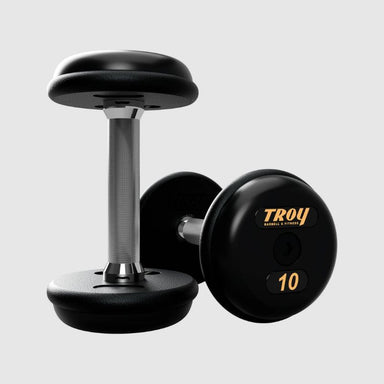
Pro Style dumbbells have the classic commercial weight-room look and are often paired with storage designed specifically around their head dimensions.
For example, Dumbbells Direct carries complete TROY Pro Style sets with saddle racks. Pairing the set and rack removes much of the compatibility guesswork.
8-Sided, 10-Sided, and 12-Sided Dumbbells
Multi-sided dumbbells sit differently from traditional round heads. Their flat surfaces can add stability while keeping a commercial fixed-dumbbell profile.
For these designs, check how the head contacts the saddle or shelf. The dumbbell should sit naturally rather than balancing awkwardly on the rack.
Saddle Rack vs Shelf Rack for Space and Capacity
Storage capacity isn't just about asking, "How many dumbbells fit?" You also need to ask how much floor space the rack consumes while holding them.
Measure before ordering. Moving a fully assembled commercial rack around the room because it blocks a walkway is nobody's idea of a good afternoon.
Comparing Dumbbell Rack Dimensions
Check the rack's overall width, depth, and height. Then measure the space members need in front of it.
Dumbbell rack dimensions vary from model to model, even when two racks hold the same number of pairs.
A 3-tier design may use vertical space differently from a wider 2-tier rack, so pair capacity alone doesn't tell the whole story.
10-Pair vs 15-Pair Rack Capacity
Ten-pair storage makes sense for many compact dumbbell runs. A 15-pair saddle dumbbell rack gives you five additional positions and can suit a broader weight range.
Think about tomorrow as well as today. If you're likely to add heavier dumbbells later, leaving some expansion room can save another storage purchase.
Storing a 5–50 lb Dumbbell Set
A 5–50 lb set in 5 lb increments includes 10 pairs. That makes a compatible 10-pair rack a logical starting point.
It's a practical range for smaller commercial gyms, hotel fitness rooms, training studios, and facilities that don't need heavier fixed dumbbells.
Storing a 5–75 lb Dumbbell Set
Move up to 5–75 lb in 5 lb increments and you're dealing with 15 pairs.
At this point, a 15-pair saddle rack or appropriately sized multi-tier shelf rack becomes especially useful. You'll also need to account for the additional total weight.
Storing a 5–100 lb Dumbbell Set
A complete 5–100 lb run in 5 lb increments contains 20 pairs. Now storage becomes a significant part of your free-weight layout.
A complete dumbbell rack with weights package can make planning easier because the rack is already paired with the intended dumbbell set.
Saddle Rack Pros and Cons
Advantages of Saddle Dumbbell Racks
- Each dumbbell gets a dedicated storage position.
- Missing weights are easy to spot.
- The set stays visually organized.
- 2-tier and 3-tier configurations are available.
- They can be purchased with matching commercial dumbbell sets.
Limitations of Saddle Dumbbell Racks
- Saddle dimensions need to match the dumbbells.
- Switching to a different dumbbell style later may create compatibility issues.
- Individual holders determine how many dumbbells the rack can accommodate.
- Members must line each weight up with its resting position.
Shelf Rack Pros and Cons
Advantages of Shelf Dumbbell Racks
- Continuous shelves provide flexible storage space.
- Several dumbbell designs may fit when the rack is appropriately sized.
- Dumbbells are easy to see across each tier.
- Multi-tier options can accommodate larger sets.
- Commercial dumbbell-and-rack packages are readily available.
Limitations of Shelf Dumbbell Racks
- Members can return weights in the wrong order.
- Shelf dimensions still need to match the dumbbell heads.
- Round dumbbells need storage designed to keep them secure.
- Larger shelf systems can take up considerable horizontal space.
What Should Gym Owners Check Before Choosing a Saddle Rack vs Shelf Rack?
This is where a five-minute check can prevent an expensive mistake. Don't choose your rack based on appearance alone.
Look at the equipment, the room, and the people who will actually use it.
Dumbbell Shape and Head Size
Start with the dumbbells themselves. Measure or confirm head width, diameter, and overall design.
A saddle that works beautifully with one Pro Style dumbbell may not suit a completely different round or hex model.
Number of Dumbbell Pairs
Count the pairs—not individual dumbbells—you need to store.
Then ask whether you'll add more weights later. Buying a rack that's full from day one gives your gym nowhere to grow.
Rack Dimensions and Available Floor Space
Mark the proposed rack area on your floor if necessary. It's an easy way to visualize how much room the unit will really occupy.
Don't forget the space in front. Members need somewhere to stand while picking up heavy dumbbells.
Weight Capacity
A rack may physically have room for 20 pairs and still not be designed for the total load you're planning to place on it.
Check the manufacturer's specifications, especially for heavier 5–75 lb and 5–100 lb sets.
Saddle or Shelf Compatibility
When possible, choose a rack specifically intended for your dumbbell series.
This is one reason complete rack-and-dumbbell packages are convenient. You aren't trying to solve the compatibility puzzle after both pieces arrive.
Ease of Access and Re-Racking
Think about your busiest hour, not your quietest one.
Can two members reach different parts of the rack comfortably? Can heavy dumbbells be returned without awkward movements?
Those everyday details matter more than they seem on a product page.
Future Dumbbell Set Expansion
Maybe you're starting with 5–50 lb dumbbells now. Six months later, stronger members start asking for 55s, 60s, and 70s.
If expansion is likely, plan the storage layout from the beginning. A little spare room today can prevent a cramped free-weight section tomorrow.
Which Dumbbells Direct Products Fit This Comparison Best?
Dumbbells Direct carries both saddle-style and shelf-style dumbbell packages, so you don't necessarily need to buy the weights and storage separately.
Complete packages are particularly useful for commercial facilities because the rack and dumbbell set are already paired around a specific weight range and storage design.
Saddle Rack Dumbbell Sets
TROY COMMPAC-RUFDR50 5-50 lbs Pro Style Dumbbell Set with Saddle Rack
This 5–50 lb Pro Style package gives smaller commercial facilities a complete weight run with dedicated saddle storage. It's a straightforward option when you want the dumbbells and rack planned as one setup.
TROY COMMPAC-RUFDR100 5-100 lbs Pro Style Dumbbell Set with Saddle Rack
Need a heavier commercial range? This package extends the Pro Style set through 100 lb while keeping the weights arranged on matching saddle storage.
TROY COMMPAC-TSDR100 5-100 lb Rubber Encased 12-Sided Dumbbell Set with Saddle Racks
This package combines TROY's 12-sided rubber-encased dumbbells with saddle racks. It gives facilities a full 5–100 lb range without having to source storage separately.
TAG Fitness 8-Sided Virgin Rubber Dumbbell Set with 3-Tier Saddle Rack
TAG's 8-sided virgin rubber dumbbells are available with 3-tier saddle storage in multiple configurations. It's another option for facilities that prefer clearly separated dumbbell positions.
TAG Fitness Round Premium Urethane Dumbbell Set with 3-Tier Saddle Rack
For gyms leaning toward round urethane dumbbells, this TAG package pairs the weights with matching saddle storage. That takes the "Will these actually fit?" question out of the buying process.
Shelf Rack Dumbbell Sets
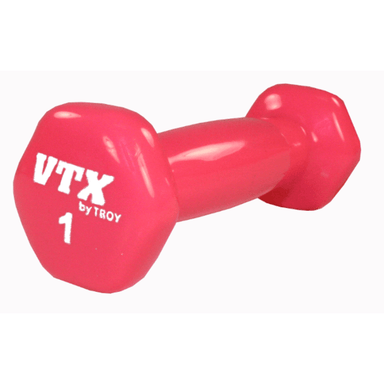
VTX by Troy 8-Sided Rubber Dumbbell Set with 3-Tier Shelf Rack – VERTPAC-SDR75
This VTX package combines 8-sided rubber dumbbells with a 3-tier shelf rack. The result is a multi-level storage setup without individual saddle positions.
Troy VERTPAC-TSDR75 12-Sided Rubber Dumbbells Set with 3-Tier Shelf Rack
If you prefer TROY's 12-sided rubber dumbbells, this package pairs them with a 3-tier shelf system. It offers another route for facilities building a larger fixed-dumbbell area.
TKO S891-TXR-E20 5-100 lb Rubber Hex Tri-Grip Dumbbells with 3-Tier Shelf Rack
This TKO setup covers a full 5–100 lb rubber dumbbell run and includes 3-tier shelf storage. That's a useful combination for commercial gyms that need both range and capacity.
TKO S891-TXU-E20 5-100 lb Urethane Hex Tri-Grip Dumbbells with 3-Tier Rack
Prefer urethane? TKO also offers a 5–100 lb Tri-Grip urethane dumbbell package with matching multi-tier storage.
For larger orders, you can also contact Dumbbells Direct for custom bulk pricing. This is worth doing when outfitting a commercial gym or purchasing multiple sets, since bulk orders may qualify for additional discounts.
Dumbbells Direct also runs rotating weekly promotions, including periodic 5% off offers. Check the current promotion before ordering rather than relying on an older coupon code.
Which Is Better: Saddle Rack or Shelf Rack?
If you were hoping for one rack to win every category, there's a catch: the dumbbells matter too much.
A saddle rack gives you structured, dedicated storage. A shelf rack gives you a more flexible continuous surface.
The better commercial setup is the one that fits your dumbbells, capacity requirements, and available floor space.
Choose a Saddle Rack If…
Consider a saddle rack when you want each dumbbell to have an obvious home. It's especially appealing for fixed commercial sets where maintaining a clean weight sequence is important.
It also makes sense when you're buying a complete package with saddles already matched to the dumbbells.
Choose a Shelf Rack If…
A shelf rack makes sense when you prefer a continuous storage surface and want some flexibility in how weights are positioned.
It can work particularly well when the selected shelf system is designed around the exact dumbbell series and weight range you're purchasing.
Match the Rack to Your Dumbbells and Facility
Instead of asking only, "Saddle or shelf?" ask four questions: What dumbbells am I storing? How many pairs do I have? How much room is available? Will the set grow?
Answer those first, and the rack decision gets much easier.
After all, the best rack isn't the one that looks nicest while empty. It's the one that still works when the gym is packed, the 80s are being re-racked, and every bench around it is occupied.
Frequently Asked Questions
What Is the Difference Between a Saddle Rack and Shelf Rack?
A saddle rack holds dumbbells in individual cradles, giving each weight a dedicated position. A shelf rack uses continuous trays or shelves where several dumbbells sit next to one another.
Which Is Better for Commercial Gyms: Saddle Rack or Shelf Rack?
Both can work well in commercial facilities. Saddle racks favor clearly defined organization, while shelf racks provide flexible continuous storage. Your dumbbell design, pair count, room dimensions, and usage should determine the choice.
Are Saddle Racks Better for Round Dumbbells?
They can be a good option when the saddle is specifically compatible with the round dumbbell. However, round dumbbells can also be stored on properly designed shelf racks that keep the heads secure.
Can Rubber Hex Dumbbells Fit on a Saddle Rack?
Yes. Some saddle racks are designed for rubber hex and other multi-sided dumbbells. Check the manufacturer's compatibility information and saddle dimensions for your specific dumbbell model.
Can Round Dumbbells Be Stored on a Shelf Rack?
Yes, but the shelf needs to be designed to hold them securely. Since round heads can roll, don't assume an ordinary flat storage surface will work.
What Size Dumbbell Rack Do I Need for a 5–50 lb Set?
A 5–50 lb set using 5 lb increments has 10 pairs. Look for storage that accommodates all 10 pairs while meeting the required dimensions and total weight capacity.
What Size Rack Do I Need for a 5–100 lb Dumbbell Set?
A 5–100 lb set in 5 lb increments has 20 pairs. You'll need a rack or rack combination designed for that pair count, the physical size of the dumbbells, and the total load.
How Many Dumbbells Fit on a 3-Tier Saddle Rack?
There isn't one standard answer. Capacity varies by model, and commercial 3-tier saddle racks may be configured for different pair counts. Always check the specifications for the exact rack you're considering.
What Dumbbell Rack Dimensions Should a Gym Check Before Buying?
Check overall width, depth, and height, plus spacing between tiers and usable storage dimensions. Then measure the surrounding training area so members have enough clearance to remove and return weights comfortably.





Leave a comment