Choosing between a 3-25 vs 5-50 dumbbell set? Short answer: 3-25 is better for light training and compact studios, while 5-50 offers more strength progression. Keep reading to compare space, cost, client needs, and best-selling dumbbells before your rack becomes too little, too soon.
Quick Answer: 3-25 vs 5-50 Dumbbell Set
3-25 vs 5-50 Dumbbell Set: Which Is Better?
For most studios offering general strength training, 5-50 lb is the more flexible choice. It covers lighter work while still giving stronger clients useful options for presses, rows, carries, lunges, and lower-body exercises.
A 3-25 lb set makes more sense when your studio leans toward classes, mobility, rehab, beginners, or older adults. In those settings, having more light pairs can matter more than having a heavier top end.
What Is the Difference Between a 3-25 lb and 5-50 lb Dumbbell Set?
The biggest difference is the ceiling.
A 3-25 lb set is focused on light resistance. A 5-50 lb set reaches into moderate strength training, so clients can keep progressing without immediately outgrowing the rack.
Is a 3-25 lb Dumbbell Set Enough for a Studio?
It can be. A 3-25 lb range is often enough for group fitness, rehab, beginner programs, light circuits, and many accessory exercises.
But if your studio serves stronger clients, 25 lb can become limiting faster than expected.
Is a 5-50 lb Dumbbell Set Better for Strength Training?
Usually, yes. The extra 30-50 lb pairs are especially useful for compound exercises where clients tend to progress faster.
Think dumbbell bench presses, one-arm rows, goblet squats, Romanian deadlifts, and walking lunges.
Which Is Better for Commercial Gyms?
Between these two ranges, 5-50 lb is generally the stronger starting point for a commercial gym. A 3-25 lb set is better used as a lighter supplemental area rather than the only dumbbell range.
What Is a 3-25 lb Dumbbell Set?
A 3-25 lb dumbbell set is built around lighter resistance. It is designed for users who need control, manageable loading, and smaller jumps rather than heavy strength work.
What Weights Are Included in a 3-25 lb Dumbbell Set?
The exact increments vary by product. Some packages include more small jumps, while others use a simpler sequence.
That means you should always check the actual pair breakdown instead of assuming every 3-25 lb set is configured the same way.
How Many Dumbbells Are in a 3-25 lb Set?
The number depends on the increments and rack design.
For example, the TKO S826-RXL8 3-25lb Rubber Hex Dumbbell Set, Contour with 8 Pair Rack uses an 8-pair setup.
How Much Does a 3-25 lb Dumbbell Set Weigh?
There is no single standard total because different 3-25 lb sets may use different weight steps.
If total equipment weight matters for flooring or delivery, check the exact included pairs before ordering.
3-25 lb Dumbbell Set with Rack
For a small studio, buying the rack and dumbbells together can make planning much easier. You already know the rack is sized for the included set, which helps avoid awkward gaps or storage problems.
Who Is a 3-25 lb Set Best For?
- Group fitness studios
- Rehab and wellness facilities
- Beginner-focused studios
- Older-adult training programs
- Apartment gyms
- Hotel fitness rooms
- Light circuit-training areas
What Is a 5-50 lb Dumbbell Set?
A standard 5-50 dumbbell set usually includes one pair at every 5 lb increment from 5 through 50 lb.
That gives a studio a much broader range without moving into a full commercial 5-100 lb setup.
What Weights Are Included in a 5-50 lb Dumbbell Set?
- 5 lb
- 10 lb
- 15 lb
- 20 lb
- 25 lb
- 30 lb
- 35 lb
- 40 lb
- 45 lb
- 50 lb
How Many Dumbbells Are in a 5-50 lb Set?
A standard set contains 10 pairs, or 20 individual dumbbells.
How Much Does a 5-50 lb Dumbbell Set Weigh?
550 lb Total Weight in a Standard 5 lb Increment Set
If you have two dumbbells at each weight from 5 through 50 lb, the dumbbells total 550 lb.
That figure does not include the rack.
5-50 lb Dumbbell Set with Rack
A 5 50 dumbbell set with rack is a practical choice for studios because it combines the full range with organized storage from day one.
5-50 lb Dumbbell Set with Vertical Rack
Vertical racks can save floor space, which is helpful in tight studios. The tradeoff is access.
If several clients need dumbbells at once, a wider horizontal rack can sometimes be easier to use.
Who Is a 5-50 lb Set Best For?
- Personal training studios
- Small commercial gyms
- Strength-focused studios
- Apartment fitness centers
- Corporate gyms
- Studios with mixed-strength clients
- Facilities expecting future growth
3-25 vs 5-50 Dumbbell Set: What’s the Difference?
| Factor |
3-25 lb Set |
5-50 lb Set |
| Weight Range |
Light |
Light to moderate |
| Training Variety |
Best for light resistance |
Broader strength use |
| Floor Space |
Lower |
Higher |
| Upfront Cost |
Lower |
Higher |
| Strength Progression |
Limited beyond 25 lb |
More room to progress |
| Best Fit |
Group fitness and light training |
Personal training and general strength |
3-25 vs 5-50 Dumbbell Set: Head-to-Head Comparison
Which Costs Less?
A 3-25 lb set usually costs less upfront because you are buying less total weight and fewer heavy pairs.
That can be a smart choice when your programming genuinely does not need anything above 25 lb.
Which Takes Up Less Space?
The 3-25 lb range usually wins here. Smaller dumbbells are easier to store, and compact rack designs are common.
Which Is Better for Beginners?
Both work well.
A 3-25 lb set feels less intimidating, while a 5-50 lb set gives beginners somewhere to go as they become stronger.
Which Is Better for Group Fitness?
For classes, lighter sets can be more useful because several people may need the same moderate weights at once.
Eight pairs of 10-20 lb dumbbells can be more valuable than one pair of 45s sitting untouched.
Which Is Better for Personal Training?
For one-on-one and semi-private strength work, 5-50 lb is usually more practical.
A trainer can accommodate more client abilities without running into the 25 lb ceiling.
Which Is Better for Strength Training?
The 5-50 lb set clearly offers more flexibility for progressive overload and compound movements.
Which Offers Better Long-Term Value?
If your clients are likely to progress past 25 lb, 5-50 can save you from expanding the rack sooner than expected.
Is a 3-25 lb Dumbbell Set Enough for a Studio?
When 25 lb Dumbbells Are Enough
A 25 lb maximum can work very well for light resistance, accessory exercises, mobility work, group classes, and beginner sessions.
When 25 lb Dumbbells Become Limiting
The limit tends to show up when clients move into larger compound movements.
A client who starts with 15 lb rows may reach 25 lb quickly. After that, your rack has nowhere else to go.
Beginner Clients
A 3-25 lb range is often more than enough when someone is just learning technique and building confidence.
Older Adults and Rehab Clients
Lighter dumbbells can be especially useful when control and range of motion matter more than heavy loading.
Group Fitness Classes
Here, duplicate lighter pairs may be more important than maximum weight.
If ten people need 12-15 lb dumbbells at once, one lonely pair of 40s does not help much.
Strength-Focused Clients
For stronger users, 25 lb can become restrictive quickly.
A 5-50 lb range is much easier to grow into.
What Exercises Can You Do with a 3-25 lb Dumbbell Set?
- Curls
- Triceps extensions
- Lateral raises
- Front raises
- Shoulder presses
- Light rows
- Lunges
- Split squats
- Floor presses
- Circuits
- Functional training movements
Where a 25 lb Maximum Becomes Limiting
The issue is not exercise selection. You can do plenty with 25 lb dumbbells.
The real limitation is progression. Once a client gets stronger, the same exercise may no longer be challenging enough.
When Do Clients Need Dumbbells Heavier Than 25 lb?
Dumbbell Bench Press
Pressing strength can move beyond 25 lb fairly quickly for intermediate clients.
One-Arm Dumbbell Rows
Rows use large back muscles, so many people can handle more load here than they can on isolation exercises.
Goblet Squats
A 25 lb dumbbell may feel heavy to a beginner. After a few months of consistent training, it may feel more like a warm-up.
Romanian Deadlifts
The glutes and hamstrings can handle substantial resistance, so heavier dumbbells become useful fast.
Walking Lunges
As balance and leg strength improve, clients may want more than 25 lb per hand.
Farmer Carries
Loaded carries are another exercise where heavier dumbbells can add meaningful challenge.
Why Compound Exercises Outgrow 25 lb Faster
Compound movements recruit several large muscle groups at once.
That is why someone may still use 8 lb dumbbells for lateral raises but want 35 lb dumbbells for rows.
3-25 vs 5-50 Dumbbells for Strength Progression
Beginner Progression
Both ranges work well at the beginning.
Lighter weights make it easier to learn movement patterns before chasing heavier numbers.
Intermediate Progression
This is where 5-50 lb becomes much more useful.
Clients can keep increasing resistance without changing equipment or rewriting the workout around a limited rack.
Why a 25 lb Ceiling Matters
A training ceiling can affect both programming and client experience.
If the client is ready to progress but the rack is not, the trainer has to improvise.
Why 5-50 Gives Clients More Room to Progress
The 30-50 lb range opens up heavier pressing, rowing, carries, and lower-body work.
For a growing studio, that extra room can be worth more than it looks on paper.
3-25 vs 5-50 Dumbbell Set for Personal Training Studios
Client Strength Levels
If your clients range from complete beginners to experienced lifters, 5-50 lb gives you more flexibility.
Number of Clients Training at Once
Semi-private studios may need duplicates just as much as they need heavier weights.
A broad rack is useful, but so is having two pairs of the weights everyone reaches for.
Exercise Variety
Both ranges support plenty of movements.
The difference is that 5-50 lets you load those movements more appropriately for stronger clients.
Available Floor Space
If your studio is tight, a compact 3-25 lb rack may be easier to live with.
Future Client Growth
Think about the clients you want next year, not just the clients you have today.
Which Range Should a Personal Training Studio Buy?
For most strength-oriented personal training studios, 5-50 lb is the safer all-around option.
A lighter set makes more sense when the business is intentionally focused on beginners, rehabilitation, or group classes.
3-25 vs 5-50 Dumbbell Set for Boutique Fitness Studios
Group Classes
Lighter sets shine when several participants need manageable dumbbells at once.
Circuit Training
3-25 lb works well for fast-paced circuits where volume and movement quality matter more than heavy loading.
Strength-Based Classes
If your classes include serious strength work, 5-50 lb gives members more room to progress.
When a Light Dumbbell Set Makes More Sense
Choose lighter weights when your programming centers on endurance, mobility, beginner-friendly resistance, or high-repetition work.
When 5-50 Adds Useful Training Options
The extra 30-50 lb range makes your studio more capable without requiring a full commercial dumbbell wall.
3-25 vs 5-50 Dumbbell Set for Rehab and Wellness Studios
Light Resistance Training
A lighter range often fits this environment naturally.
Older Adult Clients
Smaller weights make progression easier to control.
Rehabilitation Exercises
Rehab-focused studios may value lighter starting weights more than a heavy maximum.
Is 3-25 lb Usually Enough?
For many rehab and wellness studios, yes.
The deciding factor should still be your actual programming and client population.
3-25 vs 5-50 Dumbbell Set for Commercial Gyms
Member Strength Levels
A commercial gym serves more types of users, so the broader 5-50 lb range is usually more useful.
Daily Traffic
Busy facilities also need to think about duplicates.
One pair of 20s may disappear the moment the evening rush begins.
Training Style
If general strength training is part of the facility, 25 lb will usually be too limiting as the top end.
Heavy Dumbbell Demand
Watch what members actually use. That tells you more than a generic equipment checklist ever will.
Is 25 lb Enough for a Commercial Gym?
Usually not as the only dumbbell range.
It works better as a dedicated light-weight zone or class area.
Why 5-50 May Be the Better Starting Range
It covers beginners while still giving stronger members meaningful options.
3-25 vs 5-50 Dumbbell Set for Small Gyms
Limited Floor Space
A lighter rack is easier to squeeze into a compact room.
Budget
3-25 lb costs less upfront, but future expansion can narrow that savings.
Member Strength Levels
If your members already use 30-50 lb dumbbells, the smaller range is unlikely to be enough.
Future Expansion
Ask yourself where a second rack would go before you assume you can simply add one later.
Which Range Gives Better Long-Term Value?
For general strength training, 5-50 lb usually offers more room to grow.
For light-use facilities, 3-25 lb can still be the more efficient buy.
What About a 5-25 lb Dumbbell Set?
3-25 vs 5-25 Dumbbell Set
The difference is mainly the starting weight.
A 3 lb option can be useful for rehabilitation, older users, beginners, and light shoulder work.
5-25 vs 5-50 Dumbbell Set
A 5-25 lb set stays compact, while 5-50 lb gives you twice the top-end weight.
Who Benefits from Starting at 3 lb?
Clients doing rehab, mobility work, or very light upper-body exercises may appreciate the lower starting point.
When 5-25 lb Is Enough
It can work for group fitness, light circuit training, and beginner-focused facilities.
What About a 5-30 lb Dumbbell Set?
3-25 vs 5-30 Dumbbell Set
A 5-30 lb set gives you a little more top-end strength while giving up the 3 lb starting option.
5-30 vs 5-50 Dumbbell Set
5-30 saves space and money, but 5-50 offers more useful progression for stronger clients.
Why 5-30 Can Be a Middle Ground for Studios
For studios that need more than light dumbbells but do not expect heavy users, 5-30 can be a practical compromise.
How Much Space Does a 3-25 lb Dumbbell Set Need?
Compact Vertical Racks
Vertical storage is popular in studios because it keeps more floor open for training.
8-Pair Rack Options
The TKO S826-RXL8 3-25lb Rubber Hex Dumbbell Set, Contour with 8 Pair Rack is one example of a compact setup.
Rack Dimensions
Always check the exact measurements before buying.
Dumbbell shape and spacing can change how much room a rack actually needs.
Clearance Around the Rack
Leave enough space for clients to pick up and return dumbbells without blocking walkways.
How Much Space Does a 5-50 lb Dumbbell Set Need?
10-Pair Rack Requirements
A standard 5-50 lb range needs room for ten pairs.
Vertical Dumbbell Racks
These help reduce horizontal floor use.
Horizontal Dumbbell Racks
They are often easier for several clients to access at once.
Two-Tier and Three-Tier Racks
These are common choices for a broader fixed-dumbbell range.
Which Rack Style Is Best for Studios?
Vertical racks work well when floor space is tight.
Horizontal or tiered racks often work better when several people train at the same time.
3-25 vs 5-50 Dumbbell Set Price Comparison
3-25 Dumbbell Set Price Factors
Price depends on the material, brand, rack, number of pairs, and whether the equipment is built for commercial use.
5-50 Dumbbell Set Price Factors
The broader range means more material, more weight, and usually a larger rack.
Which Costs Less Upfront?
A 3-25 lb set generally has the lower initial cost.
Rack Costs
A larger range usually needs a larger storage solution.
Rubber vs Urethane Pricing
Rubber and urethane sit at different price points, so material choice can move the total package cost significantly.
Cost of Expanding Later
Starting with 3-25 and adding 30-50 later can work.
Just remember to factor in another rack, additional freight, and the possibility that the exact matching series may change.
Which Gives Better Long-Term Value?
If your clients will eventually need heavier weights, 5-50 lb can be the cleaner long-term purchase.
Should You Start with 3-25 lb and Add Heavier Dumbbells Later?
Advantages of Starting Small
- Lower opening cost
- Smaller footprint
- More budget available for other equipment
- Time to see what clients actually use
Disadvantages of Expanding Later
- Extra rack requirements
- Possible additional freight
- Matching issues if the product line changes
- More floor planning later
Adding 30-50 lb Dumbbells
This can be a sensible approach if the studio grows gradually.
Matching Brands and Materials
If a consistent look matters, plan ahead.
Product lines and finishes can change over time.
Adding Rack Capacity
Do not assume your original light rack can safely hold heavier dumbbells.
When Buying 5-50 Upfront Makes More Sense
If you already know stronger clients will use the space, buying the broader range can save you from solving the same problem twice.
Should Studios Buy Heavier Dumbbells or Duplicate Lighter Weights?
When Duplicate 5-25 lb Pairs Make More Sense
Imagine an eight-person class where six people reach for 15 lb dumbbells.
In that situation, duplicate lighter pairs are far more useful than a single pair of 45s sitting untouched.
When 30-50 lb Pairs Make More Sense
They become more valuable when you train stronger clients individually or in small groups.
Group Fitness Studio Considerations
Quantity often matters more than maximum weight.
Personal Training Studio Considerations
Range matters more because the trainer has to accommodate very different strength levels.
Busy Studio Considerations
The strongest setup may be a mix of both: a broad range plus duplicates of your most-used weights.
3-25 vs 5-50 Rubber Hex Dumbbell Sets
Rubber Hex 3-25 lb Sets
Rubber hex dumbbells work well in studios because the flat-sided heads help reduce rolling.
Rubber Hex 5-50 lb Sets
A rubber hex dumbbell set 5-50 keeps that familiar shape while giving clients a wider strength range.
Dumbbell Head Size
As weight increases, dumbbell heads usually get larger.
That matters when comparing rack size and spacing.
Floor Protection and Noise
Rubber encasement can help reduce direct metal contact with the floor, but proper gym flooring is still important.
Which Range Works Better for Studios?
3-25 lb works well for lighter programming.
5-50 lb is more versatile for studios serving clients with mixed strength levels.
3-25 vs 5-50 Urethane Dumbbell Sets
Light Urethane Dumbbell Sets
Urethane can be useful in facilities that want a polished commercial look even in lighter weight ranges.
5-50 Urethane Dumbbell Sets
Options include the TROY COMMPAC-TSDU50 5-50 lb 12-Sided Urethane Dumbbell Set with Rack and TKO S889-TXUA10 5-50lb Urethane Hex Dumbbell set with Rack.
Daily Commercial Use
Studios with steady traffic often look at urethane when durability and appearance both matter.
Custom Logo Options
Some commercial urethane lines can also be customized with a facility logo.
When Urethane Makes Sense for Studios
It is worth considering when your studio wants a commercial presentation and expects regular daily use.
3-25 vs 5-50 Neoprene and Vinyl Dumbbell Sets
Neoprene Dumbbells for Group Fitness
Neoprene dumbbells are especially useful for light resistance, group classes, and exercises where grip comfort matters.
Vinyl Dumbbells for Light Training
Vinyl is another common choice in aerobic and group-training areas.
When Neoprene or Vinyl Makes More Sense Than Rubber Hex
They can make more sense when your studio needs many lighter pairs and rarely trains at heavier loads.
Why These Materials Are Usually Better for Lighter Weight Ranges
Neoprene and vinyl are commonly used where accessibility, color coding, and light resistance matter more than heavy strength progression.
Fixed 3-25 or 5-50 Dumbbell Set vs Adjustable Dumbbells
Fixed Dumbbells for Multiple Clients
Fixed dumbbells are fast.
A client grabs the right pair and starts training without adjusting plates or selector mechanisms.
Adjustable Dumbbells for Limited Space
Adjustable models can dramatically reduce storage needs.
Weight-Change Speed
Fixed sets are usually easier when quick transitions matter.
Group Training
For classes and semi-private sessions, multiple fixed pairs are generally easier to manage.
Which Is Better for a Studio?
Fixed dumbbells usually make more sense when several clients train at once.
Adjustable models are more attractive when space is extremely limited and simultaneous use is low.
Which Dumbbell Weights Get Used Most in a Fitness Studio?
3-10 lb for Light and Accessory Work
These are useful for rehab, mobility, shoulder work, and beginner exercises.
10-20 lb for General Training
This range often gets heavy use in circuits and group sessions.
20-25 lb for Moderate Strength Work
These weights are common among stronger beginners and intermediate clients.
30-50 lb for Stronger Clients
This range allows heavier rows, presses, carries, and lower-body work.
Why Popular Weights May Need Duplicate Pairs
One pair at every weight is neat on paper.
In a real studio, two or three pairs of popular weights may be far more useful.
Best 3-25 lb and Light Dumbbell Sets from Dumbbells Direct
TKO S826-RXL8 3-25lb Rubber Hex Dumbbell Set, Contour with 8 Pair Rack
A compact rubber hex package for studios that want a true light-weight range with organized storage.
USA Sports by Troy 3-25lb Iron Hex Dumbbells with Vertical Rack - VERTPAC-IHD25
A vertical-rack option for facilities where every square foot counts.
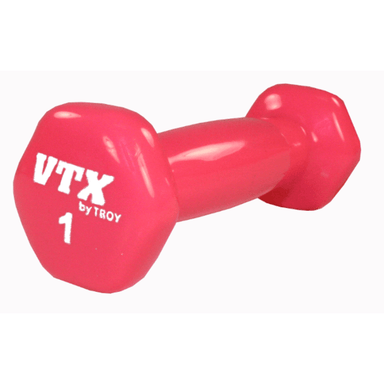
VTX 8-Pair Rubber Dumbbell Set with Rack - VERTPAC-SDR25
A compact rubber setup suited to light training areas.
Intek Rubber Hex Dumbbells Set | RCH-CRSET-005-025
A 5-25 lb rubber hex range for studios that do not need a 3 lb starting point.
Hampton Fitness JELLY-BELL Urethane Aerobic Dumbbells | 8 Pair Pack - 2.5lb-25lb
A light urethane option well suited to aerobic and studio environments.
Best 5-50 lb Dumbbell Sets from Dumbbells Direct
TROY COMMPAC-TSDU50 5-50 lb 12-Sided Urethane Dumbbell Set with Rack
A complete urethane setup covering the full 5-50 lb range.
TROY COMMPAC-TSDR50 5-50 lb Rubber Dumbbell Set with Rack
A practical rubber option for studios that want broader strength progression.
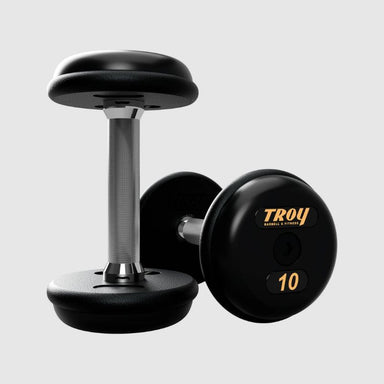
TROY COMMPAC-RUFDR50 5-50 lb Pro Style Dumbbell Set with Saddle Rack
A pro-style setup for facilities that prefer traditional commercial dumbbells and saddle storage.
VTX 5-50 lb 8-Sided Rubber Dumbbell Set with Rack - VERTPAC-SDR50
An 8-sided rubber option paired with organized storage.
TKO S889-TXRA10 5-50lb Rubber Hex Dumbbell Set With Rack
A familiar rubber hex configuration for studios and smaller commercial gyms.
TKO S889-TXUA10 5-50lb Urethane Hex Dumbbell set with Rack
A urethane hex alternative for higher-use facilities.
BodyKore RB550 RUBBER HEX DUMBBELL SET 5-50LB W/G241
A complete 5-50 lb rubber hex package with rack storage.
TKO S6230-RXA10 5-50 lb Rubber Hex Dumbbell Set, Contour with 3 Tier Rail Rack
A full 5-50 lb range paired with three-tier rail storage.
TKO 804RX-A10 5-50 lb Rubber Hex Contour Dumbbell Set
Another rubber hex option for facilities that need a broader fixed-dumbbell range.
Which Dumbbells Direct Products Fit This Comparison Best?
Best 3-25 lb Set for a Compact Studio
The TKO S826-RXL8 3-25lb Rubber Hex Dumbbell Set, Contour with 8 Pair Rack is a strong fit when compact storage is a priority.
Best Light Dumbbell Set for Group Training
The Hampton Fitness JELLY-BELL Urethane Aerobic Dumbbells | 8 Pair Pack - 2.5lb-25lb is well matched to lighter studio programming.
Best 5-50 lb Rubber Option
The TROY COMMPAC-TSDR50 5-50 lb Rubber Dumbbell Set with Rack gives studios a broad rubber range with storage included.
Best 5-50 lb Rubber Hex Option
The TKO S889-TXRA10 5-50lb Rubber Hex Dumbbell Set With Rack combines a familiar hex shape with a complete training range.
Best 5-50 lb Urethane Option
The TROY COMMPAC-TSDU50 5-50 lb 12-Sided Urethane Dumbbell Set with Rack is a strong commercial-style urethane choice.
Best 5-50 lb Pro Style Option
The TROY COMMPAC-RUFDR50 5-50 lb Pro Style Dumbbell Set with Saddle Rack fits facilities that prefer classic pro-style dumbbells.
Best Option for Limited Floor Space
A compact 3-25 lb range with vertical storage usually makes the easiest fit.
Best Option for a Growing Studio
A 5-50 lb range gives clients more room to progress and can delay the need for an upgrade.
Dumbbells Direct Bulk Pricing and Discounts
Custom Quotes for Studio Dumbbell Sets
If you are outfitting a studio rather than buying a single pair, contact Dumbbells Direct for a custom quote.
Bulk Order Discounts
Qualifying larger orders may receive custom pricing based on the products and quantity.
Complete Studio Equipment Packages
Studios often need racks, benches, storage, and other strength equipment at the same time.
Bundling those needs into one facility quote can make planning much simpler.
Rotating Weekly 5% Promotions
Dumbbells Direct also runs rotating 5% off promotions.
Because coupon codes change, check the current offer before ordering.
What Should Gym Owners Check Before Choosing 3-25 vs 5-50 Dumbbells?
-
Facility type: studio, commercial gym, hotel, apartment, rehab space, or group-fitness facility.
-
Client demographics: beginners, athletes, older adults, general fitness clients, or mixed users.
-
Client strength levels: what weights do they actually use?
-
Number of clients per session: do you need duplicate pairs?
-
Training style: circuits, classes, rehab, or strength training?
-
Most-used dumbbell weights: where does demand cluster?
-
Available floor space: how much room can the rack take?
-
Dumbbell set dimensions: verify the exact measurements.
-
Rack capacity: can it support future expansion?
-
Budget: compare opening cost with upgrade costs later.
-
Future growth: will you serve stronger clients later?
-
Material: rubber, urethane, neoprene, vinyl, iron, or pro style.
-
Warranty: compare product-specific coverage.
-
Duplicate pairs: sometimes quantity matters more than maximum weight.
Studio Dumbbell Set Buying Checklist
- Is 25 lb heavy enough for your clients?
- Will clients need 30-50 lb dumbbells?
- How many people train at once?
- Do you need duplicate lighter weights?
- How much floor space is available?
- Would a vertical rack work better?
- Can the set be expanded later?
- What is the long-term equipment budget?
Frequently Asked Questions
What Is the Difference Between a 3-25 and 5-50 lb Dumbbell Set?
A 3-25 lb set focuses on lighter resistance and compact storage. A 5-50 lb set gives clients more room for strength progression and heavier compound exercises.
Is a 3-25 lb Dumbbell Set Enough for a Fitness Studio?
Yes, for many group fitness, rehab, beginner, and light-training studios.
For mixed-strength personal training, it may become limiting.
Is 25 lb Heavy Enough for Strength Training?
It can be for beginners and accessory exercises.
For stronger clients and compound movements, 25 lb may not be enough.
Is a 5-50 lb Dumbbell Set Better for Personal Trainers?
In many cases, yes.
It lets trainers work with a wider range of abilities without changing equipment.
How Many Dumbbells Are in a 3-25 lb Set?
It depends on the increments and package.
Some commercial 3-25 lb sets use an 8-pair format.
How Many Dumbbells Are in a 5-50 lb Set?
A standard set contains 10 pairs, or 20 individual dumbbells.
How Many Pounds Is a 5-50 lb Dumbbell Set?
A standard pair at every 5 lb increment from 5 through 50 lb totals approximately 550 lb.
What Is the Total Weight of a 5-50 lb Dumbbell Set?
The dumbbells total 550 lb before the rack is included.
Should I Buy a 3-25 or 5-25 lb Dumbbell Set?
Choose 3-25 if very light starting weights matter.
Choose 5-25 if 5 lb is already light enough for your users.
Should I Start with 3-25 and Add Heavier Weights Later?
You can, especially if your opening budget is tight.
Just make sure you have room and rack capacity for expansion.
Should Studios Buy Heavier Dumbbells or Duplicate Lighter Pairs?
Group studios may get more value from duplicate light pairs.
Strength-focused studios are more likely to benefit from adding 30-50 lb dumbbells.
Which Range Takes Up Less Space?
A 3-25 lb set usually requires less storage space.
Which Range Costs Less?
The 3-25 lb range generally has the lower upfront cost.
Which Range Offers Better Long-Term Value?
If clients are likely to progress beyond 25 lb, a 5-50 lb set often gives better long-term value.
What Should Gym Owners Check Before Choosing 3-25 vs 5-50?
Look at client strength, class size, training style, floor space, rack capacity, budget, and future growth.
Which Dumbbells Direct Products Fit This Comparison Best?
For lighter studios, options include the TKO S826-RXL8, USA Sports by Troy VERTPAC-IHD25, VTX VERTPAC-SDR25, and Intek RCH-CRSET-005-025.
For 5-50 lb setups, options include the TROY COMMPAC-TSDU50, TROY COMMPAC-TSDR50, TROY COMMPAC-RUFDR50, VTX VERTPAC-SDR50, TKO S889-TXRA10, TKO S889-TXUA10, and BodyKore RB550.
Final Verdict: 3-25 lb Dumbbell Set vs 5-50 lb Dumbbell Set
Best for Group Fitness Studios
3-25 lb, especially when duplicate lighter pairs matter more than heavy resistance.
Best for Rehab and Wellness Studios
3-25 lb usually fits the programming better.
Best for Personal Training Studios
5-50 lb gives trainers more flexibility across different strength levels.
Best for Beginners
Both work well, but 3-25 lb offers a very approachable starting range.
Best for Limited Floor Space
3-25 lb usually wins.
Best for Lower Upfront Cost
3-25 lb.
Best for Strength Progression
5-50 lb.
Best for Growing Studios
5-50 lb gives you more room before an upgrade becomes necessary.
Best Overall Studio Range
For most studios serving a mix of beginners and stronger clients, 5-50 lb is the more versatile overall range.
3-25 vs 5-50 Dumbbell Set: Which Should Your Studio Buy?
Choose 3-25 lb if your studio centers on light resistance, rehab, classes, older adults, or compact training spaces.
Choose 5-50 lb if you want a studio dumbbell set that supports broader strength work and gives clients room to progress.
If you are still deciding, contact Dumbbells Direct with your studio size, client count, preferred dumbbell material, rack space, and budget. The team can help compare suitable packages and provide custom pricing for qualifying bulk orders.





Leave a comment