Ten sides or six—your dumbbells are starting to sound like dice. Short answer: rubber hex dumbbells win for floor stability and versatility, while 10-sided dumbbells offer anti-roll control with a smoother commercial profile. Keep reading for comfort, durability, storage, and best-selling dumbbells.
10-Sided Dumbbells vs Rubber Hex Dumbbells: Quick Comparison
What is the main difference between 10-sided and rubber hex dumbbells?
The obvious difference is the head shape. A traditional hex dumbbell has six sides, while a 10-sided dumbbell uses ten flatter surfaces around the head.
Both designs help prevent the dumbbell from freely rolling across the floor. The 10-sided design, however, creates a profile that looks closer to round while retaining flat contact points.
Quick comparison table
| Feature |
10-Sided Dumbbells |
Rubber Hex Dumbbells |
| Head shape |
10 flat sides |
6 flat sides |
| Rolling |
Low |
Very low |
| Floor exercises |
Stable |
Very stable |
| Commercial appearance |
Distinctive, refined profile |
Traditional gym look |
| Material options |
Rubber or urethane |
Commonly rubber |
| Product selection |
More specialized |
Very broad |
| Best fit |
Commercial strength areas |
General and functional training |
Which is better for commercial gyms?
There is no automatic winner. A busy functional training facility may prefer rubber hex dumbbells because their broad flat faces stay planted during floor movements. A traditional health club may favor 10-sided dumbbells for their combination of stability and polished appearance.
What Are 10-Sided Dumbbells?
How does a 10-sided dumbbell design work?
A 10-sided head divides its perimeter into ten flatter surfaces. It gives the dumbbell more of a rounded visual profile without making it completely round.
Do 10-sided dumbbells roll?
They can shift when pushed, but the flat surfaces are designed to reduce uncontrolled rolling compared with a fully round dumbbell.
10-sided rubber dumbbells
10-sided rubber dumbbells combine the multi-sided head with a rubber exterior. This gives gyms a practical option for everyday strength areas where dumbbells see repeated handling.
10-sided urethane dumbbells
10-sided urethane dumbbells use the same general anti-roll concept with a urethane exterior. They are particularly attractive for facilities prioritizing long-term appearance and resistance to cosmetic wear.
Why use a 10-sided design instead of a round head?
Round dumbbells can roll when left on an uneven floor or bumped between sets. Ten-sided heads retain a more rounded appearance while giving the dumbbell defined resting positions.
What Are Rubber Hex Dumbbells?
Why do hex dumbbells have six sides?
Those six flat faces are simple but useful. Put a hex dumbbell down and it normally stays where you placed it instead of attempting an escape across the weight room.
Rubber-coated vs rubber-encased hex dumbbells
The terminology varies between manufacturers, so gym owners should look beyond the label. Check the underlying construction, head-to-handle connection, rubber formulation, handle design, and warranty of the specific model.
Why are rubber hex dumbbells popular in commercial gyms?
They are familiar, stable, available across many weight ranges, and easy to incorporate into general strength training. Their popularity also means gym owners have plenty of choices when building sets and rack packages.
10-Sided Dumbbells vs Rubber Hex Dumbbells: Key Differences
Head shape and design
Hex dumbbells have larger, more obvious flat faces. Ten-sided models use additional surfaces to create a smoother-looking profile.
Stability and rolling
Both are anti-roll designs. Hex heads generally provide particularly obvious resting surfaces, while 10-sided heads balance stability with a shape closer to round.
Floor contact and protection
Rubber-covered heads can provide a more floor-friendly contact surface than exposed metal. Proper commercial gym flooring is still essential; no dumbbell should be treated as permission to repeatedly drop weights.
Size and head dimensions
Head dimensions vary by manufacturer and weight. If rack space is tight, compare actual product measurements instead of assuming every 30 lb or 50 lb dumbbell occupies the same space.
Handle design and grip
Straight versus contoured handles, knurling, handle diameter, and finish can matter as much as head shape. These details become noticeable when members use the dumbbells every day.
Weight ranges
Rubber hex dumbbells are widely available from lighter weights through heavy commercial options, including 100 lb dumbbells and beyond depending on the product line. Ten-sided ranges depend more heavily on the manufacturer.
Rack compatibility
Always match the dumbbell dimensions to the rack. A beautiful set is less impressive when half the heads do not sit comfortably on the trays or saddles.
Appearance
Hex dumbbells have a classic functional-gym appearance. Ten-sided designs can provide a slightly more distinctive look without moving to fully round heads.
Price and long-term value
Compare more than the price of one pair. For a commercial gym, the meaningful number is the cost of completing the required weight range while getting the durability, rack configuration, and warranty your facility needs.
Which Dumbbell Shape Rolls Less?
How six flat sides affect stability
Large flat surfaces make hex dumbbells naturally stable when placed on the floor. That is especially useful in busy functional areas.
How 10-sided dumbbells settle on the floor
A 10-sided head has more resting positions, but each flat face is smaller. It still limits rolling substantially compared with a round dumbbell.
Does anti-roll performance matter in a commercial gym?
Yes. Imagine several members doing circuits while dumbbells are scattered between benches. Equipment that stays where it is placed can make the training area easier to manage.
10-Sided vs Rubber Hex Dumbbells for Floor Exercises
Renegade rows
For renegade rows, stability matters. Rubber hex dumbbells are particularly well suited because their broad flat faces provide a stable base.
Dumbbell push-ups and plank exercises
The same advantage applies when the dumbbells become hand supports. A flatter, stable head can feel more predictable during push-ups and plank variations.
Circuit and functional training
Both shapes work for circuits, carries, lunges, curls, and presses. Hex designs gain an edge when workouts frequently move between lifting and floor-supported exercises.
Which shape provides better floor stability?
Rubber hex dumbbells generally have the advantage for maximum floor stability, while 10-sided dumbbells still offer strong anti-roll performance.
Which Shape Is Better for Heavy Dumbbell Training?
Dumbbell bench presses
Either style can work well for pressing. At heavier weights, handle comfort and head dimensions often become more important than whether the head has six or ten sides.
Resting heavy dumbbells on the thighs
Some lifters may prefer a less angular profile when positioning heavy dumbbells before a press. Actual comfort varies by model, head size, and lifting technique.
Shoulder presses
Both designs are suitable. Focus on grip security, balance, and available weight progression.
Rows and carries
Again, both work. For carries, handle design deserves particular attention because the hands remain under load for longer periods.
Does the rounder profile of a 10-sided head improve comfort?
It can in some lifting situations, but this should not be treated as universal. Individual dumbbell dimensions and construction matter more than shape alone.
10-Sided Rubber vs 10-Sided Urethane Dumbbells
Rubber coating and durability
Rubber is a proven choice for commercial dumbbells and often offers an attractive balance between cost and everyday durability.
Urethane construction and wear resistance
Urethane is often selected by facilities that place greater emphasis on long-term cosmetic appearance and heavy commercial use.
Odor and appearance
New rubber products can have a noticeable odor, although this varies by formulation and usually changes with time and ventilation. Urethane is often preferred when odor and maintaining a clean-looking finish are priorities.
Cost differences
Urethane models generally occupy a higher price tier. Rubber may therefore make it easier to complete a larger weight run within a fixed equipment budget.
Which material makes more sense for high-traffic gyms?
Both can work. Choose based on usage, budget, expected replacement cycle, and how much importance your facility places on long-term appearance.
10-Sided vs Hex vs Round Dumbbells
Six-sided hex dumbbells
Best known for straightforward anti-roll stability and versatility.
10-sided dumbbells
A middle ground between angular hex heads and traditional round dumbbells.
Round dumbbells
A familiar commercial style that works particularly well on dedicated dumbbell racks, although round heads can roll when placed on the floor.
Which shape rolls the least?
Hex designs usually provide the most obvious anti-roll geometry.
Which shape works best for floor exercises?
Rubber hex dumbbells are usually the strongest choice for movements where the dumbbell itself becomes a floor support.
Which shape works best for heavy lifting?
All three can work. For heavy training, construction quality, handle feel, balance, and available weight range deserve more attention.
Are 10-Sided Dumbbells Better for Commercial Gyms?
High-traffic health clubs
They can be an excellent fit when durability and a distinctive dumbbell area are priorities.
Strength and bodybuilding gyms
Look for complete heavy weight ranges and comfortable handles before choosing by shape.
Athletic performance facilities
The anti-roll design works well, although hex dumbbells may be preferable where floor-supported drills dominate programming.
Personal training studios
Ten-sided dumbbells can deliver commercial functionality without the visual bulk of some traditional hex designs.
School and university gyms
Durability, warranty, storage, and replacement availability should drive the decision.
Hotel and apartment fitness centers
A tidy appearance and controlled storage may make 10-sided models attractive in these spaces.
Are Rubber Hex Dumbbells Good for Commercial Gyms?
Functional training areas
Yes. Their floor stability is a major advantage.
General strength-training floors
They handle curls, presses, rows, lunges, carries, and countless other exercises.
Small commercial gyms
They are especially practical when one dumbbell set needs to serve many training styles.
Facilities that need a broad weight range
Rubber hex lines are available in numerous configurations, making them easier to scale from lighter training weights to heavier strength work.
What Should Gym Owners Check Before Choosing 10-Sided vs Rubber Hex Dumbbells?
Expected daily usage
A hotel gym and a packed membership gym put very different demands on equipment.
Head material and construction
Compare rubber or urethane quality and the underlying construction.
Head-to-handle connection
This is a critical durability point on any fixed dumbbell.
Handle diameter and knurling
Look for a grip appropriate for your members and training environment.
Dumbbell dimensions
Check overall length and head dimensions, particularly for heavier weights.
Weight range and increments
Plan the entire run before purchasing isolated pairs.
Rack compatibility
Confirm that the selected dumbbells and storage system work together.
Flooring and training area
Use appropriate gym flooring regardless of dumbbell coating.
Warranty
Compare warranty coverage and applicable commercial-use conditions.
Initial cost vs long-term value
The cheapest pair is not automatically the least expensive set to own over several years.
Which Dumbbells Direct Products Fit This Comparison Best?
Best 10-sided rubber dumbbell
TKO Strength 10-Sided Pro Rubber Dumbbells
This line directly fits the 10-sided rubber category and is worth considering for commercial facilities wanting an anti-roll alternative to conventional hex heads.
Best 10-sided urethane dumbbell
TKO Strength 10-Sided Urethane Dumbbells
A strong option for gyms that prefer the 10-sided profile with urethane construction.
TKO Strength Custom Logo 10-Sided Urethane Dumbbells
For branded facilities, the custom-logo version can help carry the gym's identity into the free-weight area.
Best traditional rubber hex dumbbells
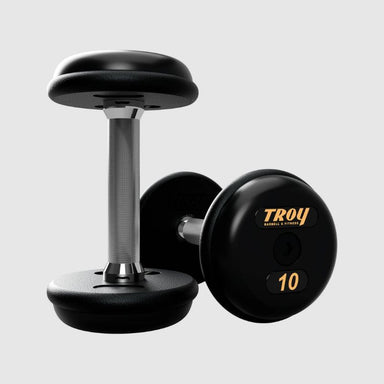
USA Sports by Troy HD-R Rubber Hex Dumbbells
York Rubber Hex Dumbbell w/ Chrome Ergo Handle
TAG Fitness Rubber Hex Dumbbells
Body-Solid Rubber Hex Dumbbells
Intek Strength Rubber Hex Dumbbell
TKO Strength Straight Handle Rubber Hex Dumbbells
These choices give gym buyers several approaches to the familiar rubber hex format. Compare handles, available weights, warranties, and set configurations before narrowing the list.
Best 10-Sided and Rubber Hex Dumbbell Sets for Gyms
10-sided dumbbell sets
TKO Strength 10-Sided Pro Rubber Dumbbell Set – 829TR
A logical choice for facilities wanting a coordinated 10-sided rubber lineup.
TKO Strength 10-Sided Urethane Dumbbell Sets – 830TU
A urethane alternative for buyers prioritizing commercial appearance and long-term wear characteristics.
Rubber hex dumbbell sets
USA by Troy HD-R Rubber Hex Dumbbell Sets
TAG Fitness Rubber Hex Dumbbell Sets
Body-Solid Rubber Coated Hex Dumbbell Sets
TKO Strength Straight Handle Rubber Hex Dumbbell Sets
Intek Rubber Hex Dumbbell Sets
Buying a complete set can simplify weight progression and create a more organized free-weight area than assembling mismatched pairs over time.
Rubber Hex Dumbbell Sets With Racks
5–30 lb sets
A useful range for studios, hotel gyms, lighter training zones, and facilities emphasizing general fitness.
5–50 lb sets
One of the most versatile ranges for smaller commercial gyms and general strength training.
5–75 lb sets
A stronger choice when members regularly progress beyond intermediate dumbbell weights.
5–100 lb sets
Better suited to full commercial strength areas where heavier pressing and rowing are expected.
Vertical vs horizontal rack packages
Vertical racks can conserve floor width, while horizontal and multi-tier racks can make a larger weight run easier to scan and access.
Which setup works best for smaller gym floors?
Measure first. A compact vertical package can work well when space is limited, but accessibility and the number of pairs being stored still matter.
How Much Do 10-Sided and Rubber Hex Dumbbells Cost?
Individual dumbbell pricing
Pricing varies by brand, material, weight, construction, and model.
Full-set pricing
Calculate the complete set you actually need rather than comparing a single pair.
Rubber vs urethane pricing
Rubber is generally the more budget-conscious route, while urethane typically carries a higher upfront cost.
Buying dumbbells with a rack
A rack package can simplify planning because the storage solution and weight range are purchased together.
Bulk discounts for commercial facilities
Dumbbells Direct customers can inquire about custom discounts for bulk purchases. Dumbbells Direct also runs rotating weekly coupon promotions, including 5% off offers, so check the current promotion before placing an order.
10-Sided Dumbbells vs Rubber Hex Dumbbells: Pros and Cons
Advantages of 10-sided dumbbells
Anti-roll design, distinctive appearance, rubber and urethane options, and a profile closer to a round commercial dumbbell.
Disadvantages of 10-sided dumbbells
Fewer product choices than traditional hex dumbbells and smaller flat surfaces for some floor-supported exercises.
Advantages of rubber hex dumbbells
Excellent floor stability, broad availability, familiar design, extensive weight ranges, and numerous set-and-rack options.
Disadvantages of rubber hex dumbbells
The traditional design may look more utilitarian, and quality can vary considerably between manufacturers.
10-Sided Dumbbells vs Rubber Hex Dumbbells: Which Should Your Gym Choose?
Choose 10-sided dumbbells if…
You want anti-roll performance with a more rounded-looking commercial profile or want access to 10-sided urethane options.
Choose rubber hex dumbbells if…
You want maximum versatility, strong floor stability, plenty of set choices, and easy access to different weight ranges.
Best for high-traffic commercial gyms
Either can work, but construction quality and material should decide the winner.
Best for functional training
Rubber hex dumbbells. Their broad flat faces are particularly useful for floor-based movements.
Best for heavy dumbbell training
Either style can perform well. Prioritize handle comfort, balance, construction, and the availability of heavier weights.
Best for small gyms
Rubber hex dumbbells are difficult to beat when one set must cover many training styles.
Best overall value
For most facilities, rubber hex dumbbells offer an excellent combination of choice, stability, and versatility. Ten-sided dumbbells become particularly compelling when the facility wants anti-roll performance with a more distinctive commercial design.
Frequently Asked Questions
What is the difference between 10-sided and hex dumbbells?
A 10-sided dumbbell has ten flat surfaces around each head, while a traditional hex dumbbell has six. Both designs reduce rolling.
What are 10-sided dumbbells called?
They are generally described as 10-sided or decagonal dumbbells, although manufacturers may use their own product terminology.
Are 10-sided dumbbells better than hex dumbbells?
Not universally. Ten-sided models offer a distinctive shape, while hex dumbbells generally provide stronger floor stability and more product choices.
Do 10-sided dumbbells roll?
Their flat surfaces help limit rolling compared with fully round dumbbells.
Are rubber hex dumbbells good for commercial gyms?
Yes. They are versatile, stable, familiar to members, and available in broad weight ranges.
Are 10-sided dumbbells good for commercial gyms?
Yes, particularly when the facility wants anti-roll performance with a less traditional head shape.
Which dumbbell shape is best for renegade rows?
Hex dumbbells are generally the better choice because their broad flat surfaces provide a stable base.
Which dumbbell shape is better for bench presses?
Both work well. Handle design, balance, head dimensions, and available weight are more important for pressing.
Are 10-sided urethane dumbbells better than rubber dumbbells?
Urethane can be attractive for facilities prioritizing appearance and wear resistance, while rubber often provides a lower-cost commercial option.
Do rubber hex dumbbells damage gym floors?
Rubber heads can soften contact compared with bare metal, but proper gym flooring and responsible equipment use remain essential.
Can you buy rubber hex dumbbells with a rack?
Yes. Dumbbells Direct carries multiple rubber dumbbell packages with vertical, horizontal, A-frame, shelf, and multi-tier rack configurations.
How heavy do rubber hex dumbbells go?
It depends on the product line. Commercial ranges can include heavy dumbbells such as 100 lb models, while specific maximum weights vary by manufacturer.
What should gym owners check before buying commercial dumbbells?
Check construction, material, handle design, available weight range, dimensions, rack compatibility, warranty, expected usage, flooring, and total set cost. The best dumbbell is not simply the one with the most sides—it is the one that fits how your members actually train.





Leave a comment